All-Star Superman: Exploring the Harmonious Dichotomy of Dual Identities
Superman tends to be a divisive superhero, and the main issue is centered around his superpowers. While some fans are drawn to the immense scope of his powers, others find it a source of contention, as his abilities sometimes lead to questions about narrative tension and relatability. The ongoing discussion about the vast magnitude of Superman’s powers inherently delves into the complex nature of his dual identity. All-Star Superman (created by the author Grant Morrison and illustrator Frank Quitely in 2011) is a story that beautifully displays the dichotomy and harmony of Superman and Clark Kent. On a single page of the graphic novel, Superman’s narrative is challenged by seamlessly blending his two opposing sides into one through the visual integration of his dual identities.
Read More
The “despised Hebrew”: Identifying Antisemitism in Victorian Popular Culture, 1835-1895
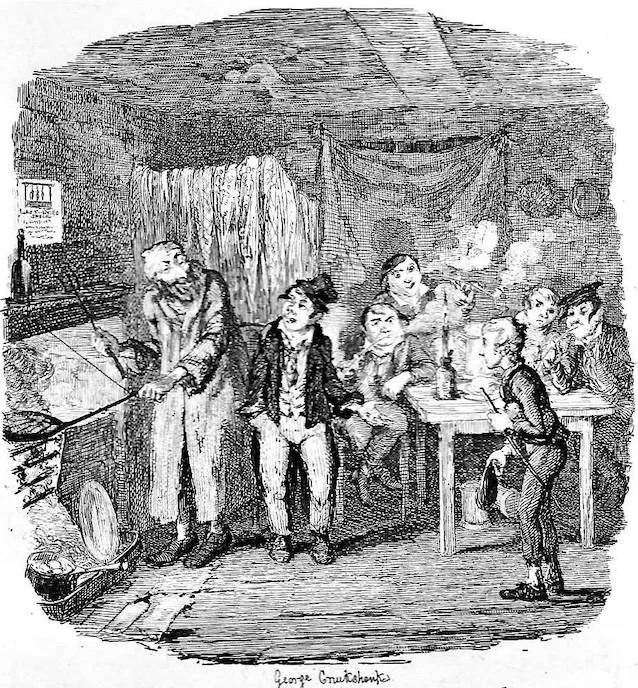
In nineteenth century English society, antisemitism resulted from long-standing antipathies towards Jewish people combined with societal conditions. Historians and literary scholars explain how Victorian authors encouraged antisemitism. However, they view these works as separate incidents of antisemitism, disconnected from both each other and places, like Eastern Europe. This limited perspective precludes a comprehensive understanding of the interwoven character and global ramifications of antisemitism during the Victorian era. By analyzing Charles Dickens’s Oliver Twist and George du Maurier’s Trilby, this paper argues that while Victorian authors used antisemitic stereotypes because of historically ingrained hostilities towards Jews, antisemitism also arose as a response to particular circumstances and conditions that emerged in England during the nineteenth century. Exploring these works in relation to each other reveals how antisemitism in Victorian popular culture is part of an interlinked historical phenomenon of hostility toward Jews.
Read More
Model Off Duty: The Life of Elizabeth Siddall in Poetry and Paintings
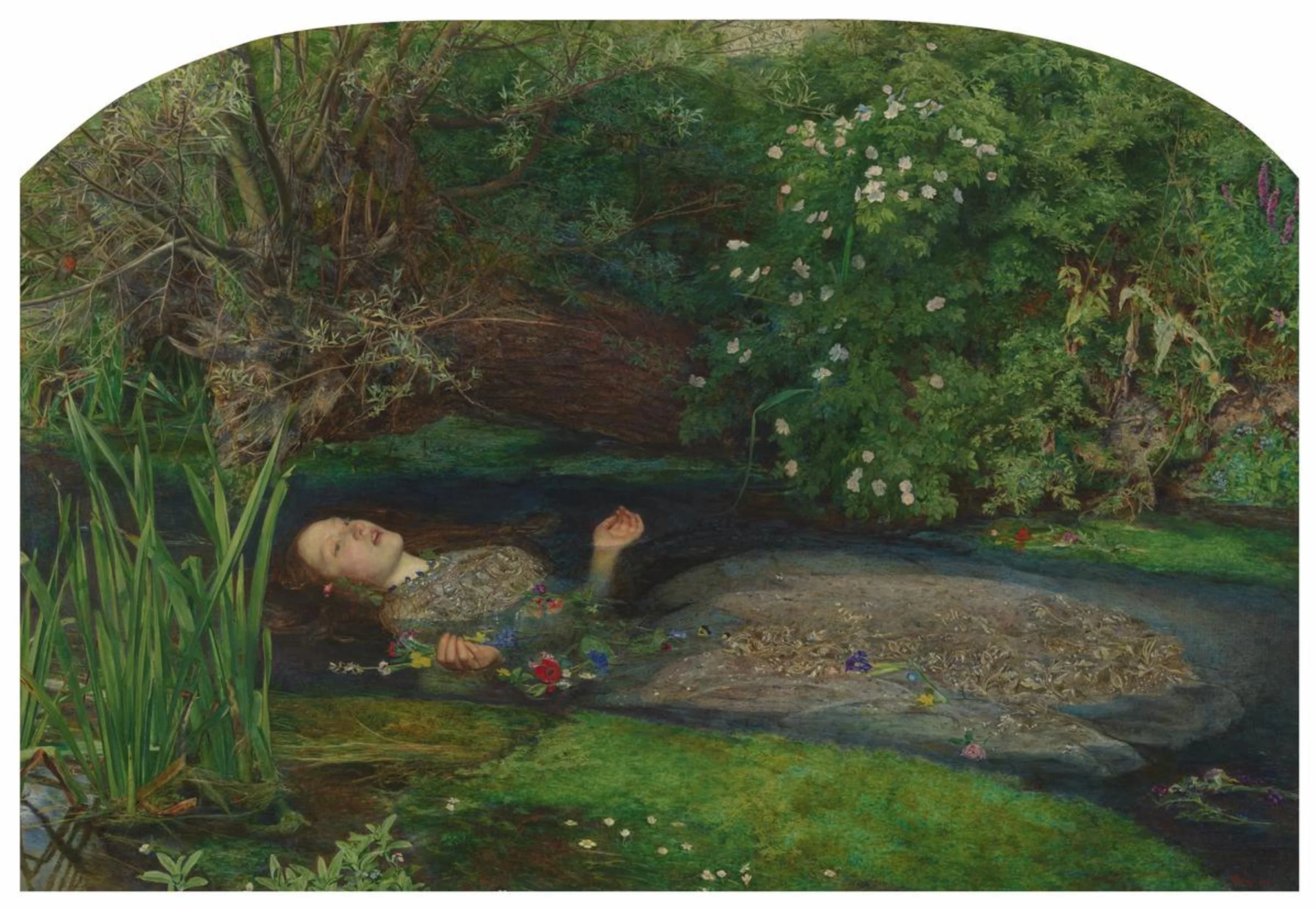
A “supermodel” of the Victorian Era, Elizabeth Siddall (1829–1862) is forever memorialized in the paintings and poetry of the men she sat for, the Pre-Raphaelite Brothers, including her eventual husband, Dante Gabriel Rossetti (1828–1882). However, the depictions of Siddall created by these men are not authentic. They captured her likeness to create characters, using her image to tell stories of literary and historical figures and heroines of myths and legends — all with an aesthetic, romantic, and sensual undertone. Siddall was a face and body used for the Pre-Raphaelite method of art for art’s sake. An artist in her own right, Siddall is survived by her poetry and paintings. After Siddall’s death, few of her letters and diaries remained. Any conclusions made about her actual life and personality are drawn from these bodies of work. The Pre-Raphaelite Brotherhood’s portrayal of Siddall in their art and poetry created a narrative of her life that, when compared with Siddall’s own art, romanticized and glorified a life of struggle, illness, and addiction. To tell the story of Siddall, one must acknowledge both her art and that of the Brotherhood.
Read More
Translating the Imaginary Space in Poetry: An Example of Translations of Emily Dickinson into German
The imaginary space is a significant element in any verse text, establishing a unique discursive situation between the poet and the reader. The creation of it involves a lot of riddles, hints, and specific pointing gestures, making it especially hard to translate. Is there even a way to translate the unique poetic effects of this section of the text into another language? In my research, various translations of Emily Dickinson’s poetry into German provide a source for the analysis of possible strategies of translators, among which Paul Celan is the most noticeable.
Read More
The Female in Frankenstein: Man’s Attempt to Abort Femininity
Although Frankenstein speaks exclusively through the voices of men, feminist ideals persist through the characters’ conflicts with each other as the novel unfolds. The prime example is Frankenstein’s protagonist, Victor Frankenstein, whose main conflict manifests between himself and his creation. This relationship parallels the emotionally complex experiences of women through the journey of pregnancy, childbirth, and parenthood. Shelley uses Victor, to introduce issues of birth and creation without disrupting the status quo of male-dominated narratives popular at the time she was publishing. Shelley effectively creates a monster, both literal and metaphorical, that induces the same fears of getting pregnant and giving birth that women encounter in a society that already restricts and controls most aspects of their lives.
Read More
Capturing Difference: Depicting Blackness in the Roman Empire
When analyzing these snapshots of native and North Africans, a few questions start to emerge: If ancient historians discriminated against these individuals, what do their sculptural representations say? Were they depicted similarly to their Italian neighbors? If so, can we say that they were equals? The Romans’ view of their new African subjects is nuanced and paradoxical. I argue that although Roman artists depicted politically powerful North Africans such as Juba II of Mauretania (ca. 50 BCE–24 CE) and Septimius Severus (ca. 145–211 CE) with reverence, common Black Africans were depicted as household items with exaggerated physical characteristics.
Read More
Inculturation: The Influence of Bartolomé de Las Casas on the Jesuits
The European discovery of the Americas and its cultures introduced theological and anthropological questions for Christians that had not yet been fully answered on such a grand scale. The Catholic Church, not accounting for different cultural groups, seemingly had the anthropological question, “Who am I?” The Hebrew Bible most clearly proclaims that the human race was created in the image of God. Yet, despite this, Christians throughout history have struggled and failed to recognize and affirm the full humanity of all peoples. In turn, Christians have oppressed, enslaved, and killed countless persons whom they deemed not worthy of the title: “human.” The European Christians alongside the Indigenous inhabitants of these lands encountered cultures that were entirely different to their own. Two essential questions arose out of this cultural dichotomy for European Christians. The first was not, “Who am I?,” but “Who are these indigenous peoples?,” as their culture was evidently different from the European Christians.
Read More
Free Thought, Free Will, and Freedom Projects: A Study of Religious Resistance
The American Constitution grants citizens freedom of speech and freedom of association. Collectively, these rights recognize citizens’ ability to protest the American Government. From the inception of the United States, direct-action protests have been a cornerstone of American democracy. Direct-action protests are so well renowned and embedded into the fabric of American democracy that in-direct protests have failed to gain the same level of traction and immortalization. This essay examines the validity of indirect small-scale resistance when conducted by liturgical (i.e.: Catholic and Episcopalian) and non-liturgical (i.e.: Baptist and Methodist) churches and the historical background that predated resistance modes and church influence during the Civil Rights Movement.
Read More
A "Prayer for Ukraine:" Music and National Identity
In this analytical and comparative study, I analyze Anna Lapwood’s transcription of Mykola Lysenko’s Prayer for Ukraine (1885) and compare it to John Romano’s recent arrangement for the United States Air Force Band. I further examine the extramusical narratives of cultural identity and highlight this hymn as a symbol of Ukrainian independence. The Ukrainian struggle for independence has lasted for centuries. Present-day Ukraine was formerly ruled by the Romanovs–later the Soviet Union–and the Habsburgs (1760-1991), where many Ukrainians were assimilated into other cultures. The nineteenth century, however, saw a series of revolutionary uprisings. As Paul Kubicek states, “toward the end of the nineteenth century, Ukrainians began to experience an important ‘ideological conversion,’ as the cultural intelligentsia, which had been growing throughout the nineteenth century, abandoned its previous ethnic self-destination as Rusyns, or Ruthenians, and began using a new moniker, Ukrainians.”[1] The rise of the Orthodox Church, the increase of scholarly publications, and the establishment of Ukrainian educational institutions became important vehicles for creating a unified Ukrainian identity.[2] To use Kubicek’s term, this “Ukrainian awakening” would continue to last throughout the twentieth century which saw Ukraine established as a nation–following the dissolution of the Soviet Union in 1991.[3]
Read More
Defining the "Ideal Woman:" Korean Femininity in Occupation-Era Modernisms, c. 1910-1945
Through an examination of modernist depictions of Korean women from 1910-1945, this study will attempt to understand how both Korean and Japanese creators used Korean women’s bodies to construct an ideal Korean identity under occupation. I argue that the visual languages they developed to represent women display a clear link between imperial and nationalist ambitions and the “modern” woman, illustrating how specifically women’s bodies were manipulated within artworks to express sociopolitical ambitions on both sides of the colonial encounter.
Read More
A Pretty Little Place: Patti Smith's "Just Kids" and the Artistic Domestic Space
Toward the end of Just Kids, the iconic queer photographer Robert Mapplethorpe, now on his deathbed with AIDS, tells his once partner Patti Smith: “We never had any children.” This yearning for heterosexual parenthood is a strange statement coming from an artist who pushed the boundaries of queer representation in art, invoking the anger of Congress and heterosexual America in the process. In response, Patti Smith shuts Mapplethorpe down, telling him instead “our work was our children.” Smith’s response does two important things. First, it legitimizes artmaking as a worthwhile life pursuit, elevating art to the status of childhood (which, as Lauren Berlant and Michael Warner argue, has achieved the “status of sanctified nationality” in America). Second, this statement reveals a major project of Smith’s memoir—the reimaging of domesticity, the creation of a home centered around art, rather than a nuclear family.
Read More
Marville’s Monument: A Fireproof Time Capsule of Notre-Dame-de-Paris
Nearly thirty years after the French photographer had jettisoned his given last name of Bossu[1]—meaning hunchback in French—in favor of his pseudonym, Charles Marville and his camera haunted the quarters of Victor Hugo’s hunchback of Notre-Dame. From his ambitious and rather apt vantage point, Marville produced a seemingly exultant image of the spire of Notre-Dame-de-Paris within a vast swath of Paris cityscape.
Read More
“The Hispanic [Identity] Challenge”: How Ethnocultural Identities are Challenged by American Society
When immigrants move to the United States, they are searching for a better life than the one they were dealt. What they do not expect are the problems they will experience while doing so — especially problems within themselves. Using my own personal experience with feeling that I didn’t fully belong and representations in Sandra Cisneros’s 1983 novel The House on Mango Street Julia Alvarez’s 1991 novel How the García Girls Lost Their Accent, I will demonstrate how young Hispanic/Latino girls experience identity crises because of their different cultures clashing.
Read More
A Writer’s Struggle: Little Women & the Publishing World
Over 150 years have passed since the publication of Louisa May Alcott’s Little Women, yet the same hurdles exist for female authors and authors of color. The powerful, grandiose publishing houses separate this group from its path to success and place them on a rocky road to failure. Writers are struggling to earn a livable salary, authors remain underrepresented, their voices are getting shut down, and they cannot escape hateful comments. Little Women calls attention to the barriers within the publishing industry, both former and present, through the use of Jo March.
Read More
Beirut in the 60s: An Enticing Locale for U.S. Cultural Diplomacy
While the American perspective argues that painter John Ferren introduced abstraction to Beirut, contemporaneous Lebanese paintings and mapping data suggest that the city boasted strong cultural foundations prior to the American’s arrival. Rather than attribute Ferren with sparking Beirut’s artistic development, I propose that Beirut’s existing status as a cultural hub within the Middle East rendered it attractive to American diplomatic efforts and shaped Ferren creatively, as revealed by the evolution of his oeuvre following his time abroad.
Read More
A Case Against Constitutional Interpretation: Expanding Upon Sontagian Theory
Though living document theorists allow for some “revamping” of the Constitution through interpretation, the core document still remains an authoritative and sometimes oppressive force through interpretative devotion to content. Both the originalist and living constitutionalist interpretative lenses hinder progress and uphold a document that may no longer be fully relevant in its current state. Instead of a new method of interpretation, following the logic proposed by Sontag, the form of the Constitution should be considered. Thus, when issues of this strange new world arise that could not have been envisioned by the founding fathers, we need not guess what their stance would be or twist ancient texts to fit modern needs.
Read More
La Fornarina: A Beautiful Woman, the Myth of the Artist and the Muse
Two lovers are locked in an embrace. The woman folds her swan like neck over her lover, the weight of her body rests atop his. And yet the man appears strangely distracted. He looks away from her, toward a framed painting to his left —a portrait he made of the same woman, still in its early stages. In Raphael and La Fornarina, Jean-Auguste-Dominique Ingres depicts the artist he seeks to emulate the most —Raphael —with his muse, the Fornarina, on his lap. The master and the model become reduced to actors with rigid roles to play: the irresistible seductress and the powerlessly, although distractedly, seduced.
Read More
Italian Modernism: A Fascist Trauma Response
Italian artists Alberto Burri and Umberto Boccioni were artists that created modernist art that reflected the overall sentiment of Italian society during their respective times. Although their art was made in two different time periods, as Boccioni created Futurist art under Mussolini’s Fascist regime and Burri created art as a response to the traumas left behind by it, their art represents changes made to Italian society as a result of a political ideology. It is through the complete study of the primary sources from this time that one can understand the integral nature of these works in the overall understanding of the way in which Italy both coped and lived as a result of Mussolini.
Read More
Transphobia in the Media: Crossdressing as a Point of Fear and Comedy
Film as a visual medium has been established as one of the most accessible displays of the human condition, nuanced philosophical discussion, and societal examination since its invention at the turn of the twentieth century. Despite its adolescence as a vehicle for narrative, film was, for a time, the most popular storytelling form, surpassing theatrical performances, stage plays, and technical innovations such as FM radio. However, due to the invention of television and its emergence as a separate genre, film has now emerged as one of many alternatives to experiencing moving, visual art. Artists began to utilize this art form to examine the human psyche and the environment from which it was constructed to more complex examinations such as the desire for self-discovery. Gender and sexuality when expressed in this fashion is often[i] used as a foil for this desire and can be utilized to grapple with one’s identity being either outside the norm or accepted at any capacity, the most contentious being identities under the trans hypernym (transsexuality, crossdressing, etc.)
Read More
Never Have We Ever Missed The Point: The Compound Effect of the Male Glance on Women of Color
Critical reception has failed Mindy Kaling, the writer and creator of several popular TV shows including The Mindy Project (2012–2017), Champions (2018), and Never Have I Ever (2020–now). Though her most recent venture, Never Have I Ever received plenty of praise when it first aired on Netflix in April 2020, critical reception also quickly revealed the viewer’s assumptions that make complex messages written by women of color difficult for audiences to notice.
Read More




![“The Hispanic [Identity] Challenge”: How Ethnocultural Identities are Challenged by American Society](https://images.squarespace-cdn.com/content/v1/5408aff5e4b03d3eb86890c1/1681913763204-YJ0MLNWXQADJEW6C71SS/house+on+mango+street.jpeg)