Pretty Women, Ugly Exchanges: Beauty, Power, and Rage in Toni Morrison’s The Bluest Eye
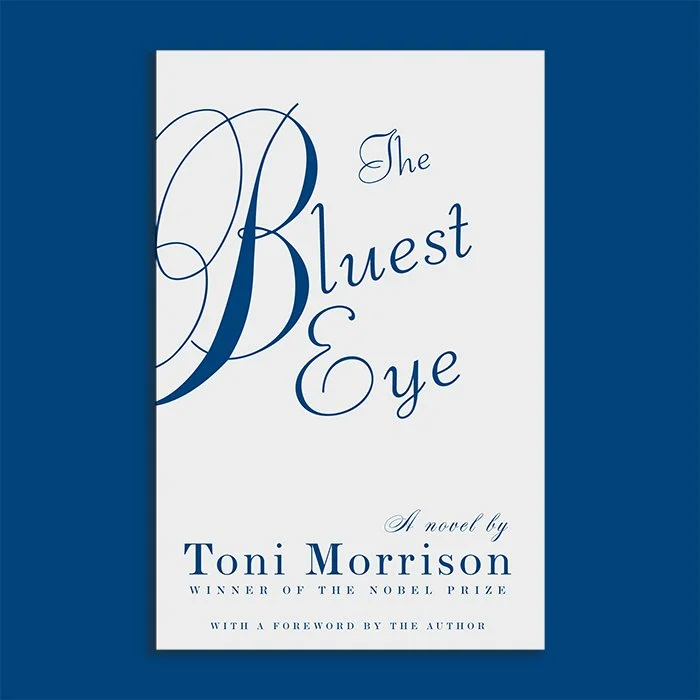
How white supremacist patriarchy interprets and values the bodies of Black women is one of the key points of Toni Morrison’s The Bluest Eye. The Black body’s value, as suggested by the text, is determined primarily through physical beauty according to a white aesthetic. In the novel, beauty standards for women have explicit ties to race
Read More
"The Maiden Who Seeks Her Brothers”: From Basile to the Brothers Grimm
The European fairy tale tradition began with oral folktales from different regions throughout the continent. Writers like Giambattista Basile (1566 – 1632) of Naples and the German brothers Jacob (1785 – 1863) and Wilhelm (1786 – 1859) Grimm were some of the first to compile stories from Western Europe into anthologies, spreading these folk and fairy tales to a wider audience and bolstering widespread interest in them over the next several centuries.
Read More
Dirck Jacobsz's Artistic Family Lineage and Identity In "Jacob Cornelisz Painting His Wife Anna"
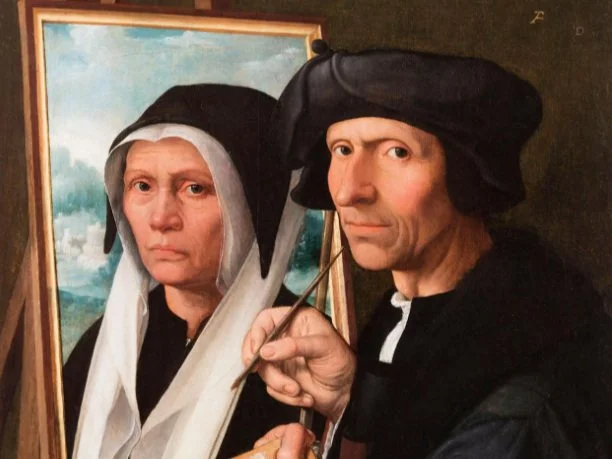
The Rijksmuseum identifies Dirck’s Jacob Cornelisz Painting his Wife Anna as a commemorative family portrait, which has been the most common interpretation of Dirck’s painting in recent scholarships of the past two decades. In fact, the Renaissance experienced increasing social and cultural practices to commemorate family identity and lineage through various means, including the commemoration of the dead through art production such as portraiture and bust sculpture.
Read More
Examining Mother Willie Mae Ford Smith as a Case Study: Notes of Religious and Mystical Experience
While the philosophy of religion project requires an outsider perspective, the African American student—as a cultural insider whose religious background lies in the Black Church—examining gospel music cannot always separate personal memories and experiences from their inclination to interpret Mother Ford’s experience as religious or mystical. Having witnessed the frenzied behaviors of individuals singing gospel makes an outsider perspective difficult to attain for those individuals. In this article, I blur the lines of the Durkheimian perspective on the sacred/profane dichotomy to underscore the nuances of reading gospel as religious material.
Read More
Void and Construction: The Historicization of Anti-Utopian and Dystopian Social Criticism in Early Soviet Literature
Evgeny Zamyatin’s We (1920–1921) was the first work banned by the Soviet censorship board, Andrei Platonov’s The Foundation Pit (1929–1930) met a similar fate just nine years later, and both writers suffered extreme marginalization afterward. Given this, one wonders why and how they and so many other authors of the period criticized the regime indirectly at all.
Read More
Seventeenth-Century Dutch Animal Imagery Challenging Anthropocentrism: Paulus Potter’s Punishment of a Hunter
In the painting Punishment of a Hunter, the Dutch seventeenth-century artist Paulus Potter depicted animals putting a hunter on trial and enacting a death sentence. In this artwork, the animal court and hunter’s execution by burning appear in two central scenes, surrounded by smaller allegorical and hunting vignettes that show animals and humans. Compared to other works of seventeenth-century Dutch art, the content and format of this painting stand out as being rather peculiar.
Read More
The Taboos of Family Romances: In Search of the Distorted Feminine Image
The feminine image is a broad conceptualization of feminine identity and behavior and is thus based in archetypical femininity. Archetypical femininity includes the nurturing quality associated with maternity, the chaotic element of nature and transformation, and the display of physical beauty and sexual appeal. Archetypal femininity, though expansive and necessary to the substance of life, becomes an oppressive tool when rigid expectations for gendered behavior arise from it.
Read More
Emerald Atlantic: Motivations in Irish-American Diasporic Violence
Civil wars and emigration are closely related concepts; wars force relocation, while refugee populations beyond a state’s borders can influence a conflict within its original borders. As Idean Salehyan writes in his “Rebels without Borders: State Boundaries, Transnational Opposition, and Civil Conflict,” from Sikhs in Pakistan to Contras in Costa Rica, “modern insurgencies are not limited to the geographic area of the state.”
Read More
The Martial and Marital Entwined: Femininity and the Military World in Shakespeare’s Othello
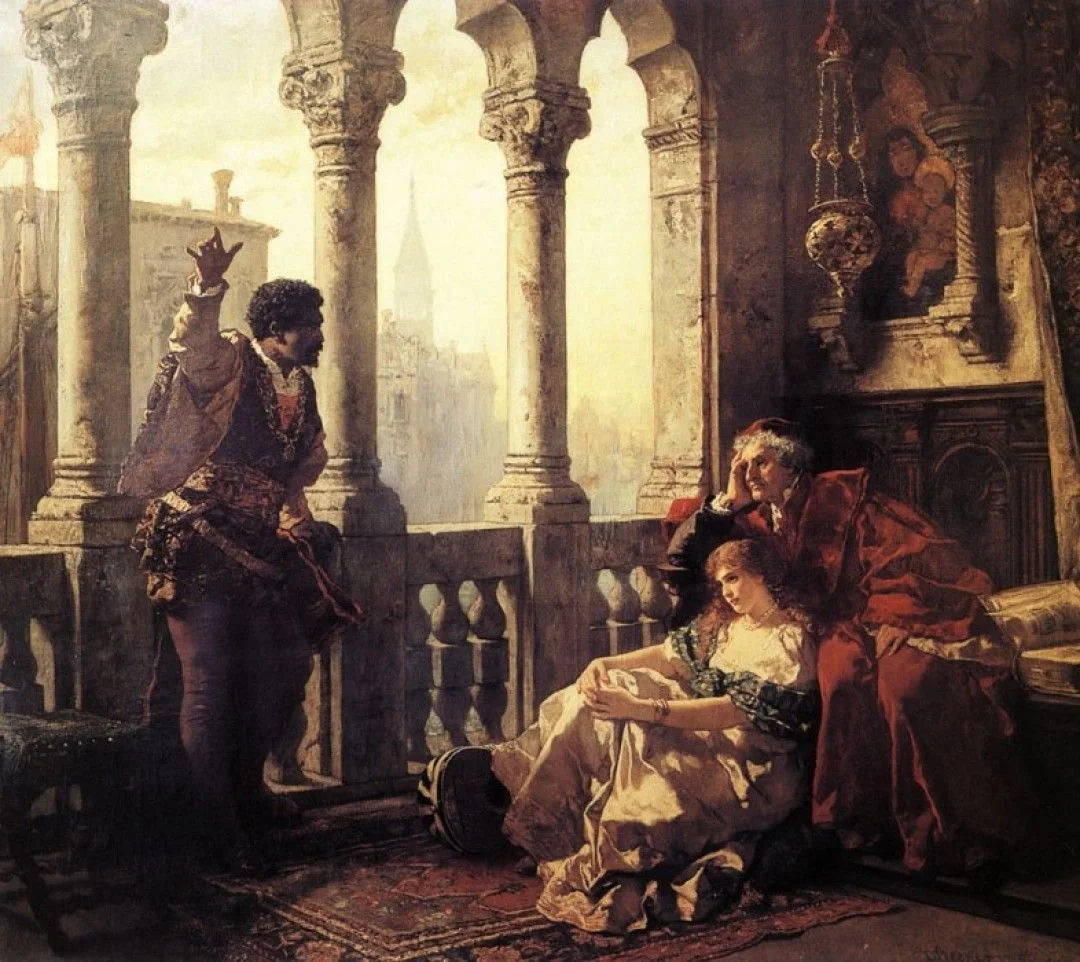
Shakespeare’s Othello is familiar to literary scholars and high school students alike: the eponymous Venetian general, falsely led to believe his wife is an adulteress, kills her and, upon realizing his error, himself. Some scholars analyze Othello’s fall by adopting a military lens.
Read More
The Power We Speak: Language, Anti-Black Racism & Black Resistance
Whatever the modality, whether verbal, written, body-language, or even the release of various chemicals and pheromones, communication is universal between all living things. Humans naturally congregate and gravitate towards one another for more than just survival, rather for companionship and celebration, primarily through language. It is from these congregations, each with their distinct methods of communication, language, that cultures are born.
Read More
Stones that Speak
Made in the 18th century, Water Dropper: Poet Li Bai Sleeping Near Pine, Plum and Bamboo is a small fluorite sculpture with a cavity and opening so it could be used as a water dropper in ink making. The piece reinforces the well-known fact that calligraphy and ink were vital to Chinese culture and were considered one of the highest forms of art. This piece shows a sensitivity to material and color that is indicative of a culture deeply in tune with the natural world, Daoist principles, and its ancient past.
Read More
Simone de Beauvoir and the Other Woman
Simone de Beauvoir in The Second Sex asks: “What is a woman?” Equally, however, the question might be: Who is de Beauvoir’s “woman”? For de Beauvoir, woman, the titular “second sex,” is “second” to man insofar as she is understood in relation to man, is dependent on man, and serves man.
Read More
Smoke and Mirrors: Reading the Rhetoric of Ted Cruz
It is well-known that on January 6, 2021, while the electoral votes were being certified, an insurrection was unfolding at the U.S. Capitol. The event was born of a concerted effort to overturn the results of the presidential election. Probably the most important aspect of this event was the barrage of misinformation doubting the security and results of the election. So, to understand this piece of history that is still unfolding, it is important to understand the rhetoric, or the verbal tactics, attached to it. In other words, how can a lie about election fraud be crafted so effectively?
Read More
Bread, Banquets, and Capons: The Cosmopolitan Culinary Condition of Rome
At its peak, Rome was an urban city very much like cosmopolitan cities of today, featuring a rich intermingling of various cultures and religions that thrived on economic strength and growth. Scholars agree that the city contained approximately a million urban residents, with the city having an estimated consumption of more than 150,000 tons of grain per annum. This, however, begs a following question. What was the quality of food for everyday Romans actually like?
Read More
Call of the Distant Mountains
In 1279, the last lingering hope of Southern Song was annihilated as the Mongolian warmongers triumphed in the naval battle of Yamen. Kublai Khan declared the establishment of the Yuan Dynasty, and China, for the first time, fell to foreign rulership. It is a subject that still puzzles the scholars today as to how one of the most epochal periods of Chinese culture prospered under the reign of “barbarous” alien nomads. The artistic creativity of the Yuan scholar-artists was not strictly circumscribed by the already well-established pictorial conventions.
Read More
Rooms of Their Own: The Spatialized Consciousness of Clarissa and Septimus in Mrs Dalloway
The feminist critique on the politics of space was central to Virginia Woolf’s conception of the private space in many of her works. Scholars have discussed at length Woolf’s interrogation of the private space as “the site of middle-class female domestic confinement” and its duality as “the site of dynamic female potential” in A Room of One’s Own (1929) and her later works The Years (1937) and Three Guineas (1938). Beyond Woolf’s preoccupation with gendered spaces, what is perhaps less widely addressed is her portrayal of “the imbrication of space and individual consciousness” and the complex relationship between physical space and the identity one manifests within it.
Read More
The Black Janus
I am a man of two faces. A question that we as humans all ask ourselves throughout the course of our lives is “Who am I?” The answer to that query is never concrete, but rather dynamic as it is always developing and changing as we navigate our way through the tempestuous hurricane that is life. For each person the answer will have its metaphysical variations based on the many intricate components that (make up who they are) or delineate their being. As I’ve journeyed through my four-year liberal arts education here at a predominantly white University, very sparingly I have been presented with the academic tools to introspectively examine myself within the framework of that question.
Read More
The Forbidden Existence: Anti-Homeless Architecture and the Regulation of Public Spaces
It is estimated that there are at least 235,000 homeless Canadians every year. Despite these large numbers, anti-homeless architecture is widespread across Canadian cities. For instance, the #DefensiveTO project has collected and mapped over 120 anti-homeless architectural structures in downtown Toronto alone.
Read More
The Case for Soviet Prison Tattoos as Art
The fields of anthropology and art history have long been intertwined. Symbols are at the core of human communication and in order to decode a set of esoteric images, overlapping practices within the fields of anthropology and art history can be employed. The discovery of the remote practice of human bodily inscription by non-European people ignited a desire to uncover and understand the nature of the inscribed symbols.
Read More
The Philosophy of Pragmatism in the Politics of Democracy: A Method of Overcoming Dualism?
In his seminal lecture, "The Present Dilemma in Philosophy," William James described the history of philosophy as that of a clash of certain human temperaments. This clash is also reflected in the history of the philosophy of democracy. Attempts at outlining the form of democracy have most prominently taken either of the two definitions: procedural or substantive, minimal or maximal, thin or thick.
Read More