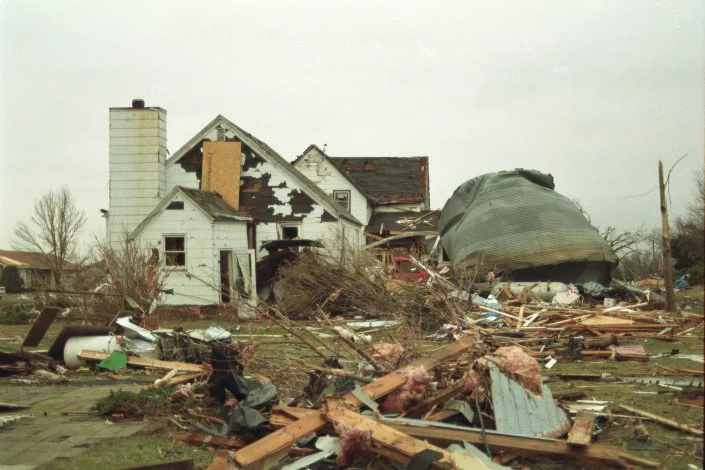
As climate change intensifies, natural disasters pose growing threats to the preservation of art and history for museums and cultural institutions. This article explores disaster response, museum preparedness, and equity in determining what cultural heritage is protected and what may be lost.
Read MoreBy Maggie Lu, University of British Columbia
As one of the most preeminent composers of the early eighteenth-century, Johann Sebastian Bach is associated most strongly with the height of the Baroque Era. Intricate polyphony and harmonic complexity remained defining characteristics of his style even toward the end of his life – features that were at times the subject of criticism from his own contemporaries. However, despite the view that Bach remained committed to the musical styles of the past during the emergence of the style galant, opuses from the composer’s mid-to-late career suggest that he was both capable and willing to adopt elements of the new fashion into select compositions.
Read MoreArt museums in the United States are not exempt from the current social and political divisiveness of our times. Recent events within the art world have revealed a call to action for museums to no longer be neutral institutions, but instead take a more active role in promoting social justice narratives, being the redistribution of power, influence, and value,[1]in order to maintain relevance within society and resolve a historic lack of diversity.
Read MoreGrant K. Schatzman
The metaphor of living artwork is interestingly appropriate to the history of Ovid’s Metamorphoses. The explosion of translation in the Renaissance turned the dusty tomes of Greece and Rome face up once more, but it is for very good reason that the movement is called a “rebirth” rather than a “rediscovery.” It is no surprise that Renaissance writers “rebirthed” Pygmalion with a new interpretation for every cultural criticism and moralization.
Read MoreBy Quinn Gilman-Forlini
The Book of Repulsive Women is a collection of eight poems and five drawings by Djuna Barnes first published in 1915. Despite the fact that this was Barnes’ first publication of what she considered to be her “serious” work, she later hated the book and wished to repress the fact that she had written it at all.
Read MoreBy Helena Gandra
The difference between art and non-art is merely one of perception and we can control how we organize our perceptions- Kyle Gann in “No Such Thing as Silence”
The 21st century is an era characterised by diversity. By looking at the 19th and 20thcenturies, one can better understand the music of their own time. The Present is shaped by both a past and a future. Wagner (1813-1883) and John Cage (1912-1992) are key figures in music history and have had a fundamental impact on the music of today.
Read MoreBy Nicole Corrigan
In the 1960s, the second wave of feminism came crashing over America and led to the criticism of many cultural institutions that had long been bastions of sexism.
Read MoreBy Joseph Witkin
Paul Valéry’s “Philosophy of the Dance” may have ekphrastic potential, but before suggesting that the author’s words give voice to the dance, a strong association between word and the dancer’s image must be formed.
Read MoreBy Victoria Winfree
For the duration of Randolph College’s fall 2009 semester, visitors to the Maier Museum of Art are treated to a special exhibition, titled “Teaching Begins Here: Recent Works by Randolph College Art Faculty”
Read More