
Disaster Response: Preserving Art and History in the Face of Climate Change
Since humans first made art, there has been a need to preserve it. Those efforts grow even more important as each passing year brings both new technologies for preservation and new dangers to preserve against. In the United States, it wasn’t until the start of World War II that groups of librarians, art historians, and other concerned parties came together to argue for the protection of cultural heritage in the face of the mass bombings and intentional destruction of books and artwork. Through this effort, many important pieces of culture and history were saved from destruction. Following the war, the conservation field grew, and since at least World War II, conservation has been tied to disaster response. Although global efforts continue to work to protect museums and libraries in the face of war, disaster response in the United States mostly pertains to natural disasters. Many museums are underprepared for natural disasters, leaving their collections especially vulnerable as climate change continues to produce more extreme weather events. In particular, academic museums in the Midwest are at risk, as seen at Gustavus Adolphus College in 1998 following a devastating tornado.[1] Beyond that, it’s important to question what art and which artists are even being accepted into and preserved in museums in the first place. Currently, very few of our cultural artifacts are safe from the dangers presented by climate change.
Collections of art and literature have often been destroyed during times of conflict, deliberately and accidentally. During World War II, the German army burned and stole a massive number of books and art across various European countries. Jewish literature specifically was destroyed or distributed to German institutions as a form of ethnic cleansing. One target was the Yiddish Scientific Institute (YIVO) Library, which housed an extensive collection of materials on Jewish culture, gathered from hundreds of synagogues and private collections across Eastern Europe. Jewish scholars were arrested and forced to sort and ship materials seized from the YIVO Library and other collections, either to Frankfurt, or the local paper mill to be destroyed. These scholars, however, were able to save thousands of books and documents by smuggling them out of Nazi hands and into the Jewish ghetto.[2] These civilians became known as the Paper Brigade, and they represent the power of the public to protect cultural heritage in the face of death and disaster.
Following early efforts to protect cultural heritage, a 1940 collective of American artists, librarians, and scholars known as the American Defense Harvard Group grew concerned about the loss of cultural heritage during the war. They successfully influenced the United States government through political connections and written statements, arguing that protecting European culture would “show respect for the beliefs and customs of all men and will bear witness that these things belong not only to a particular people but also to the heritage of mankind”.[3] By 1943, President Roosevelt created the Roberts Commission, which led to the creation of the Monuments, Fine Arts, and Archives (MFAA) group. “They were art historians, architects, artists, archaeologists and archivists: a straight civilian lot who had no business, in the eyes of many soldiers, moving around a theater of war telling colonels and generals what not to bomb”.[4] They became known as the “Monuments Men” and were in charge of locating, protecting, and repatriating the looted art. Often, they helped create bombing plans that avoided places of cultural importance, although this was complicated in countries like Italy, where masterpieces were stored in nearly every city. One of their largest discoveries came in 1945, in a salt mine in the Austrian Alps. The mine revealed a treasure trove of art and artifacts looted by the Nazis on behalf of Hitler. Notably, the 15th-century masterpiece, The Adoration of the Mystic Lamb, by Jan van Eyck, was recovered, found resting on empty cardboard boxes.[5] MFAA staff also organized soldiers to protect found works from destruction and vandalism, while also administering emergency conservation efforts. After the fighting was over, they worked with locals to repair damaged art and architecture. Many of the Monuments Men assisted with the repatriation of looted goods and returned to successful careers in art and culture– all but two, who were killed in action.[6]
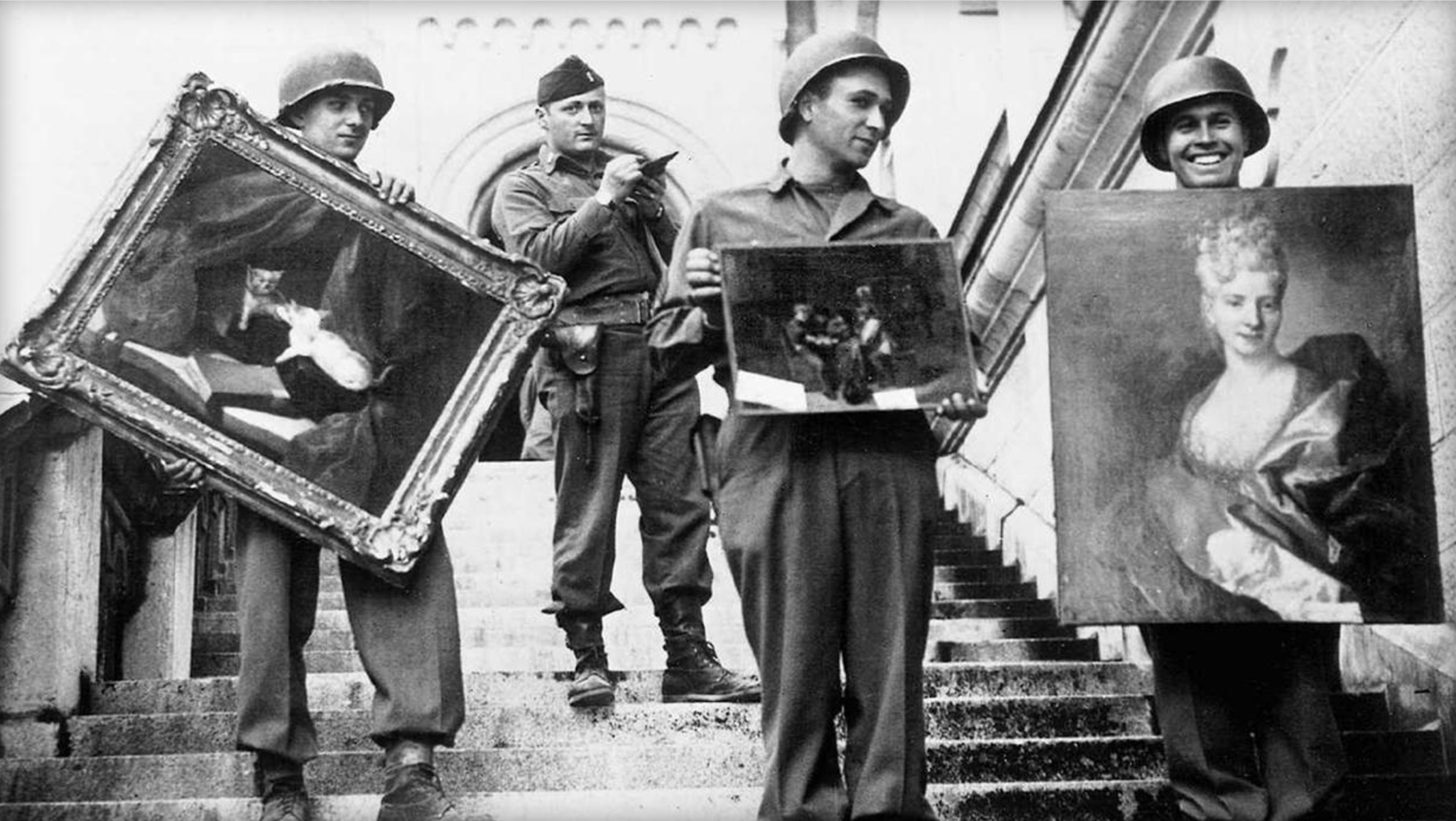
Monuments men rescue paintings from Neuschwanstein Castle. https://www.flickr.com/photos/147316538@N02/35465351256/
Decades later, conservationists struggle against a different kind of disaster: climate change. Most museum collections contain a variety of materials: paper, canvas, fabric, and wood, to name a few. Although they are typically considered safe within museum walls, museums are susceptible to natural disasters such as fire, flooding, earthquakes, and tornadoes. Due to climate change, all of these natural events are becoming more drastic: “Climate change is increasing the frequency and strength of severe thunderstorms, which in turn produces atmospheric conditions that can develop even more intense tornadoes”.[7] Similarly, rising temperatures cause longer dry seasons, earlier snowmelt, and worse wildfires because plants are less fire-resistant. On the other hand, the increased snowmelt causes major flooding, which can be equally dangerous to people, animals, and land. Already, natural disasters are known for the havoc they wreak across communities; yet we remain underprepared to protect ourselves, our belongings, and our cultural heritage against them.
In 2008, some of these disaster-related concerns were addressed during a Climate Change and Museum Collections round-table discussion. This meeting brought something troubling to light: most conservation and museum staff, as well as funders, were unaware of the growing threat to their collections. Most of the focus for protecting art from the elements was focused on outdoor installations, such as sculptures and buildings. However, many of the panelists discussed the dangers of fluctuating temperatures, precipitation pH, concentration of pollutant gases, and relative humidity to objects inside museums.[8] They cautioned fellow museum staff that these changes put collections at risk for more rapid deterioration, putting a strain on conservators in particular. A summary of the meeting stated: “The efforts needed over the coming decades to address the emerging challenges for the conservation profession… will require funding bodies to show greater creativity and a willingness to take some risks”.[9] While this conference brought much-needed attention to the issue of conservation in the face of climate change, many institutions remain underprepared to address it.
Part of the problem is that many cultural heritage institutions lack the direction to prepare for extreme weather events, even if they wish to. Museum conservators and other staff face the challenge of responding to climate change: according to a recent report, many museums are already dealing with adverse effects to their collections.[10] Meanwhile, many museum directors report not knowing where to start or how to carry out action plans to prevent their collections from being destroyed by the extreme weather. In particular, academic museums located in the Midwest are unprepared to deal with some of the potential dangers. Due to typically experiencing fewer natural disasters, these institutions lack comprehensive action plans to protect their collections. However, museums around the country are becoming more aware of their vulnerabilities to climate change and the resulting disasters, and those that can afford to are in the process of creating or revising disaster plans. Most museums are unwilling to risk or lose any part of their collection, but their levels of preparedness are nowhere near matching that level of safety.
Often, institutions simply choose to believe their collections are safe without taking meaningful steps to ensure that. This belief is exacerbated by a lack of funding, which limits museum staff in their ability to properly protect their collections, leaving them susceptible to disaster. While large institutions like the Whitney Museum of American Art can afford 15,500-pound flood doors, or the Getty Center can fund a “million-gallon water tank and an air filtration system that forces air (and smoke) out of the galleries while maintaining the temperature and humidity levels necessary to protect the artwork”,[11] these are not feasible measures for most institutions. This disparity raises the question: what works will be preserved as we slip further into climate crisis? Whose art is protected in the face of disaster? The art world has long been dominated by white, Anglo-European men. For example, when oil tycoon and art collector J. Paul Getty founded the Getty Museum, which became the best-endowed museum in the world following his death, his interest in Greek and Roman art dictated the pieces in the collection.[12] Many Western art institutions focus on American and European art. A 2019 study analyzed “more than 40,000 works of art detailed in 18 major U.S. museums’ online catalogues [and] found that 85 percent of artists featured are white, and 87 percent are men”.[13] Not only are all other groups underrepresented within major art collections, leaving them in local and more vulnerable collections, but many are also not preserved in museums at all. Currently, the United States stands to lose the art of many marginalized artists from the historical narrative, as local art is endangered by climate change.
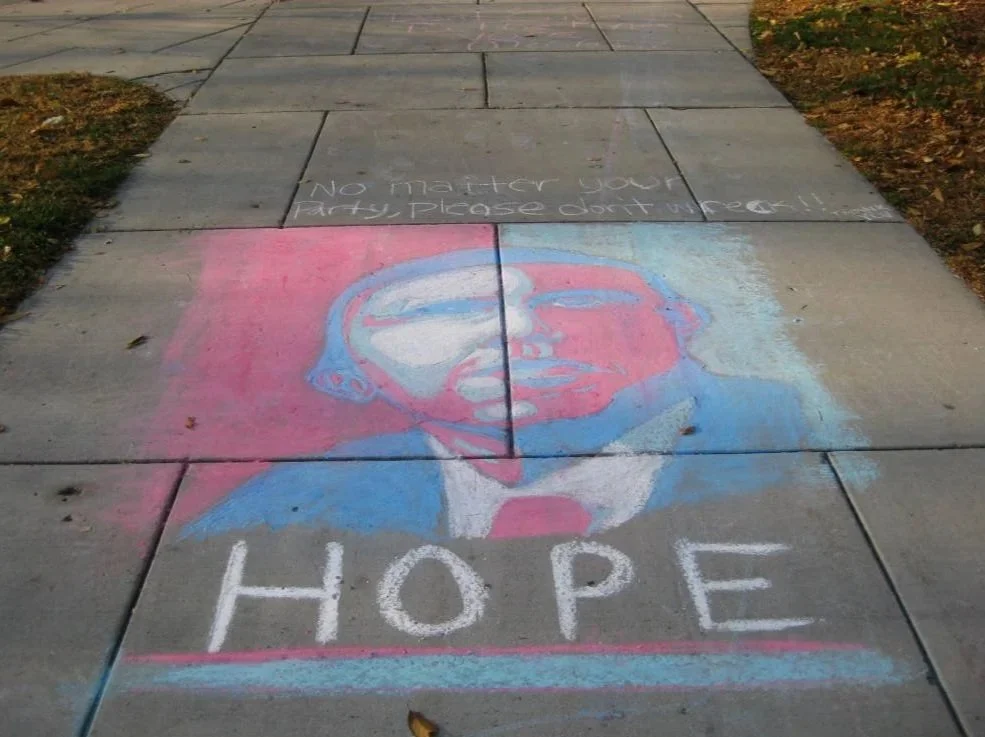
Figure 1. Barack Obama Chalk Drawing GACA Collection 0162. Gustavus Adolphus College Photograph Collection, 1855-Ongoing. https://archives.gac.edu/digital/collection/p15292coll2/id/1317/rec/10
At a local level, many people are interested in preserving art, cultural artifacts, and historical events that have impacted their communities. These efforts are key to preserving the works that may fall beyond what the art world deems valuable. College librarians who take pictures of student-drawn chalk art to add to their archives, are composing a thorough narrative of life on campus for future students to appreciate and reflect on. That art deserves to be preserved and protected like anything else. While some art is significant on a national or global scale, it may still go unrecognized for its historical worth by large art institutions. One group working to create a “living archive” is Memorialize the Movement, a collective based in Minneapolis, “dedicated to collecting, preserving, and activating the plywood protest murals that were created during the Minneapolis Uprising of 2020 and beyond”.[14] Their efforts go towards promoting marginalized voices, especially those of BIPOC artists, historians, and conservators. The pieces they make and preserve are part of the broader conversations about race and police brutality in the U.S. Meanwhile, they address the lack of representation and barriers to access within the art world.
Artists often use their work to make a political statement, daring to ask bold questions and shedding light on current events. In terms of climate change, the task of explaining the danger our planet is in often falls to scientists. However, as Lesley Duxbury writes, “Art, as mediator, may provide ways of addressing mutability and change at both global and local levels in ways that science may not. It can transcend language barriers through nonverbal communication and unite cultures through focusing on how we sense and perceive the changing world around us”.[15] Climate change is often a controversial subject, and information is often more readily accepted by the public when visual aids are used to start the conversation. Part of the problem is that climate change is happening at an almost incomprehensible scale, making it difficult for scientists to translate the severity of the problem from global to local. One study on the use of icons to engage the public in the concerns of climate change found that “local icons were more meaningful than global ones, especially if the participants in the study had an emotional connection to them”.[16] These findings show the artists have the power to engage communities with the problems that already do or will eventually impact them directly. Climate change is no exception.
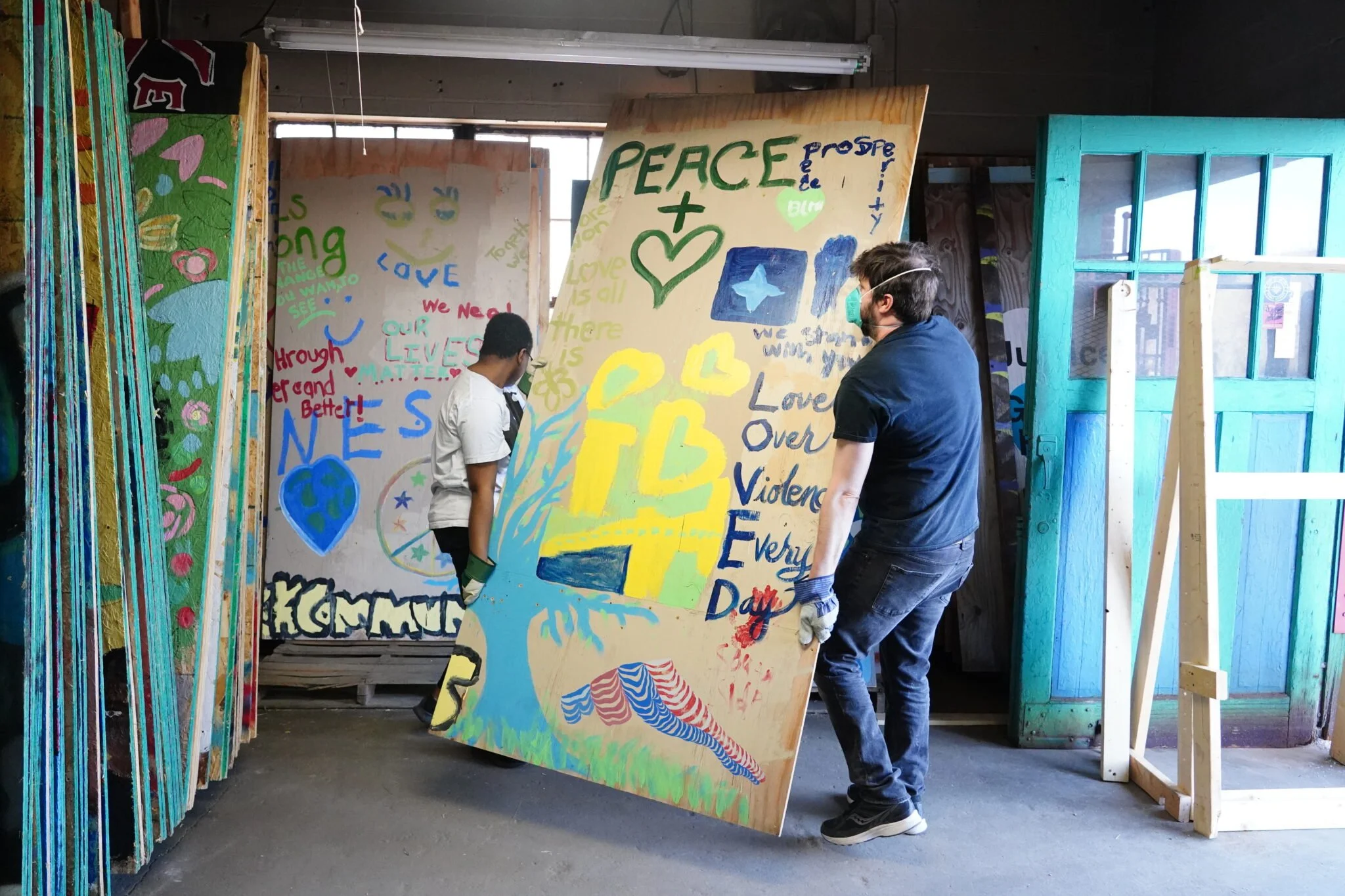
Figure 2. Amira McLendon, the exhibition’s co-curator, and another volunteer move around the plywood piece in their storage unit. Minnesota Reformer photo, https://wisconsinexaminer.com/2022/05/30/minneapolis-story-memorialize-the-movement/
In 1998, Gustavus Adolphus College in St. Peter, Minnesota, experienced loss from a natural disaster to local collections. A tornado tore through campus and the surrounding city, destroying historical buildings and homes, uprooting statues, and carrying away an artwork that had not yet joined a formal collection. This work was an Ansel Adams print titled Madrone Bark, a photo of abstract tree bark taken in 1932. The work was later repurposed as part of the Presidential Portfolio, a series of six prints by artists Ansel Adams, Audrey Flack, Sam Francis, Robert Indiana, and Wayne Thiebaud. These prints were created to raise funds for Jimmy Carter’s re-election campaign in 1980. Carter, who failed to win reelection, was known for his deep enthusiasm for environmental policy. He demonstrated a strong interest in protecting U.S. land and water against potentially harmful plans, notably using the 1906 Antiquities Act to designate 56 million acres of Alaskan wilderness as a national monument.[17] It’s no surprise that his reelection campaign involved artist Ansel Adams, who was known for his environmentalism and landscape photography, advocating the preservation of national parks and other wilderness in the U.S. through speeches, letters, and his own photographs.[18] Madrone Bark was never recovered after the tornado, one of many pieces of cultural heritage lost to disaster.
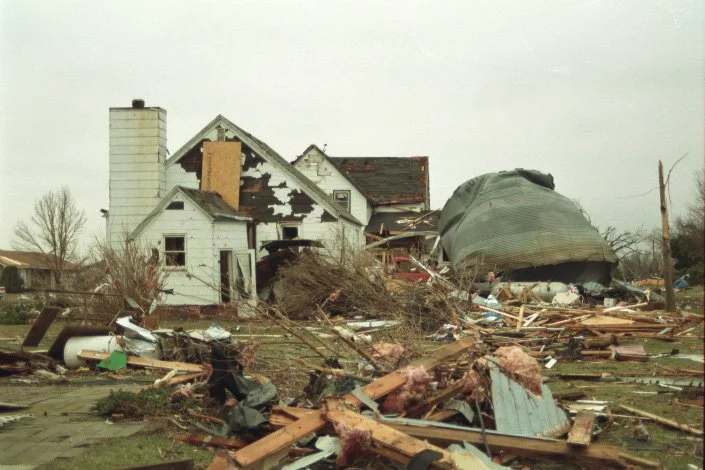
Figure 3. Tornado damage near Comfrey, Minnesotahttps. //web.archive.org/web/20110524041916/http://www.crh.noaa.gov/mpx/?n=1998mar29photographs
St. Peter suffered many losses beyond Madrone Bark: many buildings were destroyed, including several historical establishments. Trees were uprooted across the area. The chapel spire snapped off. One young boy was killed. This is the reality of natural disaster: it takes an enormous emotional, physical, and financial toll on the affected community. Although the Gustavus campus was mostly devoid of students, who had left for spring break, those still on campus had to deal with their world being turned upside down in a matter of minutes. One student, Glenn Kranking, emerged from the basement of the on-campus housing he had lived in for the past three years to see that the roof was torn off. While surveying the damage around campus, he encountered Dr. Axel Steuer, the President of Gustavus, who suggested he document the damage. Kranking, editor of both the campus newspaper and the yearbook, became an unofficial documentarian with his stock of film rolls. The photos he took that day are some of the only ones taken during the immediate aftermath of the tornado. They capture a surreal reality: trees downed, buildings crumbling, windows blown in, and roofs on the ground.
These pictures are incredibly moving and humbling, they’re a reminder of the immense power that the climate has over our lives, and what we stand to lose in the face of natural disaster. In terms of local images having a stronger impact on the community, these photos resonate more deeply than casual references to the destruction ever could. They now reside in the Gustavus Adolphus College Archives on the third floor of the library, along with a collection of other photos and written responses to the 1998 tornado. If another tornado were to strike, they too would be at risk of disappearing like Madrone Bark. This is just one example of natural disasters punching holes in our cultural heritage and object-based history; a number of museums and private collections have dealt with similar problems. That number will only rise as the frequency of natural disasters does. Like the Monuments Men during World War II, or Memorialize the Movement now, modern conservationists must act quickly to preserve the art and history we value so highly and the art we undervalue, too. Vulnerabilities must be strengthened, and plans must be made to prevent the loss of our collective past, present, and future. Luckily, the desire to protect collections is as strong as ever, as new generations are inspired to take up the cause.
Endnotes
[1] Dressel, Joanna, and Liam Sweeney. “How Have Art Museums Been Impacted by Climate Change?” ITHAKA S+R, 2023. http://www.jstor.org/stable/resrep49596.
[2] Laila Hussein Moustafa, “Cultural Heritage and Preservation: Lessons from World War II and the Contemporary Conflict in the Middle East.” The American Archivist 79, no. 2 (2016): 320–38. http://www.jstor.org/stable/26356664.
[3] Laila Hussein Moustafa, “Cultural Heritage and Preservation: Lessons from World War II and the Contemporary Conflict in the Middle East.”
[4] Ilaria D. Brey, “How the Monuments Men Saved Italy’s Treasures,” Smithsonian Magazine, 2014, https://www.smithsonianmag.com/history/how-monuments-men-saved-italys-treasures-180948005/.
[5] Jim Morrison, “The True Story of the Monuments Men,” Smithsonian Magazine, 2014,https://www.smithsonianmag.com/history/true-story-monuments-men-180949569/
[6] Nancy H. Yeide and Patricia A. Teter-Schneider, “S. Lane Faison, Jr. and ‘Art under the Shadow of the Swastika,’” Archives of American Art Journal 47, no. 3/4 (2008): 24–37, http://www.jstor.org/stable/25435157.
[7] Daniel Vernick, “Is Climate Change Making Disasters Worse?” World Wildlife Fund, 2025, https://www.worldwildlife.org/stories/is-climate-change-increasing-the-risk-of-disasters.
[8] David Saunders, “Climate Change and Museum Collections,” Studies in Conservation 53, no. 4 (2008): 287–97, http://www.jstor.org/stable/27867052.
[9] David Saunders, “Climate Change and Museum Collections”.
[10] Joanna Dressel and Liam Sweeney, How Have Art Museums Been Impacted by Climate Change? (ITHAKA S+R, 2023), http://www.jstor.org/stable/resrep49596.
[11] Minneapolis Institute of Art, “Are Museums Safe from Natural Disasters?” 2017, https://new.artsmia.org/stories/are-museums-safe-from-natural-disasters.
[12] Getty Museum, “Our History,” Getty, 2024, https://www.getty.edu/about/history/.
[13] Meilan Solly, “Survey Finds White Men Dominate Collections of Major Art Museums,” Smithsonian Magazine, 2019, https://www.smithsonianmag.com/smart-news/survey-finds-majority-artists-represented-major-museums-are-white-men-180971771/.
[14] Memorialize the Movement, “Who We Are,” 2022, https://www.memorializethemovement.com/about.
[15] Lesley Duxbury, “A Change in the Climate: New Interpretations and Perceptions of Climate Change through Artistic Interventions and Representations,” Weather, Climate, and Society 2, no. 4 (2010): 294–99, http://www.jstor.org/stable/24907363.
[16] Lesley Duxbury, “A Change in the Climate: New Interpretations and Perceptions of Climate Change through Artistic Interventions and Representations,” Weather, Climate, and Society 2, no. 4 (2010): 294–99, http://www.jstor.org/stable/24907363.
[17] Kai Bird, “Unheralded Environmentalist: Jimmy Carter’s Green Legacy,” Yale E360, 2023, https://e360.yale.edu/features/jimmy-carter-environmental-legacy.
[18] C. Z. Heard, “Ansel Adams: Preserving California,” Fine Arts Museums of San Francisco, 2023, https://www.famsf.org/stories/ansel-adams-preserving-california.

Audrey Power Theisen
Audrey Power Theisen is a recent graduate from Gustavus Adolphus College with degrees in English and Art History. She currently works there as the Art Preparator and Exhibitions Manager for the on-campus museum and gallery. In her free time, she enjoys crafting with friends, listening to podcasts, and practicing Brazilian Jiu-Jitsu.