
Challenging the Stereotype of the Witch: Medea in Fifteenth Century Burgundy
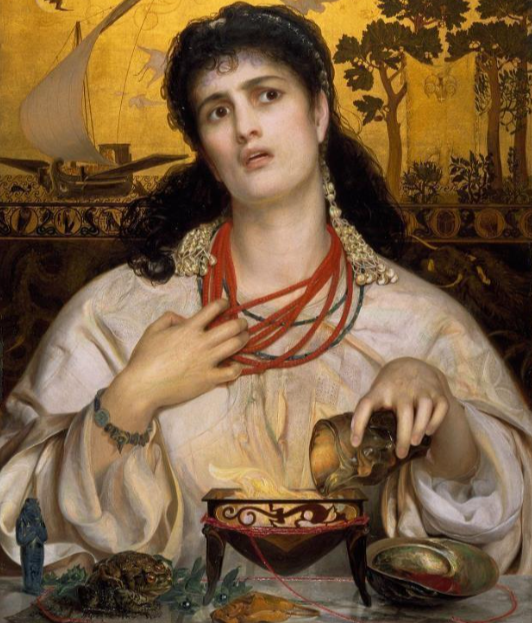
Figure 1. Frederick Sandys (English painter, 1829-1904), Medea, 1868, Oil painting, Birmingham Museum and Art Gallery, Birmingham, England, United Kingdom. https://artuk.org/discover/artworks/medea-34407.
Introduction
Frederick Sandys’ 1868 painting, aptly titled Medea, captures the essence of an anguished woman deeply engrossed in the act of incantation. She is surrounded by a plethora of ingredients and witch’s paraphernalia, alluding to her potent knowledge of magical arts. A tripod stands prominently, with toads and roots near it, with images of strange gods and mystical symbols further enhancing the mystical aura of the scene. As Medea gazes intensely into the scene before her, one is left to ponder the emotions that flicker across her face. Does her expression signify inner turmoil, a profound disturbance within her soul? Is she grappling with grief, mourning a loss or a betrayal that weighs upon her heart? This rendition of the ancient mythological enchantress, Medea, prompts viewers to think about her motives, intentions, and the complexities of her character. Through Sandys’ evocative portrayal, Medea emerges not as a mere enchantress or an evil witch, but as a multifaceted figure capable of great emotion.
This painting was created during the late nineteenth century, but its image of a complex and emotional Medea contains echoes of ancient and medieval authors’ views about this thought- provoking character. Some versions of stories containing Medea have been in existence since the eighth century BCE, and have been adapted by countless authors since then. [1] In particular, medieval authors were able to take this originally ancient Greek myth and experiment with the aspects they emphasized or omitted, in order to convey their own opinions about virtue, politics, femininity, love, passion, and most interestingly: magic. Throughout Medea’s existence as a character, various authors have been inspired by her flexibility and complex legacy, culminating in malleable and sometimes contrasting depictions of her. One prominent example that I will discuss is Raoul Lefèvre’s 1460 adaptation L’Histoire de Jason. This book was written in the court of Burgundy in France at a very fascinating point in the history of magic, where several transformative events such as the Arras witch trials and the development of the diabolical witch stereotype were occurring.
I argue that Medea’s specific portrayal in Lefèvre’s L’Histoire de Jason reflects the attitudes around witchcraft and magic in Burgundy in the late fifteenth century, in that she is a redeemable magic user but harmful magic as a whole is still a problem. She is not inherently malevolent, and embarks on a redemptive journey at the end of the book reminiscent of Saint Mary Magdalene and other Christian penitents. Clerical authorities during this period attempted to convince fifteenth century Burgundians that diabolical witchcraft was real, branding accused practitioners as apostates who had forsaken Christianity and were beyond redemption. This is exemplified by the aforementioned witch trials conducted in Arras between 1459 and 1460, which are considered among the earliest instances of institutionalized witch trials. Medea’s ability to repent demonstrates the reluctance of fifteenth century Burgundians, including Lefèvre, to fully embrace the notion of irredeemable demonic witchcraft, perhaps indicating a lingering adherence to the earlier medieval understanding of magic as a tool capable of both goodness and malevolence.
In regard to the development of the diabolical witch stereotype, there have been numerous scholarly studies about what effects these notions had on medieval perceptions of witchcraft.[2] However, they do not tend to focus on this particular piece of literature, L’Histoire de Jason, as an example of how these ideas were accepted. In this article, I utilize scholarly work from Ruth Morse in a large capacity because she has provided the most comprehensive catalog of portrayals of Medea in ancient and medieval literature, including L’Histoire de Jason. However, she does not offer an in-depth analysis of what these portrayals mean in their historical context. [3] Furthermore, when discussing L’Histoire de Jason, many scholars, including Morse, tend to focus more on Jason’s portrayal rather than Medea. The redeemable Medea in this piece of literature has been underexplored in its historical context, especially because the creation of this book coincided with some of the first institutionalized witch trials in Europe.
In the first section, I demonstrate how Raoul Lefèvre’s L’Histoire de Jason drew from a long literary tradition of a complicated Medea, not limited to the original Greek myth but encompassing various depictions from medieval times. These depictions highlighted different aspects of Medea’s character, including her passionate love for Jason, her intelligence and magical abilities, the evil acts she committed, and how she is a victim of Jason’s treachery.
In the second section, I discuss the text of L’Histoire de Jason and argue that it was crafted as a redemption narrative for not only Jason but for Medea as well. While Lefèvre could have vilified Medea to enhance Jason’s likability, he chose to depict her as emotional and redeemable despite her wicked deeds. Lefèvre also introduced new elements such as a sinister nurse character, a past love interest for Jason named Mirro, and Medea’s contemplative phase in the woods reminiscent of Saint Mary Magdalene, which diverges from other versions of the story. Lefèvre presents her as reminiscent of a Christian penitent, providing her with a villainous arc followed by a period of redemptive isolation before reconciling with Jason. This unique approach emphasizes Medea’s enduring love as a justification for her actions which acts as her redeeming quality that culminates in this eventual reconciliation. In this chapter, I utilize William Caxton’s 1477 Middle English translation, but include the original Middle French during Medea’s reconciliation scene with Jason. Caxton’s translation is quite similar to the original French, with some of his only changes including adding descriptive words or phrases to enhance his readers’ understanding. Most importantly though, Caxton included the same sentiments that Lefèvre wrote in the original French version.
In section three, I analyze the pivotal moment in the history of witch trials known as the Arras incidents. This event reflected the rising fear and belief in witches sabotaging Christian society. The ideas surrounding dangerous witches and apostasy, or when one renounces Christianity, had spread from scholarly circles to the public, influencing social, political, and cultural landscapes. Since Lefèvre composed L’Histoire de Jason in the Burgundian region where these incidents occurred, it is interesting to think about Medea’s unique redemption arc amidst a growing number of witchcraft accusations and trials. While historical scholarship traces the origins of diabolical witchcraft stereotypes to the early fifteenth century, I demonstrate how, as Michael D. Bailey and Andrew C. Gow argue, skepticism towards these ideas persisted until much later.
However, before analyzing the medieval Medea, I will provide an overview of the ancient Greek myth of Jason and the Golden Fleece to familiarize the reader with the prerequisite to L’Histoire de Jason and the other portrayals I discuss. The epic poem Argonautica written by Apollonius of Rhodes in the 3rd century BCE contains perhaps the most comprehensive narrative of this myth. The story begins with a Greek king, Pelias, assigning Jason, his nephew, the daunting task of retrieving the Golden Fleece from Colchis, a kingdom to the east ruled by King Aeëtes. Jason puts together a band of heroes, including Heracles, on the ship Argo and embarks on his journey. Their journey takes them to various lands, including Lemnos, where they encounter a land where the women have massacred all the men. Hypsipyle is introduced as the queen of Lemnos, and romantic encounters occur between her and Jason. She falls in love with Jason and becomes enamored with his pursuance of the Golden Fleece, but he ends up abandoning her to continue his quest. Once they reach Colchis, Medea, daughter of Aeëtes, plays a crucial role by falling in love with Jason and helping him overcome Aeëtes’ impossible tasks. One of the tasks involves yoking a pair of fire-breathing bulls, gifts from the god Hephaestus, and using them to plow a field. Jason succeeds by wearing a magical, fireproof cloak given to him by Medea, which protects him from the bulls’ fiery breath and allows him to complete the task. After other tasks Medea and Jason attempt to escape together but are hindered by pursuing fleets sent by her father. With Medea’s cunning plan to eliminate her brother, the Argonauts manage to evade their pursuers and journey homeward. [4]
After this tale, the famous Greek play, Medea, written by Euripides in 431 BCE continues the rest of Medea and Jason’s storyline. The play is set in Corinth after the events of Jason’s quest, when he and Medea are already married. It begins with Medea’s intense anger towards Jason for planning to marry Glauce, or Creusa, the daughter of King Creon, and therefore abandoning her. Creon, anticipating Medea’s wrath, decides to exile her from Corinth. Medea quickly turns to revenge, and she plots the murders of Glauce and Creon. She sends poisoned gifts, a robe, and a coronet, to Glauce, leading to their painful deaths. Despite her initial hesitation, Medea decides to take her revenge a step further by killing her own children, believing it will hurt Jason the most. When Jason discovers what she has done, Medea appears above the stage in a winged chariot with the bodies of her children, reveling in Jason’s pain and escaping to Athens. [5]
Therefore, Medea in Raoul Lefèvre’s L’Histoire de Jason represents a unique and redemptive portrayal of the infamous character, diverging from traditional depictions of her as a malevolent enchantress. This adaptation, set against the backdrop of the fifteenth century Burgundian court, presents Medea as a repentant figure capable of change despite her past actions. Lefèvre’s choice to humanize Medea and emphasize her passionate love for Jason demonstrates widespread attitudes towards magic during this time. To understand how such a reimagining of Medea emerges, it is necessary to consider the literary and cultural traditions from which Lefèvre was drawing, which we will examine in the following section.
The Medieval Medea
In composing L’Histoire de Jason, Raoul Lefèvre drew upon a complicated and multifaceted tradition of retelling Medea and Jason’s story. He had a rich inheritance of texts at his disposal to inspire him, where some authors chose to highlight or omit several aspects of Medea’s character. These include her powerful passion for Jason, her intelligence and magical prowess, the killing of her children and the betrayal of her homeland, and her victimhood caused by Jason. In L’Histoire de Jason, Lefèvre stitched together a patchwork quilt of Medea that contained elements found in earlier depictions, which produced his unique but familiar Medea.
The trend of reworking or omitting certain aspects of this narrative is most prominent when Medea’s murder of her children, the betrayal of her father, and Jason’s infidelity arise. Those who disapprove of Jason either take the blame off of Medea for these events or do not mention them at all, with several heavily condemning Jason for not living up to the standard of a chivalric hero. Furthermore, as demonstrated by Joel Feimer, when a medieval author approved of courtly love, Medea is generally portrayed in a positive manner, but when they do not she is depicted as overpassionate and lustful. [6]
When discussing the various Medeas of both antiquity and the medieval period, Ruth Morse tends to focus on the sexism held by the authors and analyzes Medea through a gendered lens. She explains how these factors affected the way that Medea was portrayed and concludes that Medea was often depicted as a threat because she is a powerful female character. She also suggests that the political environment of the Middle Ages contributed to how Medea was represented. [7] However, political circumstances are not the only explanations as to why this character has such a complicated tradition of retellings. On the other hand, Siobhán McElduff points out that in two of Ovid’s prominent works, the Metamorphoses and the Heroides, the audience is presented with two quite different Medeas. In the Middle Ages, especially the early Middle Ages, where it was an even more shifting and unstable realm than antiquity, McElduff asserts that Medea represented many different types of anxieties. Some of these include reproductive matters, with her being a mother who murders her children, or even fears about how some men cannot live up to chivalric standards of honor and marriage. [8] However, there needs to be a more in-depth analysis of what specific traits of Medea were so malleable for medieval authors in particular to portray.
Aspects of Medea
There are four prominent characteristics of Medea that many authors chose to treat in their adaptations. These include her intense passion, exemplified by her unwavering love for Jason which often turns into revenge; her exceptional magical prowess and intelligence, which she employs to achieve her goals; the act of filicide, where she murders her own children out of vengeance and despair; and the profound betrayal she experiences at the hands of Jason, who abandons her for another woman. In my opinion, these are the most important features of Medea and Jason’s narrative that are usually touched upon by various authors, and offer insights into the different ways this story has been adapted.
Driven by passionate love, lust, and vengeance
One of the most principal characteristics of Medea that is included in several adaptations is her strong passion for Jason. Depending on how the author viewed Medea and Jason’s relationship, this passion was either interpreted as love or lust. Generally, if the author placed more blame on Medea then her passion would be portrayed as lust, as can be seen in works by Giovanni Boccaccio, but if the author condemned Jason more than it was presented as love, as seen with Benoît de Sainte-Maure.
In the book On Famous Women, written by the Italian writer and poet Giovanni Bocaccio, Medea is directly blamed for her uncontrollable lust for Jason. One of Boccaccio’s strongest criticisms of Medea was that Medea’s lack of control over her lust was the cause of many misfortunes. This 1374 book is a collection of biographies of one hundred and six mythological and historical women ranging from Eve to Queen Giovanna of Naples, and contains extensive moralizing by Boccaccio. [9] One of Boccaccio’s main sources was Ovid’s Heroides, the less sympathetic of Ovid’s two Medeas, and he narrates the life stories of these women while offering his opinion about their characteristics or life events, often condemning them for not being virtuous enough. [10] With Medea, he not only recounts her story with Jason but also adds in critiques about her choices and character, specifically about her uncontrollable sexual passion. Boccaccio states that if Medea “had closed her eyes or turned them elsewhere when she fixed them longingly on Jason, her father’s power would have been preserved longer, as would her brother’s life, and the honor of her virginity would have remained unblemished.” [11] Boccaccio portrayed Medea as a non-virtuous woman with uncontrollable sexual desire, and that if she were virtuous, the horrible events in her life would not have happened.
Learned magic user
Unlike her passion, Medea’s magical tools are not always framed in a negative way with various authors framing them in an advantageous manner. In her book, the Book of the City of Ladies, Christine highlights Medea’s intelligence and magical prowess while omitting any negative aspects of Medea’s character. Medea also appears to be viewed by Christine as an alter-ego, with her great admiration for Medea highlighted in her fierce defense of Medea’s reputation. Written between 1404 and 1405, Christine, an Italian-French poet, wrote the Book of the City of Ladies as a defense for women where three virtues, Reason, Rectitude, and Justice help Christine build a city where women can find refuge. She utilizes stories about both ancient and medieval women, and presents them as wise and virtuous. [12] Christine’s main sources were the Roman de la Rose, which is a notoriously anti-feminine chivalric romance written by Guillaume de Lorris in 1230 and expanded by Jean de Meun in 1275, and Boccaccio’s On Famous Women. [13] Christine reframed these negative examples of women and added in women of her time to demonstrate their contributions to public life. [14]
The reframing tool that Christine employs in this poem directs the audience to focus on Medea’s virtues, such as her knowledge. Medea’s story appears under the section titled “Christine asks Reason if God has ever blessed a woman’s mind with knowledge of the highest branches of learning, and Reason’s reply,” which implies that Medea is one of the women that had been blessed with great knowledge and learning. Christine also states that “I’ll now go on to prove to you that the female sex is just as clever as the male sex, by giving you some examples of women who had fine minds and were extremely erudite.” [15] When specifically describing Medea, Christine frames her as superior “in learning,” even to the point of “surpass[ing] all other women, for she knew the properties of every plant and what spells they could be used for.” There are several other instances where she describes Medea as skilled, such as when Christine mentions that Medea can “perform many marvels,” and completely credits Medea with Jason’s victory of the Golden Fleece, affirming that “it was she whose powers of sorcery helped Jason to win the Fleece.” [16] Christine’s depiction of Medea showcases a deliberate effort to reframe Medea’s narrative by emphasizing her knowledge and talents, presenting her as a skilled individual and not as someone who could be criticized for murdering her children or betraying her homeland.
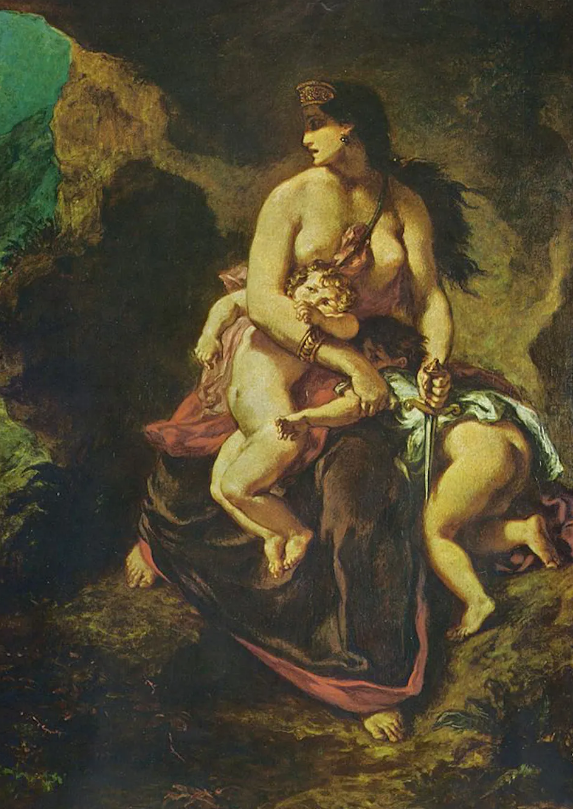
Figure 2. Medea with Child. Painting. Wikimedia Commons. https://commons.wikimedia.org/wiki/File:Medea_withchild.png#file
Child killer and betrayer of her homeland
In contrast to an author like Seneca, who featured this child murder in his tragic play Medea, Benoît de Sainte-Maure in his Roman de Troie chose to not describe this incident in detail and instead frames it as the gods’ revenge on Jason. At the end of the piece, after criticizing Jason for his betrayal of Medea, Benoît states that “all the gods were angry with him and their vengeance on him was terrible. I shall say no more on this matter, nor do I wish to do so.” [17] Benoît interprets Medea’s murders as retribution sent by the gods on Jason. In closing the narrative this way, Benoît removes some of Medea’s guilt and agency by framing it as a function of divine anger. She is no longer a woman seeking private revenge but simply a tool of the gods. [18]
However, Boccaccio in his On Famous Women chose to feature these murders like Seneca did, but placed blame on Medea for becoming bitter towards Jason. He stated that over the course of Medea and Jason’s marriage, Medea “became hateful to Jason, who replaced her with Glauce, the daughter of Creon, the king of Corinth.” In retaliation, Medea became “angry and unable to bear this,” which led her to contrive plots against Jason and kill her sons in front of him. [19] In this situation, Boccaccio clearly blamed Medea for becoming resentful towards Jason, and implied that it was her fault that Jason decided to take another wife. Boccaccio’s Medea is destructive, who kills her children out of her hatred for Jason.
Boccaccio also equates Medea leaving her homeland with her betraying her father, and chose to include a distressing scene of Medea murdering her brother that makes her look like a wicked person. Apparently Medea, not satisfied with leaving her homeland, had her “cruel soul turned to worse.” Thinking that her father would follow her and Jason when they fled, she took her brother and had him “dismembered and scattered the parts of his body…so that her wretched father would linger…thus giving the fugitives more time.” [20] Boccaccio’s description of Medea viciously murdering her brother portrayed Medea as a wicked betrayer to her family instead of a passionate victim. Ultimately, each author’s portrayal of Medea and Jason reflected their own values and beliefs, which becomes especially prevalent in regard to how they view Jason’s betrayal of Medea.
Victim of Jason’s abandonment and treachery
Jason’s betrayal of Medea is one of the most significant pillars of their story, with several authors focusing on it and even relating it to ideas of chivalry and courtly love. It is rare to find a depiction of Medea where she is not abandoned by Jason in some way, but several authors such as Dante Alighieri, Benoît, and John Gower are heavily critical of Jason and highlight how he is not a chivalric hero. Within these circumstances, Jason and Medea’s story is problematic not just because of Medea’s horrible actions, but also because of Jason’s lack of honor and infidelity. Specifically in how he bounces from one woman to the next without regard for their feelings. [21] Chivalry gained popularity in the twelfth century, and can be explained as a refinement of the idea of justice, where heroes are sympathetic for those who are victims of oppression and uphold a strong code of honor. Chivalric men are honest and good citizens, who assist those around them in a gracious manner. [22] This explains why several authors are so critical of Jason, in that they would expect him to live up to the ideals of chivalry and honor by being honest and staying loyal to one woman.
Benoît would have definitely been familiar with the concept of courtly love, and with his Roman de Troie, assisted in pioneering texts written to uphold the values and ideals of chivalry. [23] Benoît states that through Jason’s abandonment of Medea, he “committed a very shameful act. She had saved him from death, so he ought not to have forsaken her after that. He shamefully deceived her, which distresses me because he was false to his word in a disgraceful way.” [24] Benoît’s main criticism of Jason is that he did not keep his promise of love to Medea after all she did for him. Therefore, one way that Benoît characterizes Medea is as a victim of Jason’s non-chivalric ways.
Dante also views Jason as non-chivalrous, because he places Jason in his Eighth Circle of Hell, reserved for the panderers and seducers. In Dante’s Divine Comedy, completed in 1321, he made use of the Bible and various classical sources, such as Virgil’s Aeneid and Ovid’s Metamorphoses, but also read and referenced other ancient authors like Lucan, Boethius, Cicero, Horace, and Statius. [25] This lengthy narrative poem is divided into three parts, Inferno, Purgatorio, and Paradiso, and describes the state of the soul after death and showcases divine justice given out either as punishment or reward through describing Dante’s travels through Hell, Purgatory, and Heaven. [26] Jason appears in the circle titled Malebolge, or “evil pouches” which is then separated into ten separate bolge, which Dante characterizes as particularly wicked. According to Dante, those who commit treachery are especially evil because treachery not only employs deceit but also breaks the natural bond of humanity and also special bonds with people. [27] In this case, Dante condemned Jason because he has broken the special bond of love he promised to both Medea and Hypsipyle.
Even though Dante describes Jason’s betrayal of Hypsipyle in more detail, it is clear that he also denounces what Jason did to Medea as well. When Dante and Virgil, Dante’s guide, pass by Jason, he states that “that is Jason, who by courage and by craft despoiled the Colchians of the ram.” After Jason went to Lemnos, he deceived Hypsiple with “tokens and with fair words” and “left her there pregnant and forlorn.” He then mentions Medea, and says that with Jason in such torment “Medea too is avenged. With him go all who practice such deceit.” [28] In this passage, Dante assumed that the audience will be familiar with the story of Medea and Jason, but that they will be surprised by his emphasis not on Medea, who murdered her children, but on Jason who deceived her. [29]
This immoral behavior is not only condemned by Dante, but also by John Gower, an English poet. In his poem, the Confessio Amantis, or The Lover’s Confession, Jason commits the crimes of avarice and perjury. This poem was completed in 1390, and is divided into a prologue and eight books separated thematically. Gower takes the audience through the seven deadly sins and interprets them in the context of courtly love, and uses Ovid, the writings of St. Augustine, and other medieval writers such as Benoît as sources. [30] Medea and Jason’s story appears in the chapter titled “Avarice,” or greed, and specifically under the section titled “Perjury,” or the violation of an oath. Therefore, Gower also berated Jason for his betrayal of Medea, and characterized Jason as breaking his love oath to Medea.
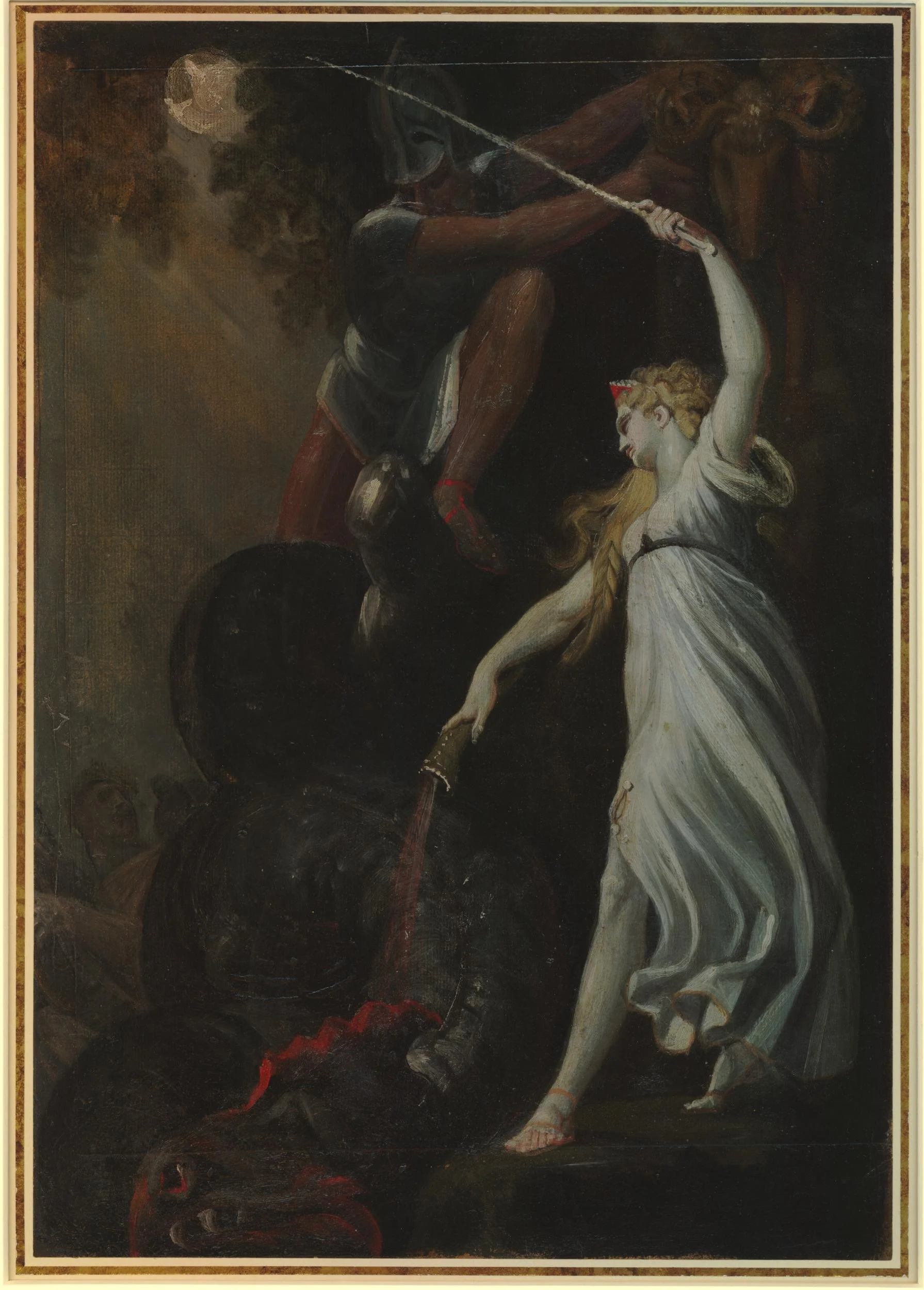
Figure 3. Jason and Medea capturing the Golden Fleece. Wikimedia Commons. https://commons.wikimedia.org/wiki/File:F%C3%BCssli__Jason_and_Medea_capturing_the_Golden_Fleece,_1806.jpg#/media/File:F%C3%BCssli__Jason_and_Medea_capturing_the_Golden_Fleece,_1806.jpg
Medea in Raoul Lefèvre’s L’Histoire de Jason
Perhaps the most surprising aspect that Lefèvre added to Jason and Medea’s story is that he chose to have them reconcile at the end of his book. This might be difficult to accept, given that every depiction described in the previous chapter included them having an intense quarrel that resulted in the murder of their children. However, Lefèvre creatively achieved this by portraying Medea similar to a Christian penitent who also possesses redeeming qualities, such as her undying love for Jason, that do not make her inherently evil. He also added in an evil nurse character and a character named Mirro, who is apparently Jason’s first love. When Lefèvre’s Jason and Medea first meet, Medea is a young lovestruck girl who is called a “noble maid” [31] several times, and at the very end of the book she becomes noble again by promising to not cause any more harm.
This penitent Medea, who seems to imitate the Christian saint Mary Magdalene’s redemption story, could have simply been included to make Jason look better. According to Morse, Medea’s complicated portrayal is used as a tool to make Jason suffer, which makes him a good person rather than a perjurer. Jason loves Medea despite her faults, but ultimately leaves her because she is too evil to be with. [32] However, this rationale is not enough to explain why Lefèvre chose to make Medea and Jason end up together at the end of the story and to make her apologize in such a specific way. McElduff highlights how the inclusion of Mirro acts as an “anti-Medea,” and argues that courtly love is the reason Jason and Medea reconcile while Maria Colombo Timelli also discusses Mirro’s role as a contrast to Medea, and calls attention to how Lefèvre’s Medea is not inherently evil. [33] But, in most of the limited scholarship on this book, Jason is the one that is analyzed. How Lefèvre altered Jason’s characteristics and framed this tale in order to transform Jason into a chivalric hero is the focal point of this scholarship, but what about Medea? Why does she imitate a Christian penitent at the end of the book and does this have anything to do with her magical abilities? At the time of L’Histoire de Jason’s creation, Lefèvre was reading Boccaccio, so the negative way that Boccaccio portrays Medea could have easily influenced him not to include Medea’s storyline reminiscent of Christian penitence. [34] Additionally, Lefèvre could have blamed Medea entirely for Jason’s infidelity, which still could have redeemed Jason by leaving him with no choice but to leave her wickedness. Even though it is impossible to know what exactly Lefèvre’s intentions were, it is plausible to suggest that he may have been influenced to portray this magic user as redeemable by the witch trials happening in the nearby city of Arras. Furthermore, even though he might have seen Medea as a completely separate figure to the “witches” tried in Arras, it is reasonable to believe that Lefèvre might have held an older view of magic where it is a tool that could be used for both good and evil, a “repentable” witchcraft.
Burgundian Context
During the mid-fifteenth century, Burgundy’s political aspirations were at the forefront of the political scene in Continental Europe. During Philippe le Bon’s reign as the Duke of Burgundy, from 1419 until 1467, the region experienced a period of great power, particularly in contrast to the weakened state of the French monarchy at the time. The French King in the early fifteenth-century, Charles VI, was considered “mad,” which allowed for stories to be spread that his madness came about through sorcery practiced by Duke Louis d’Orléans, who was also the king’s brother. [35] This is the same man who was murdered by the Burgundian Duke Jean sans Peur, Philippe’s father, in 1407, which represents the power struggle occurring in France at this time. [36] This weakened state of the French king led various regions, including Burgundy, to strive for greater autonomy and even independence. Philippe actively promoted Burgundy’s independence by taking strategic steps, such as marrying Isabella of Portugal and establishing the Order of the Golden Fleece in 1430. This chivalric order, drawing on classical tales like Jason and the Golden Fleece, served as a symbol of Burgundy’s strength and sovereignty, sending a clear message to other European dynasties. [37]
Jason played a significant role in Philippe’s vision of Burgundy as an independent state, with him acting as the patron of the Order of the Golden Fleece. His fascination with Jason’s heroic deeds could date back to his childhood, where he was exposed to depictions of Jason’s adventures on his grandfather’s tapestries. Unlike other patrons of chivalric orders, Jason’s antiquity and status as a prince probably resonated deeply with Philippe’s aspirations for Burgundy’s future. Jason’s narrative, particularly his defiance against a weak and corrupt ruler, Pelias, mirrored Burgundy’s own struggle for autonomy and distinction. Additionally, linking Burgundy to Jason and the Argonauts suggests an older foundation for the state and therefore a higher prestige than other chivalric orders, such as those linked to King Arthur in Britain and Charlemagne in the rest of France. [38] Philippe’s court also became a hub of literary activity, where mythological or historical figures like Jason acted as part of his claim to power to outdo his royal rivals.[39] However, due to Jason’s reputation as perjurer, womanizer, and unfaithful husband, his choice as patron invited criticism from other members of the court.
In 1454, during the Vows of the Pheasant, a banquet where “Jason” was brought in front of the attendees, Philippe garnered criticism for the opulent extravagance of the event. Especially because the figure of Jason, a perjurer, was the focal point of this banquet. This extravagant display that invited ridicule instead of admiration caused individuals like Jehan Germain, Philippe’s chancellor, to suggest replacing Jason as patron of the Order with the Biblical Gideon. The character of Gideon was not tainted by accusations of perjury, dishonesty, or perjury, and the fact that he was a Christian character might have also contributed to this suggestion. However, Gideon was not a prince, so the Duke accepted Gideon as a model but still kept Jason as the main patron of his chivalric order. [40]
Due to all of these complicated political factors, it makes sense why Jason is portrayed the way he is in L’Histoire de Jason. Rewriting histories with idealized heroes that upheld the values of medieval society, like chivalry and honor, was a popular way for authors to input their own morals onto popular characters. [41] Portraying Jason as a hero that can do no wrong who has to deal with lovesick women throwing themselves at him, as seen with Medea and Hypsiple, fits this trend entirely. L’Histoire de Jason was undoubtedly a Jason redemption story, designed to change the negative reputation of this character. Lefèvre was most likely influenced to create this book in order to appease Philippe le Bon’s fascination with Jason, in order for Philippe to avoid accusations of misconduct by association. [42] However, there are several fascinating changes that he made to the core story, especially with Medea, which will be expanded on below.
Lefèvre’s Striking Changes
As mentioned above, perhaps the most striking alteration that Lefèvre wrote was Medea’s seemingly Christian penitence storyline, where she reflects on her actions and fate has her and Jason reconcile. As seen from the previous chapter, it is rare to find this reconciliation in adaptations of Jason and Medea’s story. It can first be found in the first-century Roman writer Pompeius Trogus, but Lefèvre mentioned in his preface that he has read Boccaccio’s Genelagie of Goddes.[43]The Middle English translator William Caxton also noted that the only other medieval text in which he could find a similar storyline was in the Genelagie of Goddes.[44] However, this does not explain why Lefèvre decided to include it himself. Therefore, even though Lefèvre is preoccupied with vindicating Jason’s reputation, in which he had to transform Jason into a noble hero worthy of having a chivalric order named after him, in the quintessential words of Timelli, he “seems just as attentive to not burden Medea too much with her faults: her cruelty remains, but always justified by boundless love.”[45] Medea’s powerful love for Jason acts as a justification for her actions and leaves the door open for their reconciliation, while also making Jason look virtuous and allowing Medea to eventually become penitent.
One important inclusion that transforms Jason into this virtuous hero is the inclusion of the character Mirro, Jason’s original betrothed, who acts as a representation of Jason’s loyalty and chivalry. In this storyline, during Jason’s youth and before he sets off on the Argo, he learns of the unjust siege of Oliferne by the Esclavonian army, motivated by the princess, Mirro’s, refusal to marry their king. Disguised as a humble knight, Jason joins the city’s defenders and, through acts of heroism, wins Mirro’s admiration and love. Unlike the arrogant Esclavonian king, Jason embodies humble devotion to her and they fall in love.[46] He even promises to marry her, with Lefèvre stating that Jason “promised to her to do and accomplish truly all that she had desired. That is to wed that he should go into Myrmidone to assemble his friends and allies. And that he should return to Oliferne to marry and wed her in their presence.”[47] Lefèvre highlights Jason’s loyalty and commitment to his first love, Mirro, by promising to fulfill all her desires, including marrying her. Jason is portrayed as a devoted and honorable partner, with him promising to make a marriage official by holding it in front of friends and allies. This dedication to Mirro reflects positively on Jason’s character, painting him as a trustworthy hero that will later help save him from accusations of perjury and infidelity. Unlike the independent and intelligent Medea, Mirro needs to be saved from an offensive suitor. Therefore, Mirro and Jason represent normative gender roles that bolster his reputation.[48]
Once Jason sails into Colchis and is received by Medea’s father, Aeëtes, Medea immediately falls in love with him because of his beauty and heroic personality. However, after overhearing Jason and Mopsius’ conversation where Mirro is mentioned, she is distraught because she wants to be with Jason herself. Lefèvre states that “the noble maid Medea went and laid in her bed full of thoughts and imaginations, that when she would have slept she could not. For as much as so many thoughts and imaginations assailed her…that she turned often in yielding many a sigh.” [49] This quote reflects Lefèvre’s incorporation of themes regarding the pain of love, while humanizing Medea in the process. By describing Medea as a “noble maid,” Lefèvre does not portray her as inherently evil but rather as a lovesick girl consumed by her feelings for Jason. The language used, such as “full of thoughts and imaginations” and “yielding many a sigh,” illustrates Medea’s inner turmoil and distress caused by her love for Jason. The way that Lefèvre framed Medea suggests that her actions, particularly those driven by her love for Jason, stem from a place of genuine emotion rather than inherent malice. Lefèvre showcases his nuanced portrayal of Medea’s character, emphasizing her emotional depth and inner struggles.
This scene is not the only place where Lefèvre could have made Medea inherently evil, and demonstrates that her character is still a redeemable individual even though she performs evil acts later in the story. Medea initially attempts to get Jason to fall in love with her by teaching him how to win the Golden Fleece, exclaiming how happy she would be “to teach and learn him the Industry and administer to him the manner to conquer the noble fleece of gold.” She believes that she possesses the skills to bring his conquest to an end, and that will cause him to take her as his wife because she did “so great a thing as saving his life…he shall come about this enterprise honorably, that for the merit and reward of my beneficence he shall be content and joyous to take me as his wife.” [50] Medea’s initial thoughts and rationalizations about Jason seem to be honorable, with her simply wanting to help him with his quest. She believes that by saving Jason’s life and aiding him in his quest, she would earn his gratitude and affection in a legitimate and honorable manner, rather than resorting to deceit or manipulation. Medea sees her assistance to Jason as a way to win his love rightfully, without considering herself a bad person for ending his love for Mirro, which she is aware of by this point in the story. This scene captures Medea’s strategic thinking and her belief that her actions are justifiable and morally acceptable while also fulfilling her own desires.
Another instance that demonstrates that Medea is not inherently evil is when she is rejected by Jason and begs her nurse to help Jason love her. The inclusion of this magical nurse character allows Lefèvre to secure for Medea the possibility of repentance, because this unnamed nurse plays the leading role in the action.[51] Lefèvre describes this nurse as “an expert in all manners of enchantments and of sorceries,” and when Medea asks for help she replies that Medea “should no more doubt of any thing, for from after the time that Jason be laid and couched in his bed he should never love another woman but her.” [52] By depicting Medea as seeking help from her childhood nurse, Lefèvre portrays her as a lovesick woman seeking solutions to her romantic troubles rather than a malicious character. This portrayal is an attempt by Lefèvre to make Medea look less villainous and to provide justification for her later actions, framing them as a result of her desperate attempts to secure Jason’s love. The addition of this nurse helps shift the blame away from Medea and portrays her as a victim of circumstances. From this scene, not only Jason is not at fault for his infidelity to Mirro, but Medea herself, a victim of painful love, is only indirectly involved. [53] Even though Medea is able to do magic by herself, she chooses not to. Her nurse, because of how distraught Medea is, decides to enchant Jason in this way.
Lefèvre also saves Medea from accusations of being too lustful, by reframing instances where she could have had sexual encounters with Jason. Once Medea’s nurse enchants Jason to fall in love with Medea, they get married in the presence of this nurse and Medea provides Jason with the magical strategies to obtain the fleece. Jason successfully accomplishes this, and he and Medea spend the night together. However, when Jason asks Medea to lie with him, she makes a request that they not lie with each other quite yet. Jason replies “in his courage that she had wisely answered. And that he was content to obey her request.” Lefèvre also highlights “how well Jason lay there till it was day.” [54] Lefèvre presents Jason in a positive light because instead of pressuring Medea, he respects her wishes and acknowledges her wisdom in making such a decision. However, interestingly Lefèvre also portrays Medea as an honorable woman who prioritizes her virtue and honor. Her decision not to immediately lie with Jason reflects her commitment to maintaining her maidenhood and upholding traditional values of virtue. Here, Lefèvre rejected criticisms of Medea as overly lustful. [55] Therefore, at this point in the story Medea is a young woman who is clearly not inherently evil but displays aspects of honor and chastity.
The beginning of Medea’s turn towards wicked tendencies happens when she and Jason escape from Colchis in order to be together, even though they are already technically married. After attempting to ask Medea’s father for permission to be together, which he declines, she and Jason escape on a ship together with Medea’s nurse. She takes her younger brother, Apsyrtus, and “made her mistress cut his throat secretly.” [56] In this scene, Medea is not the one to perform this murder because her nurse is the one who actually does this action. Her redeeming quality is that it is the nurse who kills and tears the body to pieces, with Medea feeling horrible about it. [57] Directly after this the nurse and Medea magically force the Argo to sail past Lemnos, where the queen Hypsiple resides. Earlier in the story, Jason promised to return to her, but since Medea and the nurse use magic to prevent the ship from stopping, Hypsiple commits suicide.
Lefèvre described Medea as feeling apologetic for her actions and in the process allowed her to justify these actions to Jason. When she sees her dead brother, she starts “weeping tenderly,” with Lefèvre calling the nurse “an evil old woman” in this scene. [58] When Jason confronts Medea, Lefèvre took this opportunity to provide a vaguely logical explanation for this deed. Medea explains that Aeëtes would have followed them to his own demise, so she actually did this out of love for her family and Jason, stating that “without fault he will come after me armed…and thus when I have all these things considered and the great danger that might ensue to us…in which without remedy he should be slayn or taken by his valiance…he would abandon himself to recover me. And to then ensue more great pain and damage for him.” [59] Therefore, Lefèvre’s Medea feels guilty for what she did to her brother but justifies this by describing how her father would relentlessly pursue them, which would lead to more harm for everyone involved. Medea believes that by sacrificing her brother, she can prevent a greater tragedy from occurring. This portrayal of this situation adds complexity to her character and provides context for her actions, making her seem less inherently evil and more driven by circumstances and perceived necessity.
Another example of Medea performing wicked actions is how she magically murders Jason’s uncle, Pelias; but interestingly enough, Lefèvre also gives her a chance to justify her actions. When she and Jason return to his kingdom, Medea performs a complicated magical ritual where she rejuvenates Jason’s father, Aeson, to his youth. She then ends up promising Pelias to perform the same ritual on him, but instead tricks his daughters into killing him through magic. After Jason confronts her about this horrible act, Medea states that she did this because she knew that Pelias was disloyal to Jason and he “intended to have Jason be dead.” [60] By framing Medea’s actions as a response to perceived threats against Jason, Lefèvre suggests that Medea’s actions are motivated by her love for Jason and her desire to protect him from harm. Lefèvre gives Medea a redeeming quality in this sense and suggests that her actions, while extreme and morally questionable, stem from a place of love and devotion rather than pure malice or evil intent.
When Jason eventually leaves Medea because of this murder, Lefèvre once again provides an opportunity for Medea to state her side of the story. After Jason formally renounces his marriage to Medea, Creusa enters into the story but Jason is still in love with Medea. Pelias’ murder acts as a great justification for Jason to leave Medea, which Lefèvre could have expanded upon and portrayed Medea as completely evil after this point. Instead, Medea gives Jason a passionate speech, reminding him of all that she has done for him, stating that “for your love I have abandoned the king - my father and all his royalty. Is this the reward that I have waited after…by so great labor and work [I turned] my lord your father the king from his ancient age into the youth.” [61] By highlighting Medea’s sacrifices and contributions to Jason’s life, Lefèvre presents her as a character who is capable of virtuous acts, and suggests that magic can also be used in virtuous ways. She abandoned her father because she fell in love with Jason, but ultimately was able to assist him in his quest because she showed him how to use magic. She also rejuvenates Aeson through magic, which acts as a demonstration of her loyalty to Jason. This scene showcases Lefèvre’s nuanced portrayal of Medea, emphasizing her complexities and portraying her as more than just a one-dimensional villain. Lefèvre’s Medea is someone who is capable of both good and bad deeds, made possible through magic, a character possessing internal struggles and conflicts that drive her actions throughout the narrative.

Figure 4. Episodes De L'histoire De Jason: Créüse Consumée Par La Robe Empoisonnée, Le Combat Des Soldats Nés Des Dents Du Serpent . Painting. Wiki Commons. https://upload.wikimedia.org/wikipedia/commons/c/c8/Episodes_De_L%27histoire_De_Jason_-_Cr%C3%A9%C3%BCse_Consum%C3%A9e_Par_La_Robe_Empoisonn%C3%A9e%2C_Le_Combat_Des_Soldats_N%C3%A9s_Des_Dents_Du_Serpent.jpg
Nevertheless, Jason does not forgive Medea for her actions and decides to marry Creusa anyway, which causes perhaps the most intense scene in this book: Medea’s murder of her children that she does with the help of her magic. Since Jason has formally renounced Medea and his marriage, Jason is justified before the law to marry Creusa. [62] But, Medea is obviously extremely hurt, and begins to “study in many of her sciences” to magically create four fierce dragons. [63] After this she flies into the wedding hall seated on these dragons with her naked son in her hands. She tears her son limb from limb and throws him into the laps of Jason and Creusa, while the dragons’ fire and venom destroy all those in attendance with the exception of Jason, who was protected by the ointment Medea had given him to complete his trials for the fleece. [64] The scene is very emotionally charged, with Medea stating that Jason knows that she is his wife, and that because she saved his life and he betrayed her, that Jason’s “new wife Creusa and the king - her father and all that have been here shall lose their life…and by consequence your proper son that I hold in my proper arms shall be the first that shall begin the feast.” [65] Medea is a character driven to extreme measures by her feelings of betrayal and abandonment, in which she utilizes magic as a tool for her evil deeds.
Medea then leaves in a fury and surprisingly is supported by Aeson, Jason’s father, because he believes that she is overall an honorable woman. Jason also eventually reconciles with Mirro, and she breaks the enchantment that Medea’s nurse placed on him earlier in the story. He is no longer in love with Medea, and realizes that Mirro is his one true love. At the same time, Medea approaches Aeson looking distraught, pale, and unhealthy, and “he began to comfort her thinking on the good services that she had done for his son…And likewise of the great pleasure that she had done to him. Also how she abandoned the king her father and her court upon the promise of his son.” [66] Jason’s father takes pity on Medea and chooses to comfort her, considering the good services that she performed for him and Jason with her magic. He “promised her that he should punish Jason for the great offense…and administer to her all that was needful and necessary for her.” [67] It is notable that Jason’s own father finds redeemable qualities in Medea, to the extent that he promises to take action towards his own son on her behalf.
Aeson delivers on his promise and attacks Jason and Mirro in their fortress, which causes Medea to disappear into the woods in a way that resembles Saint Mary Magdalene. During this time, Medea lives in a little isolated cabin and lives off of “herbs and roots.” [68] The woods seem to act as a sort of purgatory, because at the end of her time there she has effectively repented for her sins and her and Jason reconcile. According to the legend of Saint Mary Magdalene found in Jacobus de Voragine’s Golden Legend, Mary Magdalene spent thirty years wandering the desert in repentance for her sins, and is known as one of the model penitent saints. [69] It is said that she is called Magdalene because it is understood to “mean ‘remaining guilty,’” or it means armed, or unconquered, or magnificent. These meanings point to the sort of woman she was before, at the time of, and after her conversion.” [70] She was able to reach the purest degree of self because she chose to leave the company of crowds and people to find spiritual solace in the harsh wilderness, with Jacobus stating that “blessed Mary Magdalene, wishing to devote herself to heavenly contemplation, retired to an empty wilderness, and lived unknown for thirty years in a place made ready by the hands of angels…thus it was made clear that our Redeemer had determined to fill her not with earthly viands but only with the good things of heaven.” [71] The European forest, which, to the medieval imagination, had always been a place of chivalric adventures and courteous love, became a substitute for this desert wilderness. During the early Middle Ages Mary Magdalene’s cult would grow in France, specifically at Vézelay, in particular, and at least since the eleventh century her cult and hermetic life would be associated with Burgundy. [72] By the first quarter of the twelfth century, Vézelay became a place of widespread importance because abbots there declared that they possessed the actual remains of Mary Magdalene. Around 1050 there were two papal bulls that recognized and legitimated this. [73]
Philippe le Bon may also have taken a special interest in Mary Magdalene, with figures associated with her being used as political propaganda. In 1447, Jehan Wauquelin, a scribe and translator, wrote a prose paraphrase of the Girart de Roussillon legend, which concerns a legendary Burgundian nobleman and hero of medieval romance. In this story, Girart sends a monk named Badilon to search for Mary Magdalene’s relics. On Badilon’s journey back from his pilgrimage to Jerusalem, he brought her body to France. Apparently in the year 745, Girart carried the relics to Vézelay from Aix-en-Provence in order to protect them from the Saracens. [74] Due to the legitimacy of possessing the Magdalene’s remains, through the eleventh and twelfth centuries Burgundy attempted to compete with the shrine of Compostela in Spain, especially since the journey from Burgundy to Compostela was an important pilgrimage. [75] In 1463-4, an abridged version of Wauquelin’s story was written specifically for Philippe. [76]
Lefèvre’s Medea could be a rendition of the Magdalene to demonstrate that even those who sin can still be redeemed. Especially because when Jason and Medea meet in the woods, due to “fortune,” the first thing that she does is weep and beg for Jason’s forgiveness, with Lefèvre stating that she “kneeled down on both her knees in great humility before Jason requiring and crying for his mercy.” [77] The fact that Medea is depicted as crying, with actual tears present on her face, adds another layer to her penitence. Crying in the late Middle Ages in particular was permeated with narratives of sacrifice and forgiveness, so Medea possessing tears in this scene demonstrates that she is not an unredeemable witch who cannot be forgiven by Jason. [78] Once he remembers all that Medea has done for him and how she abandoned her family for him, he “pardoned her of all things that she had trespassed or disparaged against him. And said that his pleasure was that she should be his wife again as she had been before.” [79] When Medea kneels before Jason, crying and asking for his mercy, it shows a vulnerable side to her character, acknowledging her mistakes and seeking forgiveness, which Jason offers at the end. Perhaps the most interesting aspect of this repentance is how magic is involved. After Jason makes the offer of marriage and forgiveness to Medea, in Caxton’s translation, he states that Medea “swore to him that she should never meddle more with divination nor enchantments nor any other malefices without first giving him cognisance and knowledge.” [80] Caxton’s Medea specifically connects magic and her evil deeds, and realizes that she was able to perform these deeds through magic. The fact that she specifically promises not to use magic anymore and not to do evil deeds after her penitence in the woods demonstrates magic was her tool for evil.
However, Caxton seems to have altered this line slightly from the original Middle French. In the Middle French, Lefèvre states that Medea “promised him and swore that she would no longer do evil.” [81] Caxton’s interpretation as a translator shows that he also believed that magic was Medea’s main tool for her evil actions. Since Lefèvre has spent the entire book proving to the readers that Jason is a moral and honorable hero, it makes sense why he would have Medea promise to Jason not perform any more evil. When she was left to her own accord, she used magic to enchant him, prevented the Argo from stopping at Lemnos even when Jason wanted to, and obviously killed her children and many others. When Jason asked her to use magic, it was used in positive ways that assisted him or others in some way, such as allowing him to complete his quest for the fleece and rejuvenate his aging father. Lefèvre concludes his book with Jason and Medea having their happily ever after, which only happens after she promises not to use magic for evil. Apparently they “governed their Kingdom for a long time. During which they lived together in great love and binding and had many fair children together that reigned after them.” [82] This is a significant turning point in Medea and Jason’s relationship, portraying a new beginning characterized by love and harmony. After Medea repents for her sins and seeks forgiveness, they have a fresh start free from the burdens of past mistakes and conflicts. Additionally, the death of their previous sons could symbolize a closure to the past and a clean slate for their new family.
Lefèvre’s Medea is not an inherently diabolical witch set on destroying lives, but a woman with good intentions who can get carried away by passion. Although she has committed several evil actions, that Lefèvre acknowledged and highlighted, the fact that she was able to reconcile with Jason after spending time in penitent isolation shows that Lefèvre did not think that it was impossible for magic-users to be forgiven. Instead, he may have held the older idea that magic is simply a tool that could be used for good or evil. This thread of magic and the way it is utilized can be related to broader events occurring in Burgundy at the time, such as the Arras witch trials, which will be discussed in the following section.
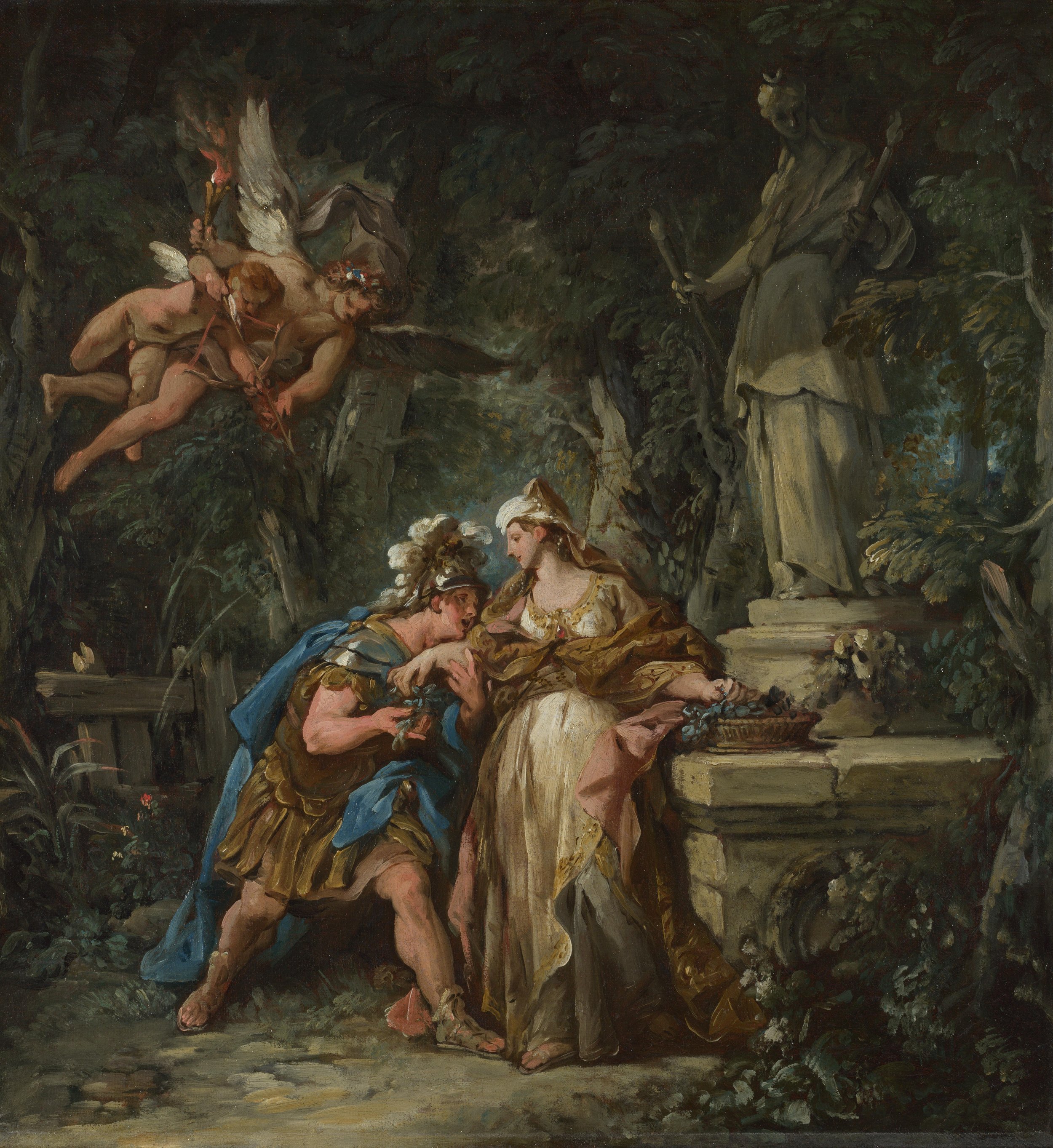
Figure 5. Jean-François de Troy - Jason swearing eternal affection to Medea. Painting. Wiki Commons. https://commons.wikimedia.org/wiki/File:Jean-Fran%C3%A7ois_de_Troy_-_Jason_swearing_eternal_affection_to_Medea.jpg#/media/File:Jean-Fran%C3%A7ois_de_Troy_-_Jason_swearing_eternal_affection_to_Medea.jpg
Diabolical Witchcraft and the Arras Witch Trials
To the surprise of many inhabitants of the cité of Arras, one spring day in the year 1460 would act as a crucial turning point in the history of witch trials. [83] The crowd, composed of individuals from many walks of life, including shopkeepers, artisans, and agricultural workers, stood watching five prisoners atop a scaffold in the bishop of Arras’ courtyard. The defendants included four prostitutes and one outlandish poet, with the corpse of a sergeant named Jean Lefebvre placed on the stage next to them. The inquisitor, Pierre Le Broussard, who was an outsider to the town, loudly berated them and stated that they had participated in vauderie, diabolical witchcraft. He asserted that all of them had confessed to this egregious sin, and as the crowd watched, all five were burned at the stake. [84]
These defendants, notably mostly women, had unknowingly confessed to crimes that were circulating in the air in the mid-fifteenth century: apostasy and participation in the Witches’ Sabbath. An apostate, or someone who has committed apostasy, is defined by Johannes Tinctor, author of one of the famous treatises concerning witchcraft in Arras, as a person who has “estranged” themselves from God and who has “liberated themselves and placed themselves outside obedience” to God’s laws. [85] As for the Witches’ Sabbath, this myth consisted of the belief that certain individuals were part of a sect of witches who met secretly to worship the devil and sabotage Christian society. These meetings supposedly resulted in the destruction of harvests and even the horrible deaths of Christians.
Compared to earlier in the Middle Ages, ideas about dangerous witches and diabolical witchcraft were no longer isolated to clerical scholarly circles but were spread in manuscripts beginning in the 1430s. [86] One way that these ideas spread was through written works such as treatises and demonological literature, where the authors attempted to prove that these dangers were real threats and should become pressing social problems. As Martine Ostorero so aptly puts it, questions about diabolical witchcraft and the Witches’ Sabbath become larger “questions with great implications, be they social, political, or cultural.” [87]
There is abundant scholarship about the origin of the Witches’ Sabbath and diabolical witchcraft that has placed the crystallization of this stereotype in the early fifteenth century, in the decades prior to the completion of L’Histoire de Jason. [88] In 1976, Richard Kieckhefer demonstrated how these ideas about diabolical witchcraft were interjected into early trials for witchcraft in Alpine regions of Europe. He also illustrated how the stereotype of the witch was imposed on the defendants in these trials, persons who originally stood accused merely of harmful magic. [89] More recent work about these theories has come from Martine Ostorero and a team of researchers in Lausanne, who published the earliest witch treatises in modern editions and devoted their careers to analyzing the earliest trials. In reference to the Witches’ Sabbath, Ostorero demonstrated how the growing fear surrounding a secret sect of witches scheming to bring down Christendom appeared in the first decades of the fifteenth century. [90] However, scholars like Michael D. Bailey and Andrew Colin Gow have stressed that the invention of diabolical witchcraft by clerical authorities was initially met with skepticism. Bailey argues that not only were these ideas about witches a new invention of the early fifteenth century, but also that they were not caught on until the late fifteenth century at the earliest. He also demonstrates how the “lazy student” is shocked by this new witch stereotype, which shows that older views of magic being a tool for good or evil was present even into the Middle Ages. [91]
History of Diabolical Witchcraft and the Witches’ Sabbath
This new creation of diabolical witchcraft borrowed ideas from ancient notions about magic, but added new theological concerns that reflected important developments in medieval Europe. In the ancient Greco-Roman Mediterranean world, ideas about magic were socially nuanced but legally they were quite straightforward. Magic was a “morally neutral act that an individual could employ toward either beneficial or harmful ends.” [92] One was only condemned if they chose to wield that magic in a harmful way towards another person. This trend continued in the ancient world up until the Christianization of Rome, when Classical daimones and the ancient pagan gods were modified into Christian demons with evil intentions. Therefore, the ancient concern with harmful magic became the Christian world’s objection and fear of many sorts of magical affairs. [93]
As early as the thirteenth century, clerical authorities began to take magic more seriously because of the rise in learned magic, such as alchemy, necromancy, and even astrological magic through the influences of Arab, Greek, and Jewish texts being introduced to Europe. [94] Instead of individuals being punished for causing harm through magic, theologians moved to view all magic as demonic, and eventually heretical. By the fourteenth century, a series of disasters intensified concerns about misfortune, leading to a heightened focus on heresy and demonic magic. Accusations of demonic involvement became a political tool, notably employed by figures such as King Philip the Fair of France against Pope Boniface VIII. [95] Pope John XXII also played a key role, actively incorporating concerns about magical practices into political strategies, issuing decrees allowing inquisitors to pursue all sorcerers, and expanding the scope of accusations to include those invoking demons. [96]
In the fifteenth century, a new wave of ecclesiastical reformers began to be concerned with magic and superstition at all levels of society. Ecclesiastical initiatives during this period, demonstrated by the Council of Basel, were focused on reforming Christian governance and addressing heresy concerns. [97] At this point, those passionate about the existence of the Witches’ Sabbath were pushing for repression and authoritative action, but they were a minority, as we’ll see below. However, their influence strengthened over time in certain local areas, such as the Western Alps, Savoy, and the north and south of France. [98] This occurred mainly through the circulation of demonological literature more than proceedings happening in the secular courts, with this process continuing into the sixteenth century. [99] One of these pieces of literature, Johannes Nider’s Formicarius (1437-8), played a significant role in associating witchcraft with women, with Nider arguing that women’s perceived weaknesses made them prone to demonic influence. [100] By the 1450s, these ideas were circulating in the form of manuscripts primarily authored by theologians, inquisitors, lawyers, and doctors. These intellectuals aimed to incorporate the emerging belief in the Witches’ Sabbath into scholastic Christian demonology, focusing on the existence and characteristics of demons. [101]
The criminalization of magic and the notion of diabolism during the great European witch trials of the sixteenth and seventeenth centuries gave the term maleficus (witch) a more sinister meaning. [102] Those accused of witchcraft were believed to perform magic through demonic means, such as the invocation and worship of demons. More importantly, they were accused of rejecting Christianity and giving their souls to the Devil in exchange for rewards. This rejection of Christianity transformed them into apostates, with the authors of the Arras treatises directly using that label to characterize those using magic. [103]
The Arras Incidents
An assertion that the people of Arras heard during the witch trials held between 1459 and 1460 would be that “witches…are apostates from the faith, idolatrous and guilty of the crime of divine lese-majeste; that they are invokers of demons; and that they act immorally, against nature, with demons.” [104] They would also be told that witches feasted and fornicated with the devil, destroyed consecrated hosts, and spat upon the cross. [105] The people of Arras had their fair share of terrifying propaganda on the dangers of witches and such tales would only spread farther across Europe. The Arras trials acted as one of the first significant witch hunts in Europe in which prosecutors in an urban setting utilized ideas about witchcraft to interrogate, convict, and even execute a large number of people. [106] Earlier in the late fourteenth and early fifteenth centuries, secular authorities started acting on the stereotype of the diabolical witch pushed by clerical inquisitors particularly in the Alpine regions. The later part of the fourteenth century marked the time when municipal courts started to adopt inquisitorial procedures, but prior to 1383 there were no known cases of sorcery in the Swiss region. [107] By the turn of the fifteenth century, there was a famous outbreak of accusations in the Simmenthal region, located in modern-day Switzerland, where the secular judge Peter of Greyerz told Johannes Nider about his discoveries of witchcraft. Between 1400 and 1435 there were more than twenty trials in certain towns in the Swiss regions, but most of the charges were simple sorcery. [108] Charges of diabolical witchcraft came from Italy during the first half of the fifteenth century, which contained ideas that later moved into regions such as Arras in Burgundy. [109]
By the time Dominican inquisitors with their accusations of diabolical witchcraft came to Arras, the atmosphere of the city changed to one marked by terror. Most of the suspects confessed to charges of vauderies, a term used in the plural to refer to Witches’ Sabbaths and participation in diabolical witchcraft. Interrogations and torture prompted the suspected to name others, triggering a wave of paranoia in the town. [110] Thirty-one people were convicted and thirteen people were burned at the stake. But, these confessions were later recanted, with the accused asserting that they had been promised clemency in exchange for a guilty plea. [111]
Even though the Arras incidents had distressing impacts on the residents of Arras, one of the most important aspects of these incidents was the church authorities’ fixation on the charge of apostasy. There are two important treatises written about these incidents, and through them we know the details of the trials and what ideas these clerical authorities were attempting to push. One author is anonymous, referred to as the “Anonymous of Arras,” and the other is a theologian named Johannes Tinctor. Both authors refer to witches as “apostates” and “heretics” and state that witches have turned their back on God. They also describe in detail the horrific methods of torture and interrogation that authorities should use when confronted with someone accused of witchcraft. Additionally, they also illustrate what they believe occurs at the Witches’ Sabbaths, and how exactly witches use demonic power to spread evil and take down Christendom. Furthermore, it becomes quite clear in these treatises that the authors are attempting to convince their readers that witches are a real threat and that their horrific magic is something to be concerned about.
A History of the Case, State, and Condition of the Waldensian Heretics (Witches)
The first treatise, written in the spring or summer of 1460, was authored by an anonymous source thought to be Jacques du Bois, the dean of the cathedral chapter at Arras. [112] The author reveals that he was present during the first trial on May 9, 1460, which was shortly after the first groups of individuals were tried for vauderie in Arras. [113] In this treatise, the author describes the horrible acts that witches commit, while also making a serious attempt to convince skeptical readers that these modern witches are demon-invokers who present a large threat to Christian society.
An important aspect of this work is how the author discusses the nature of witches and their beliefs. He strives to portray those accused of witchcraft as terrifying and sacrilegious so as to justify the brutal process he advocates for hunting them. He makes a distinction between other heretical groups, such as the Waldensians, or the Poor of Lyon, and witches by asserting that witches are not simple heretics but secretly and nefariously work with demons. They are apparently part of an occult congregation dedicated to explicitly following the devil’s orders, and by virtue of their acceptance into the devil’s congregation are “invokers of demons.” [114] He directly states that these witches are “practically deserted by God” because they have forsaken Him entirely, and that they are “apostates from the faith.” [115] Additionally, all of these witches are equally evil no matter the geographical region, for they all have the “same form of profession and a similar type of behavior.” [116] Therefore, due to all witches’ evil nature they must be persecuted and exterminated, or “a large part of Christendom will be lost and the faith will perish.” [117]
Another large aspect of this treatise involves a strong attempt to convince readers that witches are real. However, the nature of this attempt being so vigorous points to the fact that many people probably did not buy into what the author was saying. Much of the treatise comes across as defensive, with it ending on an exhortation to the readers and the judges of witch trials. The author is pleading with the reader to believe his declarations about diabolical witchcraft, asking them to “consider carefully to themselves…whether they have…closed their eyes and pretended not to notice and neglected to punish and rectify so great and such unheard-of wickedness and vice against God and Christ, now that the need is clear.” [118] Similarly, the next treatise also includes much of the same sentiments that point towards a common theological goal to warn the public about the dangers of witchcraft.
Incentives Against the Sect of Waldensians (Witches)
The second treatise was written in Latin in 1460 by Johannes Tinctor, who was a French- speaking theologian and respected intellectual. Born around 1405 in Tournai, he attended the distinguished University of Cologne and eventually was made the dean of arts in 1433, the dean of theology in 1442 before becoming rector of the university by the mid-fifteenth century. Tinctor’s scholarly contributions were significant and diverse, including commentaries on key philosophical and theological works by Aristotle, Aquinas, and Peter Lombard’s Sentences, alongside treatises, sermons, and official speeches. However, Tinctor's involvement in witch trials during his later years complicates his legacy, which culminates in this treatise. This treatise differs slightly from the one analyzed above, because Tinctor does not focus as much about what occurs at a Witches’ Sabbath and specifically warns of apocalyptic events from the influences of witches. However, he does seem to plead with the readers to believe that dangerous witches are real, and includes the same sentiments about witches as the first treatise.
One important thread in this treatise is that Tinctor also equated witchcraft with apostasy. Just like the Anonymous of Arras, Tinctor saw those who practice witchcraft as apostates who have betrayed Christianity. He described how apostates are portrayed in the Bible, as those who worship idols; host demonic night vigils; do not maintain virtuous widowhood or marriage, commit adultery, fornication, theft, false witness, and blasphemy; and otherwise carry out evil deeds against humanity. He then stated that witches “do all these things listed above and that they…are the most intimate and principal servants of the Devil.” [119]
Additionally, Tinctor linked witchcraft to a fundamental rejection of Christianity and a descent into pride and evil. He described witches as “damned and disloyal apostates, devoid of all shame, [who] have abandoned the holy Christian faith and made of the depraved angel their god,” adding that, “they make a pact with hell and an alliance with death.” [120] He also directly stated that witchcraft is the greatest evil, and it begins with “apostasy and disdain for the Christian religion.” [121] These descriptions not only condemn the practice of witchcraft but also frame it within a theological context, portraying it as a betrayal of faith. Therefore, witchcraft was not merely a crime but a form of heresy and apostasy deserving of harshest punishment.
However, perhaps the more compelling element of this treatise is how he also attempted to convince seemingly skeptical readers of his claims about witches and diabolical witchcraft. The previous treatise included a request for judges to be harsh towards those accused of witchcraft and for them to realize the gravity of this crime, and Tinctor did the same. He wrote a passionate plea directed towards judges, urging them to carefully consider the gravity of witchcraft accusations. He explained that witches are “conscious of the diabolical things they do,” and that they have made an alliance with the Devil. This is a fervent call to the judges to understand that they need to save the Christian world by inflicting justice on these witches.” [122]
Before this desperate call to judges, Tinctor provides various long explanations about the characteristics and practices of demons and Satan. Interestingly, he prefaces this section with the statement that “it is certainly necessary to be able to find the truth about these things in order to calm the disturbances that now afflict the hearts of good and loyal Christians, who, not knowing where such things come from, are overcome by such fear and wonderment that the tranquility of their mind is much damaged and undermined.” [123] Tinctor directly states that the audience he wrote this treatise for is unaware of the claims he made about diabolical witchcraft and the Witches’ Sabbath, and explains that he wrote this treatise to show them these ideas. Therefore, this demonstrates that ideas about witches being apostates, diabolical Witches’ Sabbaths, and even that all magic is demonic were not in circulation before the Arras incidents.
Reading Lefèvre’s L’Histoire de Jason in light of the Arras incidents, it is hard not to imagine Lefèvre as one of these skeptical Burgundians who was appalled by the torture and executions happening at Arras that the authors of these two treatises attempted to educate. His Medea, penitent and redeemed at the end of his story, resonates more with Mary Magdalene, who was so dear to the Dukes of Burgundy, more than with the Arras apostates.
Conclusion
In exploring the connections between L’Histoire de Jason and the emergence of a new sect of witches in Arras, one must consider the coincidences present. Medea’s depiction in this context raises intriguing avenues for future research, including in other literature and even in artistic depictions. However, specifically in regard to Lefèvre’s L’Histoire de Jason, was Medea’s Christian penitence storyline deliberate, reflecting changing perceptions of witchcraft, or merely incidental? Or was this simply a reflection of Burgundian political propaganda? As demonstrated by the above sections, I believe that all of these factors are related and represent fifteenth century Burgundians perceptions about magic. Lefèvre’s decision to humanize Medea directly challenged the notion of irredeemable demonic witchcraft endorsed by clerical authorities in places like Arras, and again shows that Lefèvre was most likely one of the skeptical Burgundians that people like Tinctor were trying to convince.
However, this thesis has prompted many more questions about the intricacies of this topic, especially having to do with the contextual circumstances surrounding Caxton’s translation of this novel. What drew him to this particular narrative, and how did he interpret its magical elements within the English context? The appearance of a printed book adds layers of complexity, suggesting possible commentary on prevailing ideas about magic in England during this period. Additionally, his commentary at the end of his translation raises more questions about the knowledge he possessed about Medea’s story and its implications surrounding magic, especially because he altered the reconciliation scene between Medea and Jason to explicitly mention her use of magic. He also mentioned that the only other place he could find a reconciliation scene was in Boccaccio, which prompts the question about his own interests in magic and mythology since he had read that text.
Furthermore, looking into how the figure of Medea has extended beyond medieval texts, even into subsequent centuries of artistic interpretations would be fascinating to look at. The painting shown at the beginning of the introduction and the various medieval and ancient visual depictions of Medea is another topic that warrants further study. Since she is often viewed as a strong and intelligent woman who took matters into her own hands, the fact that her strength has inspired female authors like Christine de Pizan is inspiring to think about. Medea has been someone that has fascinated authors for over 2,500 years, and throughout that time has always been a flexible figure that possesses the ability to represent larger ideas, and I have found myself also captivated by her and her compelling story of magic, murder, and betrayal.
*This text is an abridged version.
Endnotes
2. See Julian Goodare, The European Witch-Hunt (London: Routledge, 2016), 55-87 and 121-54, for an overview of the historiography surrounding diabolical witchcraft and the myth of the Witches’ Sabbath.
3. See Ruth Morse, The Medieval Medea (Cambridge, UK: D.S. Brewer, 1996).
4. Apollonius of Rhodes, Argonautica, trans. William H. Race (Cambridge, MA: Harvard University Press, 2008).
5. Euripides, Euripides’ Medea: A New Translation, trans. Diane J. Rayor (Cambridge: Cambridge University Press, 2013).
6. Joel Feimer, “The Figure of Medea in Medieval Literature: A Thematic Metamorphosis,” CUNY Dissertation, 1983, iv.
7. Ruth Morse, The Medieval Medea (Cambridge, UK: D.S. Brewer, 1996), 243.
8. Siobhán McElduff, “Epilogue: The Multiple Medeas of the Middle Ages,” Ramus 41, no. 1/2 (2012), 201-2.
9. Susan Gaylard, “De Mulieribus Claris and the Disappearance of Women from Illustrated Print Biographies,” I Tatti Studies in the Italian Renaissance 18, no. 2 (2015): 287.
10. Ovid’s other Medea can be found in the Metamorphoses, which I expand upon in the non-abridged version of this thesis; Morse, The Medieval Medea, 203.
11. Giovanni Boccaccio, On Famous Women, trans. Guido A. Guarino (New York: Italica Press, 2011), 36.
12. Sandra L. Hindman, “With Ink and Mortar: Christine De Pizan’s ‘Cité Des Dames,’” Feminist Studies 10, no. 3 (1984): 457.
13. Kevin Brownlee, “Christine de Pizan’s Canonical Authors: The Special Case of Boccaccio,” Comparative Literature Studies 32, no. 2 (1995): 245.
14. Morse, The Medieval Medea, 231.
15. Christine De Pizan, The Book of the City of Ladies, trans. Sophie Bourgault, Rebecca Kingston, and Ineke Hardy (Indianapolis, IN: Hackett Publishing Company, 2018), 58.
16. Ibid., 63.
17. The Roman de Troie, 69.
18. McElduff, 194.
19. On Famous Women, 35.
20. Ibid., 35. Mention of Medea murdering her brother also appears in Seneca’s Medea. 21. McElduff, 192.
22. Claude C. H. Williamson, “Chivalry,” The Irish Monthly 47, no. 552 (1919): 330.
23. Morse, The Medieval Medea, 82.
24. The Roman de Troie, 69.
25. Wallace Fowlie, “Canto 4: Limbo (First Circle),” in Critical Insights: The Inferno, ed. Patrick Hunt (Pasadena, CA: Salem Press, 2012), 175; Patrick Hunt, “On the Inferno,” in Critical Insights: The Inferno, ed. Patrick Hunt (Pasadena, CA: Salem Press, 2012), 7.
26. Aldo Vallone trans. Robert Treasure, “Commedia” in The Dante Encyclopedia, ed. Richard Lansing, (London: Routledge, 2010), 181.
27. Ibid., 190.
28. Dante Alighieri, “Inferno,” in The Divine Comedy, trans. Charles S. Singleton (Princeton, NJ: Princeton University Press, 1977), 189.
29. Morse, The Medieval Medea, 243.
30. Russell A. Peck, and Andrew Galloway, introduction to John Gower’s Confessio Amantis, trans. Russell A. Peck, and Andrew Galloway (Kalamazoo, MI: TEAMS, 2006).
31. Raoul Lefèvre, The History of Jason, trans. William Caxton (London: Oxford University Press, 1913), 117. “Noble mayde.”
32. Ruth Morse,“Problems of Early Fiction: Raoul Lefèvre’s ‘Histoire de Jason,’” The Modern Language Review 78, no. 1 (1983): 43-4.
33. Siobhán McElduff, “Epilogue: The Multiple Medeas of the Middle Ages,” Ramus 41, no. 1/2 (2012): 201; Maria Colombo Timelli, “Entre magie du savoir et magie de la parole: Médéé dans L’Histoire de Jason de Raoul Lefèvre (vers 1460),” Magia, gelosia, vendetta. Il mito di Medea nelle lettere francesi (2006).
34. Lefèvre references Boccacio’s Genealogy of Gods in his preface to the book, which does offhandedly mention that Medea and Jason reconcile in some way.
35. These stories are featured in the infamous defense of the murder of Louis. See “Politically Inspired Necromancy. Enguerrand de Monstrelet: Chroniques (referring to 1407).” In The Occult in Mediaeval Europe, 500-1500, edited and translated by P. G. Maxwell-Stuart, 110-112. New York: Palgrave Macmillan, 2005.
36. Jan R. Veenstra, Magic and Divination at the Courts of Burgundy and France : Text and Context of Laurens Pignon’s Contre Les Devineurs (1411) (Leiden: Brill, 1998).
37. See Jan R. Veenstra,“‘Le Prince qui se veult faire de nouvel roy’:Literature and Ideology of Burgundian self-determination,” and “The Order of the Golden Fleece” in The Ideology of Burgundy: the Promotion of National Consciousness, 1364-1565, ed. Jonathan Dacre Boulton D’Arcy (Leiden: Brill, 2006), 27-9 and 209-21.
38. Ruth Morse, The Medieval Medea (Cambridge, UK: D.S. Brewer, 1996), 160.
39. Ibid., 153.
40. Ibid., 159-61.
41. Ruth Morse, “Historical Fiction in Fifteenth-Century Burgundy,” The Modern Language Review 75, no. 1 (1980): 49.
42. Ruth Morse, The Medieval Medea, 161.
43. Ibid., 178.
44. Lefèvre, trans. William Caxton, 198.
45. Timelli, 83.
46. Morse, “Problems of Early Fiction,” 39.
47. Lefèvre, 63-4. “And promised to her to doo and accomplisshe treuly alle that she hadde desired. that is to wete that he sholde go into Myrmidone for tassemble his frendes & alyes. and that he sholde retourne into Oliferne for to marye and wedde her in their presence.”
48. McElduff, 200.
49. Lefèvre, 117. “And thenne the noble mayde Medea wente and leyde her in her bedde full of thoughtes & ymaginacyons / that whan she wolde haue slepte she coude not. For as moche as so many thoughtes & ymaginacyons assaylled her on alle parties by suche facion / that she torned her often in yelding many a syghe.”
50. Ibid., 118-19. “to teche & lerne him the Industrie & admynistre to him the maner for to conquere the noble flees of golde. I haue all thinges propices for to bringe this conquest to an end. if I wilt that he wold take me to his wyfe…And furthermore me semeth that if I do for him so grete a thing as for to saue his lyf. & that by my moyen he shal come to aboue of his enterprise honourably, that for the merite & réwarde of my benefice he shalbe content and ioyous to take me to his wyf.”
51. Timelli, 80.
52. Lefèvre, 127. “For she was att expert in alie maners of enchantemens & of sorceries...& sayde to [Medea] that she sholde no more doubte of ony thing / for from after the time that Iason be leyd & couched in his bedde he sholde neuer loue other woman but her.”
53. Timelli, 80.
54. Lefèvre, 143. “Whan Iason hadde vnderstande the good wil of Medea, he saide in his corage that she had wisely answerd. And that he was content for tobeye to her requeste. What shal I saye more the night drew ouer in such termes as said is. how well Iason laye there til it was day.”
55. See previous chapter, specifically Boccaccio’s On Famous Women.
56. Lefèvre, 144. “Made her maistresse to cutte his throte pryuely.”
57. Timelli, 80.
58. Lefèvre, 147. “wepyng tenderly / My goode moder wher is my util broder Absirthyws / gyue him to me ' / Thenne the euyl olde woman opend her lappe and vnwonde the body of the childe. whom she had smiten into pieces.”
59. Ibid., 148. “withoute fawte he wil come after me in Armes lyke as ye see lie doth / and thus whan I haue alie these thinges considered and the grete daimger that might ensiewe to vs that for me shold be the bataylle mortaft bytwene yow and him in whiche withoute Remedye he shold be slayñ or taken by his hye vailliauwce seen that vnto deth he wold abandonne hym selfe for to recouere me. and to thende teschewe more grete parift and dommage for hym.”
60. Ibid., 165. “thinking in her self that she wolde be auenged of the disloyaft Peleus the whiche entended to haue made Iason be ded.”
61. Ibid., 172. ”Whan for your loue I haue abandonned1 the kyng- my fader and1 all his royaume. Is this the gwerdon that I haue t awayted after that I haue reduysed by so grete labour and trauaile my lorde your fader the kyng from his auncient aage vnto the yongth.”
62. Timelli, 87.
63. Lefèvre, 174. “She began to study in many of her sciences.”
64. Catherine Léglu, “‘A New Medea’ in Late Medieval French Narratives,” in Unbinding Medea, 1st ed. ( CRC Press, 2010), 71.
65. Lefèvre, 175. “Iason thou knowest that I am thy wyf / thou leuest me for another / & wenest thy self not to haue mesprised to me. I haue saued thy life And thou doste to me grete wrong and ouermoche grete blame. And this procedeth fro the of alie desloyalte and of alt mauastie. wherof thou art chief and heed. And suche wilt thou be and abide, but I shall kepe the from it yf my connyng faylle not. For certaynly I promise the that thy new wyf Creusa and the kyng- her fader and al they that ben here within shall lose theire lyf. Keseruedt thy self. & by consequent thy propre sone that I holde in my propre armes shalbe the first that shal begynne the feste.”
66. Ibid., 189. “For she was so dyscoloured lene / and euill arayeo. Certes he had grete pyte of her. Thence he began to recomforte her thinking on the good seruices that she had don vnto his sone wherof al his wele and Renomme was comen. And in like wise of the grete plaisir that she had don to him. also how she had abandonned the king her fader & her couwtre vpon the promysse of his sone. Among other wordes in recomfortyng her.”
67. Ibid. “He sayde & promysed her that he shold punysshe Iason of that so grete offence …certes he loued Medea meruaillously / & anon he dide do clothe her new right honourably / & tamynistre to her all that was nedeful & necessarie for her.”
68. Ibid., 197.
69. Peter Loewen and Robin Waugh, eds, Mary Magdalene in Medieval Culture : Conflicted Roles (New York, NY: Routledge, 2014), 2.
70. Jacobus de Voragine, The Golden Legend Readings on the Saints trans. Eamon Duffy and William Granger Ryan (Princeton, NJ: Princeton University Press, 2012), 375.
71. Ibid., 380.
72. Loewen and Waugh, 117-18.
73. Patrick J. Geary, Furta Sacra : Thefts of Relics in the Central Middle Ages (Princeton: Princeton University Press, 1990), 74.
74. Ibid., 75.
75. Ibid., 77.
76. Susan Haskins, “Mary Magdalene and the Burgundian Question,” Journal of the Warburg and Courtauld Institutes 73, no. 1 (2011): 103-4.
77. Lefèvre, 197. “knelid doun on bothe her knees in grete humylite tofore Iason requiring & cryeng him mercy.”
78. Christopher Swift, “A Penitent Prepares: Affect, Contrition, and Tears,” in Crying in the Middle Ages (Routledge, 2012), 80.
79. Lefèvre, 198. “pardonwed her of al thing that she had trespaced or mesprised aycnst him. And1 in feat sayd that his plaisir was that she shulde be his wyf agayn as she had ben tofor.”
80. Ibid., 198. “And thence she sware to him & auoweo that she sholde neuer medie more with sortes ne enchantements ne none other maléfices ne of ony thing but first he sholde haue the cognoissauwce and knowlech.”
81. Raoul Lefèvre, L'Histoire Jason, ein Roman aus dem 15. Jahrhundert, ed. Gert Pinkernell (Frankfurt: Athenäum Verlag, 1971), 240. “Elle lui promist et jura que jamais mal ne feroit.”
82. Lefèvre, trans. William Caxton “Iason & Medea regned & gouerned their Royaume hyely long- time / During the whiche they liued to gyder in grete loue & corde and had many fayr children to gyder that regned after hem.”
83. The cité was different from the ville of Arras. Medieval Arras was broken into two sections with the cité controlled by the bishop and the ville controlled by a council of aldermen: Andrew C. Gow et al., ed. and transl., The Arras Witch Treatises: Johannes Tinctor's Invectives contre la secte de vauderie and the Recollectio casus, status et condicionis Valdensium ydolatrarum by the Anonymous of Arras (1460) (College Park, PA: Pennsylvania State University Press, 2016), 1.
84. Ibid., 1-2.
85. Johannes Tinctor, “Incentives Against the Sect of Waldensians (Witches) (1460),” in The Arras Witch Treatises, 102.
86. Martine Ostorero, “The Rise of the Witchcraft Doctrine,” in The Routledge History of Witchcraft, 1st ed. (Routledge, 2020), 61.
87. Ibid., 74.
88. This can be seen in events like the Council of Basel (1431-9). See Michael D. Bailey & Edward Peters, “A Sabbat of Demonologists: Basel, 1431–1440,” The Historian, 65:6, 1375-1396: 2003.
89. Richard Kieckhefer, European Witch Trials : Their Foundations in Popular and Learned Culture, 1300-1500, (Berkeley: University of California Press, 1976).
90. Ostorero, “The Rise of the Witchcraft Doctrine.”
91. Michael D. Bailey, “The invention of satanic witchcraft by medieval authorities was initially met with skepticism,” The Conversation, July 2, 2020, https://theconversation.com/the-invention-of-satanic-witchcraft-by-medieval-authorites-was-initially-met-with-skepticism-140809.
92. Michael D. Bailey, “From Sorcery to Witchcraft: Clerical Conceptions of Magic in the Later Middle Ages,” Speculum 76, no. 4 (2001): 963.
93. Richard Kieckhefer, Magic in the Middle Ages. Third edition. (Cambridge: Cambridge University Press, 2022), 37.
94. Bailey, “From Sorcery to Witchcraft,” 964.
95. See Jennifer Kolpacoff Deane, A History of Medieval Heresy and Inquisition, Second edition, (Lanham, Maryland: Rowman & Littlefield, 2022), 184.
96. Ibid., 184-7.
97. Ibid., 189-92.
98. Ostorero, “The Rise of the Witchcraft Doctrine,” 62. Ostorero also includes Burgundy in this list, but I do not completely agree, as I have demonstrated throughout the rest of this thesis.
99. Richard Kieckhefer, “Mythologies of Witchcraft in the Fifteenth Century,” Magic, Ritual, and Witchcraft 1, no. 1 (2006): 99.
100. Bailey describes how this concern around magic became connected to women in: “The Feminization of Magic and the Emerging Idea of the Female Witch in the Late Middle Ages,” Essays in Medieval Studies 19, no. 1 (2002).
101. Ostorero, “The Rise of the Witchcraft Doctrine,” 69.
102. More specifically, a worker of harmful and dangerous magic.
103. Bailey, “From Sorcery to Witchcraft,” 962.
104. Anonymous of Arras, “History of the Case, State, and Condition of the Waldensian Heretics (Witches) (1460)” in The Arras Witch Treatises, 48.
105. Gow, 2.
106. Ibid., 3.
107. Kieckhefer, European Witch Trials, 18.
108. Gow, 20.
109. Ibid., 21.
110. Ibid., 4.
111. Ibid., 2.
112. Ibid., 9. Du Bois spent some of his career in French Flanders, where he was apparently trained in the scholastic method, and lived in Tournai, where the author of the other treatise, Tinctor, also lived.
113. Ibid., 11.
114. Anonymous of Arras, 27.
115. Ibid., 29.
116. Ibid., 48.
117. Ibid., 35.
118. Ibid., 76.
119. Tinctor, 102-3.
120. Ibid., 93.
121. Ibid., 92.
122. Ibid., 138-9.
123. Ibid., 121-2.



Kirsten Bell
Kirsten Bell is a graduate of the University of Rochester, where she earned a B.A. in History Honors and Classical Civilization with a minor in English Literature. She plans to pursue graduate study in archival and library sciences beginning in Fall 2026, with the goal of working directly with the historical materials that shaped her undergraduate research. Her scholarly interests center on witchcraft, religion, and magic in the ancient and medieval worlds, with particular attention to the roles of gender, sexuality, and social demographics. In addition to her academic work, she served as editor-in-chief of LOGOS, the University of Rochester’s Art & Literature Journal, and completed a fifth-year program at U of R focused on printmaking and photography which culminated in a solo exhibition.