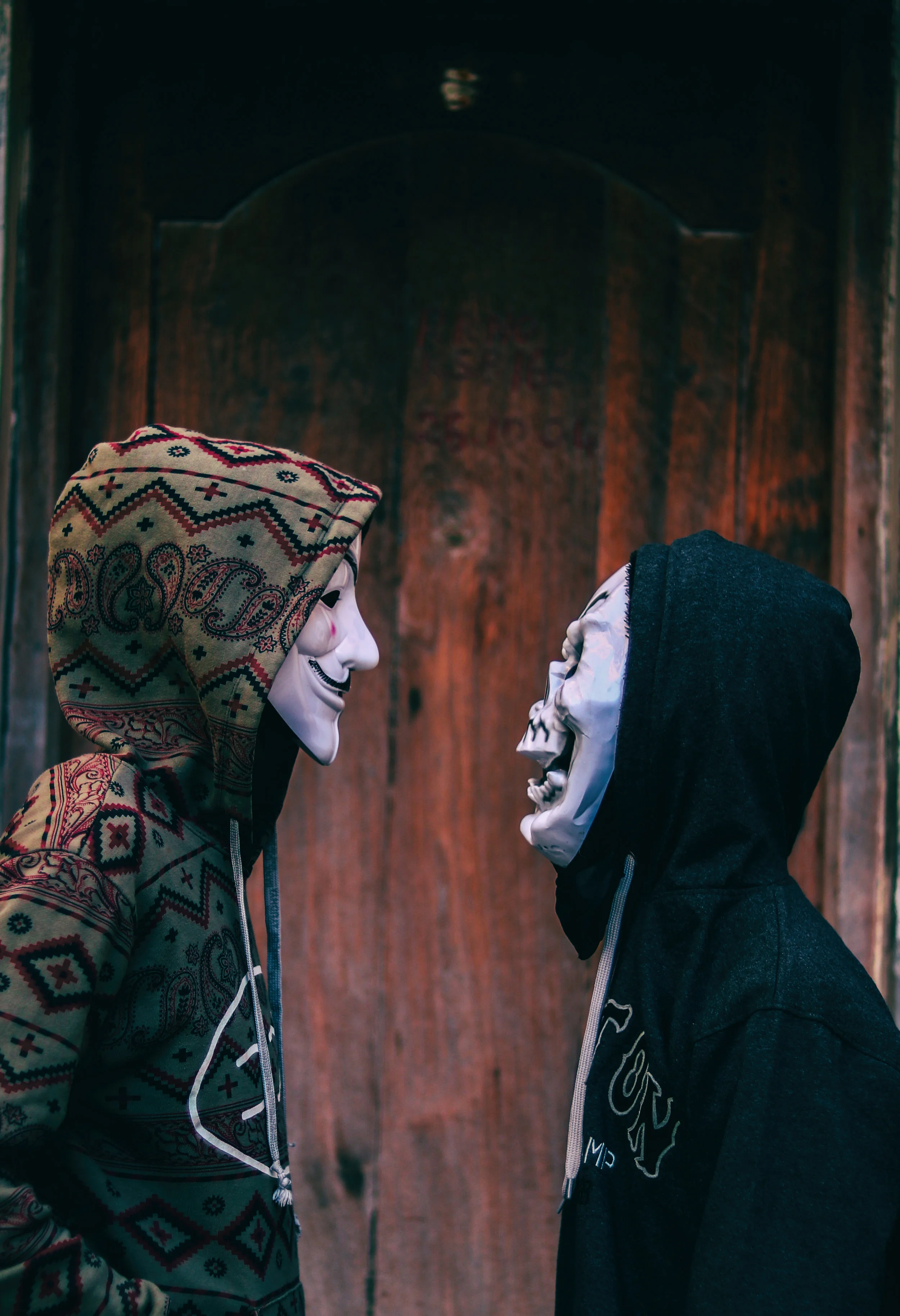
The term “monster” defines an individual who has an unusual or unacceptable behavior or appearance.[1]With this definition, the word is used by society as a label to alienate those who do not fit into its criteria of normalcy.
Read More
The term “monster” defines an individual who has an unusual or unacceptable behavior or appearance.[1]With this definition, the word is used by society as a label to alienate those who do not fit into its criteria of normalcy.
Read MoreSe dice que en las guerras todos pierden. Sin embargo, no hay alguna duda de que existen grupos de personas que pierden más que otros. Este fue el caso de las mujeres a partir de la derrota de los republicanos ante los nacionalistas tras la Guerra Civil española (1936-1939).
Read MoreEdwin Tran
The rise of militant jihadist organizations in the Middle East is often thought of in simplistic and blanketed terms. Unfortunately, diverse and distinct groups, such as Hezbollah and Hayat Tahrir al-Sham, are grouped into a single category, and are often explained in broad terms.
Read MoreRosalyn Stilling
Angela Carter’s “The Bloody Chamber” is a touchstone of postmodern fairy tale revisions, deftly marrying the latent content of Charles Perrault’s “Bluebeard” with her entrancing and opulent prose. She boldly addresses the sexuality, gender relations, and biblical comparisons inherent in Perrault’s tale in her prose, particularly by blending allusions to Judeo-Christian figures with sadomasochistic practices. Carter expands upon these elements present in “Bluebeard,” while keeping her focus on the representation of villainous Bluebeard and his abuses towards the innocent bride.
Read MoreAbigail Robinson
Modernity is a concept, period, idea, etc., that has been explored ad nauseam. Defining it seems to be an impossible task; scholars have been debating when it began and when it ended (if it even ended at all) for at least 100 years.
Read MoreBy Rachael Malstead
Langston Hughes chronicled the spirit, fervor, and intensity of the Harlem Renaissance as only an artist can. In his short story collection, The Ways of White Folks, Hughes concerns himself with the downtrodden, the poor and lonely, the black and oppressed. The transcendent insight into the human condition that crafts this anthology is unique to an author of genius.
Read MoreBy Nick McIndoe
Since the end of World War II, global governance has been characterized by the presence of international institutions, which are charged to pursue global justice. However, there is presently much conjecture regarding the justice of such institutions. In this paper, I introduce two main branches of global justice, namely ‘substantive justice’ and ‘procedural justice.’ Then, I apply these concepts to the World Trade Organization in order to analyse its policies, practices, and structural foundations. For an international institution that allegedly promotes economic and international trade equality, my findings are troubling.
Read MoreBy Jenna Geick
In October of 2015, Mexican and United States news sources reported on circumstances that resulted in the lynching of José and David Copado in Ajalpan, Mexico. Hours after the brothers arrived in town, word spread of the arrival of the strangers, and a crowd approached the brothers, violently accusing them of playing a role in the disappearance of local children. The police found no reason to suspect the two brothers to be child abductors, but very few residents accepted the police verdict. The brothers were seized by the crowd and brought to the center of it, as a man doused the brothers with gasoline before setting them on fire. How are we to understand why such a horrific act of violence occurred, so that it does not occur again?
Read MoreBy David deHaas
The 1960s were a time of many social and political movements representing the diverse voices and concerns amongst the fragmented American populous. The particular causes of these movements consisted of clashes between standard cultural norms that characterized American society, and communities that resisted this standard. I would posit that a substantial causal factor of these clashes was a widespread crises of human identity.
Read MoreBy Nikolas Oliver
“The Yellow Wallpaper” is the story of a woman who, while under patriarchal control, constructs and instills a meaning upon the environment around her, which allows her to subvert partially that control.
Read MoreBy Lindsay Brents
During his attempts to create American literature distinct from its European heritage, Charles Brockden Brown wrote Ormond; Or, The Secret Witness. Written and set in the 1790s in the United States, this novel establishes a recognizably Gothic plot, only to thwart the expected sexual violence by allowing the heroine to kill the man who threatens her.
Read MoreBy Jeanette Tong Gin Yen
Science fiction and Fantasy, falling under the general classification of imaginative literature, have an established tradition of charting the impossible through narratives that verge on possible, often articulating underlying concerns about our social worlds through the paradox of ‘(im)possibilities’.
Read MoreLarisa Coffey-Wong
Despite the numerous, well-documented differences that exist between Ridley Scott’s loose filmic adaption of Philip K. Dick’s novel Do Androids Dream of Electric Sheep, as first and foremost an adaptation, Blade Runner necessarily has some points of similarity with its source text.
Read MoreMegan Krelle
Technology is used to challenge the hegemonic ideal that the natural is of more value than the artificial. This prevailing valuation is explored through the examination of the societal power structure, which asserts the dominance of one group, and their ideals over any other, and the way that value is constructed and legitimized by the ruling center of the society in Philip K. Dick’s Do Androids Dream of Electric Sheep? and G. Willow Wilson’s Alif the Unseen.
Read MoreCatherine J. Bruns
Over two hundred years after the French Revolution, historians have yet to reach a consensus as to what caused the bloody overthrow of one of Europe’s leading political regimes. While previous research has focused on the revolutionary policy and legislative changes that occurred during this period, there has been little focus on the involvement of related subject--the political actor.
Read MoreGrant K. Schatzman
The metaphor of living artwork is interestingly appropriate to the history of Ovid’s Metamorphoses. The explosion of translation in the Renaissance turned the dusty tomes of Greece and Rome face up once more, but it is for very good reason that the movement is called a “rebirth” rather than a “rediscovery.” It is no surprise that Renaissance writers “rebirthed” Pygmalion with a new interpretation for every cultural criticism and moralization.
Read MoreDr. Shiva's discusses patents, GMOs, energy systems, and Navdanya with interviewer Haley Skeen.
All visuals can be found on BBC News, www.navdanya.org, and Dr. Shiva's website.
Read MoreBy David York
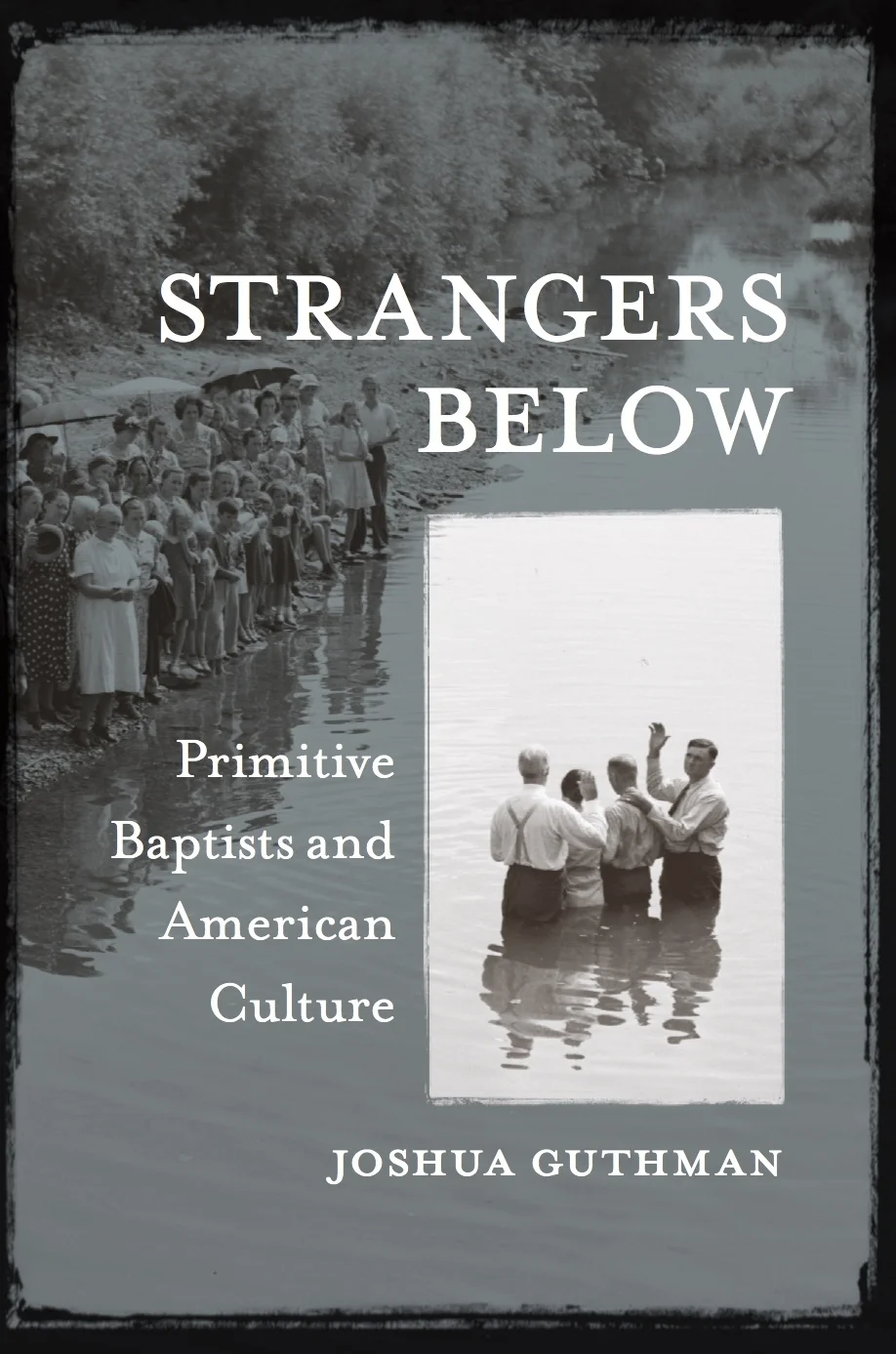
Joshua Guthman’s book, Strangers Below: Primitive Baptists and American Culture, tells the story of a small, fairly obscure, group of Southern Calvinistic Christians called the Primitive Baptists (as the title well implies). Although Guthman’s book uses the Primitive Baptists to trace a part of the American Calvinist experience in order to demonstrate how it shaped the Second Great Awakening and the post-World War II folk revival, Strangers Below also demonstrates that the Bible Belt was formed in the fire of religious schism.
Read More