
Posts tagged Christianity
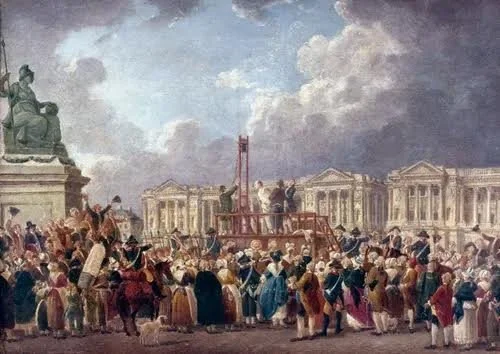
From Religion to Reason: Voltaire, Diderot, d’Holbach and the Public Perception of Christianity in Revolutionary France

This article examines how Voltaire, Diderot, and d’Holbach questioned religious authority along with Christianity during the Enlightenment. It goes over how their multiple critiques of church authority and the clergy weakened the French monarchy along with the Catholic Church. By relating events such as church reforms and the abolition of the monarchy to Enlightenment ideas, this article makes a clear case for how religious skepticism completely helped reshape the political and religious landscape in France.

Read More
A Battle, Two Buildings, and One City During the Crusades

By Lauren Wilbur, the University of Texas at Austin

Historical archaeology attempts to understand cultures of antiquity by studying written primary sources in conjunction with archaeological analysis. The Crusades present a challenge in using this method because many physical spaces have not been excavated due to political strife, or they had only been excavated in a biblical context with little regard to any other period. However, the discipline has recently started to see some success in the areas that the Latin Christians occupied and material evidence is more readily available to fill in the holes of Crusader history.

Read More
“What is this thing, Lord?”: Matthew O’Connor and the Queer Theology of the Catholic Church in Nightwood (1937)

By Olivia Harris, University of North Carolina at Chapel Hill

The modernist novel Nightwood by Djuna Barnes (1892-1982) is a celebration of difference. Published in 1937,[1] it precociously spotlights the voices of those who are often marginalized: homosexuals, women, Jews, starving artists, political activists, the working class.[2] The story focuses on a lesbian love triangle in Paris:

Read More
Hypermasculinity and Fetishized Martyrdom in Angela Carter's "The Bloody Chamber"

Rosalyn Stilling

Angela Carter’s “The Bloody Chamber” is a touchstone of postmodern fairy tale revisions, deftly marrying the latent content of Charles Perrault’s “Bluebeard” with her entrancing and opulent prose. She boldly addresses the sexuality, gender relations, and biblical comparisons inherent in Perrault’s tale in her prose, particularly by blending allusions to Judeo-Christian figures with sadomasochistic practices. Carter expands upon these elements present in “Bluebeard,” while keeping her focus on the representation of villainous Bluebeard and his abuses towards the innocent bride.

Read More