A Story of Shifting Stone: Pygmalion in the Renaissance

Grant K. Schatzman

The metaphor of living artwork is interestingly appropriate to the history of Ovid’s Metamorphoses. The explosion of translation in the Renaissance turned the dusty tomes of Greece and Rome face up once more, but it is for very good reason that the movement is called a “rebirth” rather than a “rediscovery.” It is no surprise that Renaissance writers “rebirthed” Pygmalion with a new interpretation for every cultural criticism and moralization. 

Read More
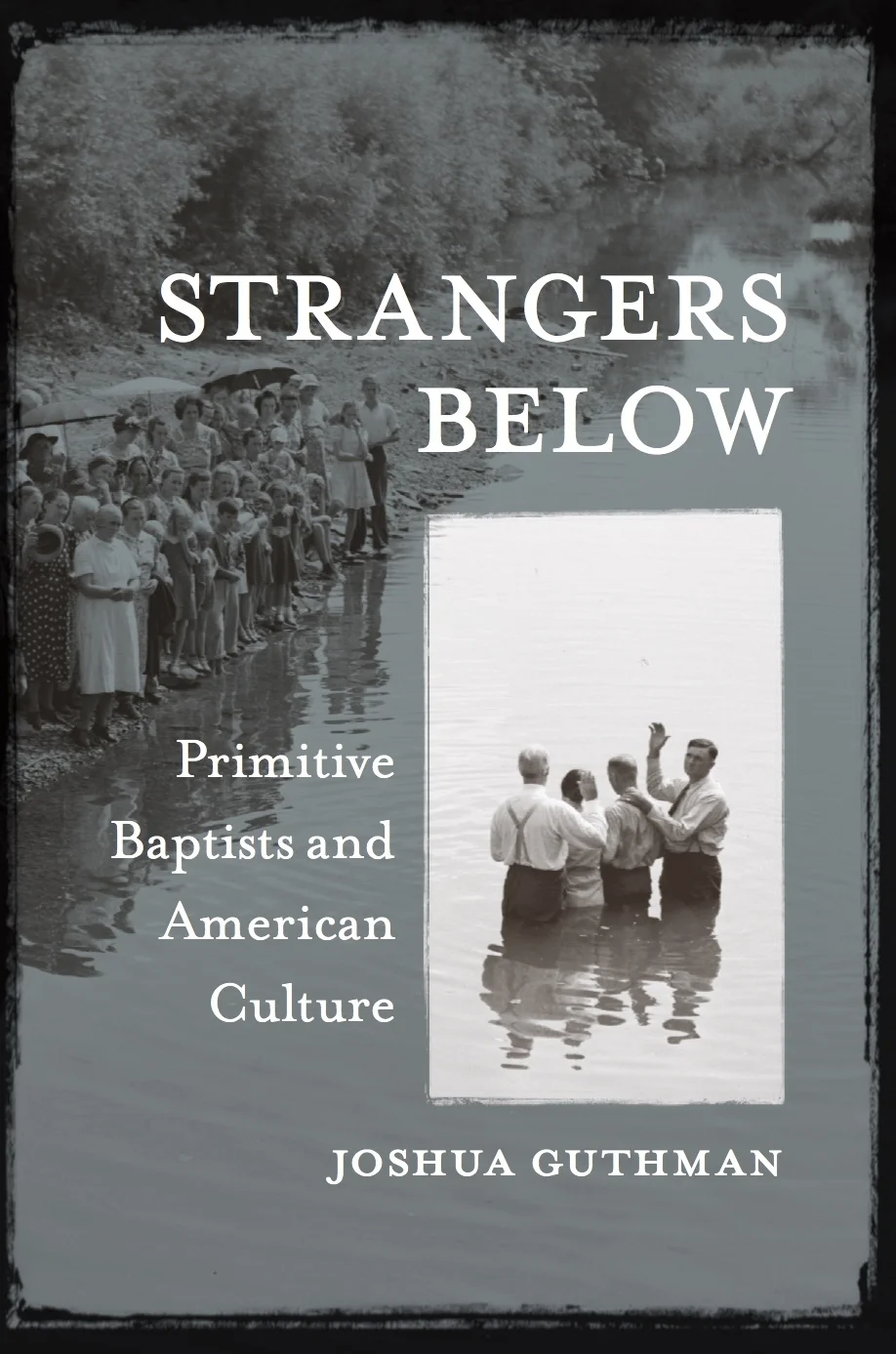
Review of Strangers Below

By David York

Joshua Guthman’s book, Strangers Below: Primitive Baptists and American Culture, tells the story of a small, fairly obscure, group of Southern Calvinistic Christians called the Primitive Baptists (as the title well implies). Although Guthman’s book uses the Primitive Baptists to trace a part of the American Calvinist experience in order to demonstrate how it shaped the Second Great Awakening and the post-World War II folk revival, Strangers Below also demonstrates that the Bible Belt was formed in the fire of religious schism.

Read More
In a World with a Nuclear North Korea, Can We Question the Power of Nuclear Non-Proliferation?

By M. Ethan Johnson

It’s been nearly two weeks since the Hermit Kingdom declared that it had successfully launched and detonated a hydrogen bomb—much to the surprise and dismay of the international community.

Major news outlets have argued, minimalized, and debased the plausibility of a nuclear Democratic Republic of North Korea, but let’s consider such a world.  

Read More
Legacy of the Mongol Empire

By Ethan Johnson

Acts of war fuel change—changes in foreign and domestic relations, changes in politics, and most often changes in national boundaries. The conquests of Genghis Khan in the 12th and 13th centuries C.E. absorbed such boundary lines into the Mongol Empire, extending his rule from the steppes of Mongolia to the eastern shores of the Black Sea. His reign over such a vast expanse of land and large collection of people was due to his strict military leadership, paired with a powerful army to carry out his will. At the head of his army was a handful of generals who answered to him directly, and obediently followed his orders. 

Read More
Outcry from Tibet

By Hsin-Ta Tsai

Should the universality of the UDHR be applied to the people of Tibet in the first place, discounting its sociocultural context? To answer this question, we have to consider the appropriateness of having some principles or a set of human rights regulations that all cultures and nations can agree upon, a rather Western cosmopolitan view on international ethical issues. In cosmopolitanism, national borders are morally irrelevant because “a truly moral rule or code will be applicable to everyone.” However, it raises concerns knowing that most of the debates about international ethics come from Western traditions of moral theory.

Read More
The Lonely King

By Victor Zou

Beowulf is a classic and ancient Anglo-Saxon hero’s tale. The various monstrosities he faces define his story and character. His defeat of Grendel, his atrocious mother, and the dragon all reflect his prowess and courage as a heroic champion. But these victories also encourage the growth of ill-fated attitudes. As J. Leyerle describes, he is a hero that “follows a code that exalts indomitable will and valor in the individual.”[1] In fact, the more Beowulf grows as a heroic warrior the more independent and prideful he becomes. And yet, in the midst of this he is pushed towards taking on the role of a king, which is a role he is woefully unfit to take. To lead a people-group requires a willingness to cooperate and a humility that a Beowulfian hero is simply disinclined to have. This disconnect between both ideals is the crux of Beowulf’s journey. While Beowulf assumes both positions, there is a clear distinction between the characteristics of a successful hero and a successful king. Thus, the tale acts as a critique of a heroic culture that values pride and independence by showing the dangerous tendencies that this encourages, and what can happen when a hero is given power and responsibility.


Read More
The Paradox of Globalization

By Christopher Albert Jacques D'Silva

The advent of globalization has brought about sweeping changes that have left indelible marks on societies. While newfound interconnectedness between cultures, information, and people creates an increasingly homogenized planet in some respects, such trends also have the effect of isolating certain non-members of the so-called “global community.” This residual marginalization has typically affected those who obstinately cling to the past, and those who are simply dubious towards the current state of affairs. For these persons, methods of coping with this social and psychological schism run the gamut from complete denial and delusion, to important modulations of acceptance.

Read More
“Concessions” to Cuba?

By Abigail Palmer

On December 17, 2014, President Obama shocked many Americans by declaring his intent to open relations with the Cuban government, which has enlarged the rift between the political parties and has thrown many American citizens into protest. 

Read More
Julia Brennan on AVM

Julia Brennan has worked in the field of textile conservation for over twenty-five years. She worked for five years as Assistant Conservator for Exhibitions at the Textile Museum in Washington, and founded Textile Conservation Services in 1995. 

Read More
Video MattersStartzmanComment
Theodore Lowi on AVM

Theodore J. Lowi was born on July 9, 1931 in Gadsden, Alabama. He and his wife, Angele, reared two children, Anna and Jason. He currently makes his home inIthaca, New York. Lowi obtained a Bachelor of Arts from Michigan State University in 1954, and an Master of Arts and Ph.D. from Yale University in New Haven,Connecticut, in 1955 and 1961, respectively.

Read More
Video MattersStartzmanComment
Naomi Tutu on AVM

The challenges of growing black and female in apartheid South Africa has led Nontombi Naomi Tutu to her present as an activist for human rights. Those experiences taught how much we all lose when any of us is judged purely on physical attributes. In her speeches she blends the passion for human dignity with humor and personal stories.

Read More
Video MattersStartzmanComment