
The Flight of Picasso’s "Guernica": Spain’s Transition to Democracy, Historical Memory, and Integration into the European Community
Introduction
On September 9, 1981, a secret operation went underway at the New York City Modern Museum of Art (MoMA) that entailed removing one of the world’s most famous paintings — Pablo Picasso’s enormous black and white masterpiece, Guernica — from the walls of the museum and loading it onto a routine Iberia Airlines flight destined for Madrid. This flight marked the painting’s first ever voyage to the country to which it owes its name, artist, and story. An Iberia Airlines ad that appeared in the Spanish newspaper ABC the next day remarked that the painting had flown without a return ticket to Spain as a “symbol of peace.”[1] Over four decades earlier, Picasso, stunned by reports and images from the saturation bombing of the Spanish Basque city of Guernica carried out by the Nazi and Italian Air Forces and Spanish Nationalists, painted the devastation and chaos of this violent act to fulfill a 1937 commission by the Second Spanish Republic. Guernica came to life in Picasso’s Parisian studio, and after leaving the Paris International Exhibition for which it was commissioned, it decorated museum walls around Europe and the Americas before finding a temporary home in the MoMA in the 1950s. Despite its symbolic importance for the Spanish and Basque people, Spain never saw the painting during Francisco Franco’s authoritarian rule, as per Picasso’s wish. Responding to Spain’s requests for the painting, the Spanish artist legally established that the 25'8" x 11'6" painting belonged to his home country but would be entrusted to the MoMA until “public liberties” are reestablished in Spain.[2] Although Picasso never saw this come to fruition, dying in 1973, Franco’s death shortly thereafter in 1975 marked the end of his 36-year-long dictatorship and gave way to Spain’s democratic transition, known simply as the Transition. Six years later, on September 10, 1981, the MoMA released a statement announcing that Guernica had permanently departed from New York City and was now in the hands of the newly democratic Spain.[3]
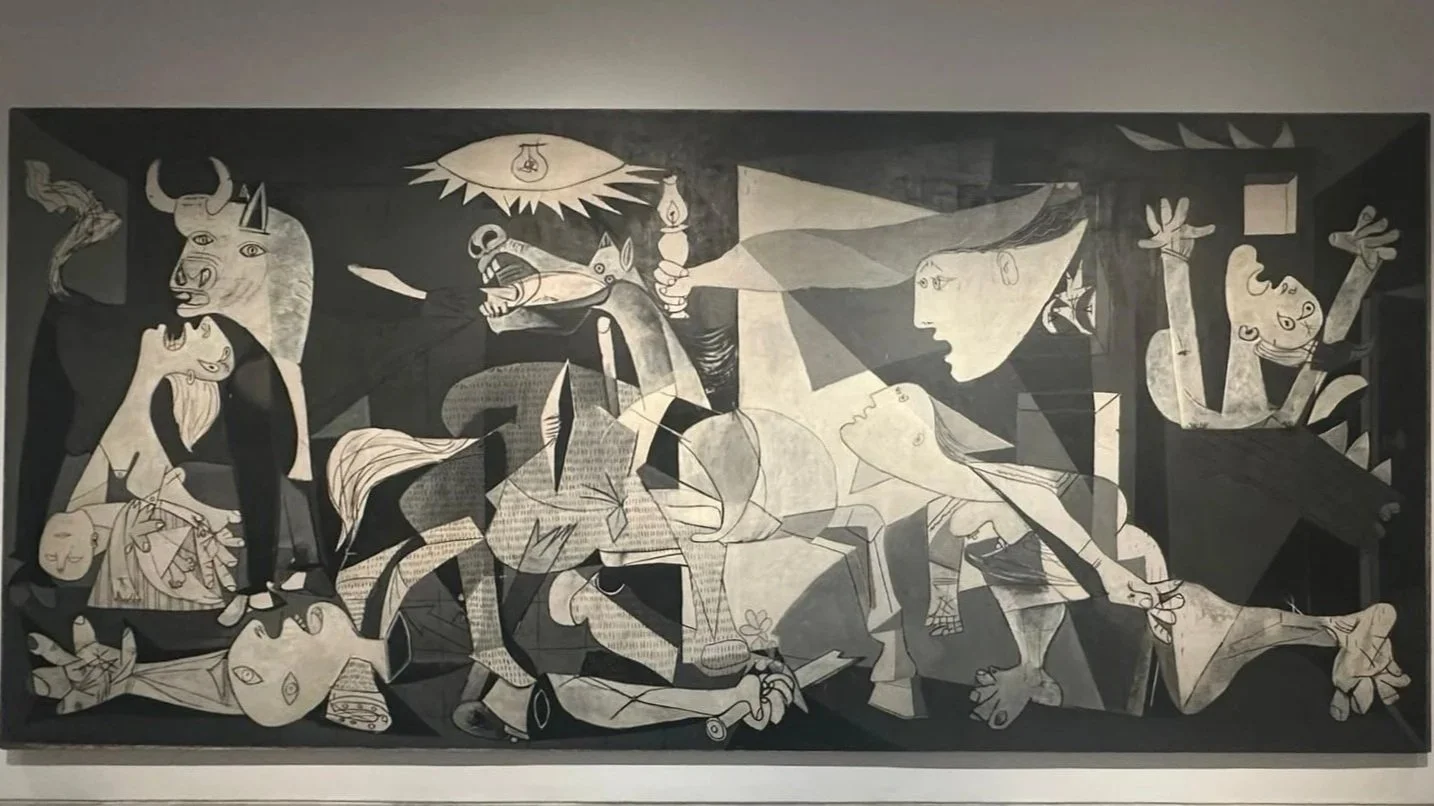
Fig 1. Pablo Picasso's Guernica (1937) hanging in its new permanent home, the Museo Nacional Centro de Arte Reina Sofía in Madrid Spain.
© 2026 Estate of Pablo Picasso / Artists Rights Society (ARS), New York.
In a review celebrating forty years of Guernica in Spain, journalist Diana Arrastia calls the act of bringing the painting to Spain one of the biggest successes of the Spanish Transition.[4] As Iberia Airlines advertised, the painting had garnered the status of a “symbol of peace” because the work’s disturbing display of twisted bodies, primitive fear, and total helplessness in the face of war evoked a moving need for peace. The painting’s political status was furthered when it circulated around major Western museums to raise money for the Republican cause during the Spanish Civil War and, later, became a popular site of American protest during the Vietnam War.[5] However, the people of Spain and the Basque Country feel a direct connection to Guernica as it explicitly depicts a national trauma perpetrated by the former regime against its own people. The newly democratic Spanish government’s efforts to regain ownership of Picasso’s work of art reveal a moment in which Spain had to sort through their historic memory and establish their cultural capital in order to transition to democracy and heal past wounds. The Transition was marked by silence about the past in order to secure the success of the new, fragile democracy and the political future of Spain. The move to acquire Picasso’s Guernica, which explicitly highlights violence carried out under Franco’s command, stands out as a rare instance in which the government deliberately shed light on the country’s violent past. The return of the painting also resulted in dialogue about regional repression under Franco, with many Basques arguing that the painting belongs in the Basque Country rather than Madrid, the city that represented the heart of Franco’s dictatorial power. Additionally, the painting was a way for Spain to assert itself as a relevant cultural and artistic center after its decades of isolation. Therefore, the process of bringing Guernica to Madrid marks a moment in which Spain turned to art to confront its past, grapple with its historical memory, and promote a modern, democratic, and European future.
The Spanish Transition to Democracy
At the conclusion of the Spanish Civil War, the Nationalist forces led by General Francisco Franco employed mass violence and repression against Republicans and enemies of his conservative Catholic regime.
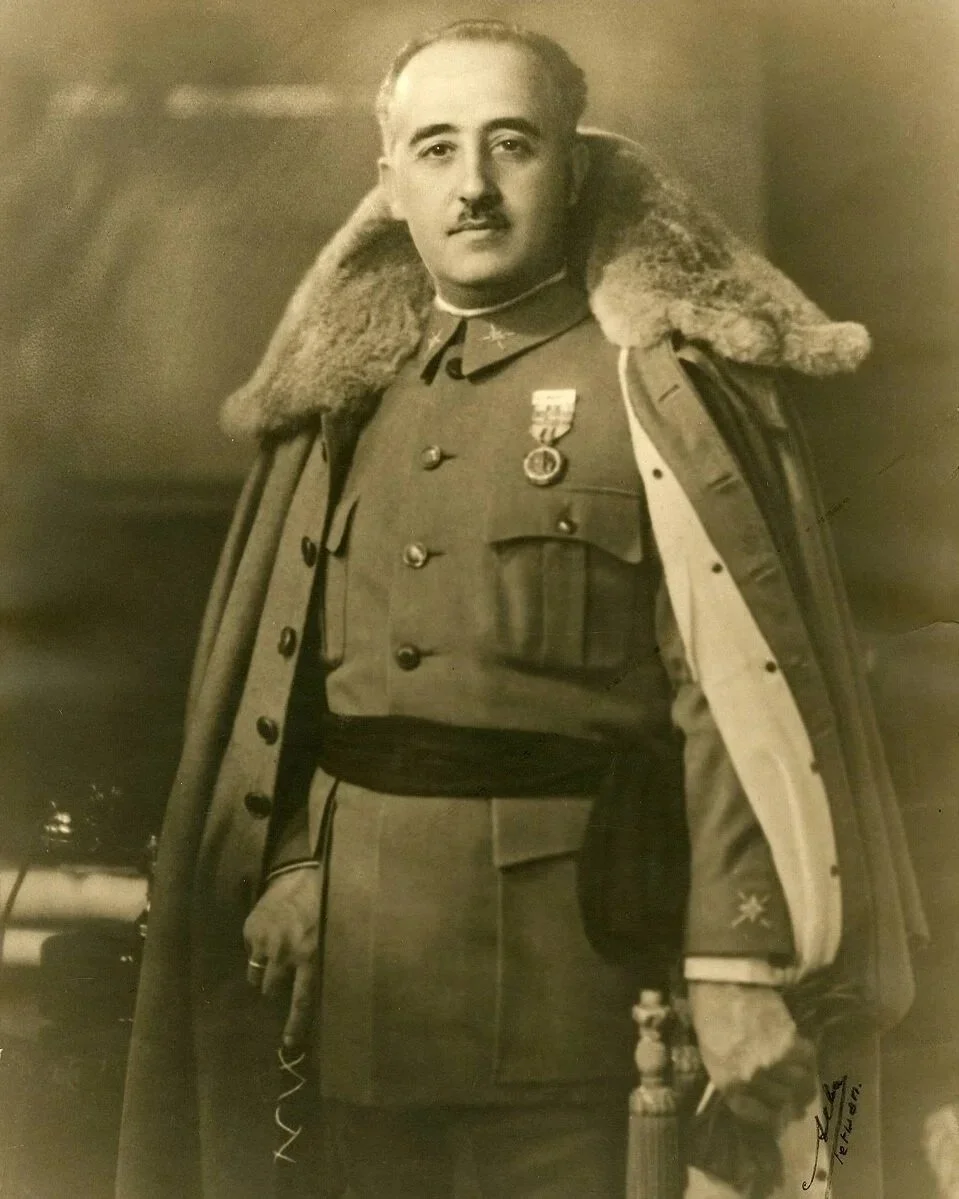
Fig 2. A portrait of Francisco Franco, who served as the caudillo (leader) of Spain following his victory in the Civil War in 1939 until his death in 1975.
Wikimedia Commons contributors, "File:Francisco Franco 1930.jpg," Wikimedia Commons, https://commons.wikimedia.org/w/index.php?title=File:Francisco_Franco_1930.jpg&oldid=1119939073 (accessed April 13, 2026).
However, after the defeat of Franco’s fascist allies in World War II, only six years after his victory, he downplayed the explicitly fascist elements of his regime by relaxing violent repression, labor camps, and mass executions. In the latter half of his almost four-decade-long dictatorship, he attempted to present Spain as an open and modern country by building international relationships in opposition to the Communist East during the Cold War.[6] After a 1953 military and economic pact with the United States as part of the American Cold War strategy, Spain’s diplomatic isolation ended, catalyzing a period in the 1960s and 1970s when Spain began to open itself up to the other Western countries.[7] Spain’s economy grew quickly and sustainably in this period thanks to remittances from emigrant Spanish workers and tourism, and a 1959 National Stabilization Plan stifled inflation and encouraged outside investment, transforming Spain into a top-ten economy by the mid-1970s.[8] Tourism skyrocketed toward the end of Franco’s rule as well, with 17.3 million foreigners visiting Spain in 1966 and over 34 million by 1974, which was particularly important as the import of European tourists connected Spain to more progressive and modern Western ideals.[9] This situation reveals what Spanish historian Raymond Carr calls the “paradox of latter-day Francoism” in which new prosperity undermined the traditional social foundations of the regime, thus creating a Spanish society that was ready to become a part of the liberal and modern European society.[10]
Apart from the allure of the Mediterranean coasts, a key attraction for tourism in Spain was art and culture, and the most famous Spanish artist on the world stage in the twentieth century was Pablo Picasso. Despite his cultural relevance, the Franco regime saw Picasso as a political enemy because of his membership in Communist parties, his support for the Spanish Republic, and the manner in which his art, particularly Guernica, was displayed in exhibitions as a “propaganda weapon.”[11] Although the regime initially isolated Picasso from Spain, it was difficult for all Spaniards to ignore the painter's cultural importance. Curator Clarisse Fava-Piz of the 2023 Meadows Museum exhibition, In the Shadow of Dictatorship: Creating the Museum of Spanish Abstract Art, explains:
During the Cold War, cultural patronage became a key strategy for the Spanish regime which sought to construct a modern image of itself as it pursued diplomatic relations with Western democracies. Although Franco had long scorned the avant-garde, his efforts to reestablish diplomatic links with western Europe—marked in part by Spain’s entry into the United Nations in 1955—led to a reassessment of cultural policy.[12]
The changed attitude toward Picasso was visible, with a privately organized exhibition of Picasso’s work in 1957 taking place at the Sala Gaspar, and the first Picasso museum opening in 1963, both in Barcelona.[13] The success of the museum and the cultural relevance of the Spanish painter enhanced his native country as culturally relevant and modern. As a result, Franco and his regime adopted a more open attitude towards Picasso during the 1960s; Franco’s government offered to build a Picasso museum in Madrid to honor his “Iberian genius” but Picasso refused.[14] Franco also looked explicitly to Guernica with the Spanish Director General of Fine Arts under Franco, Florentino Pérez Embid, asserting that Franco deemed Madrid the right place to house Guernica and the far-right newspaper El Alcazár arguing in 1969 that Guernica should return to Spain as it is part of the “cultural patrimony of this people.”[15] Although Picasso was hostile to these requests, the Spanish government and people alike were clearly eager to take advantage of Picasso’s fame and saw the importance of Guernica as a cultural icon. It was just over 10 years after these initial inquiries that the conditions for Guernica’s transfer to Spain were met and approved by his lawyers.
When Franco died on November 20, 1975, Spain’s political system lagged behind the society and economy that were already progressing toward the rest of Europe.[16] In 1969, Franco appointed Prince Juan Carlos de Borbón as his successor with the hope that his Nationalist movement would continue through the monarchy. But, after Franco’s death, King Juan Carlos I worked with appointed officials and the liberal opposition to democratize the Spanish government through a total political reform.[17]
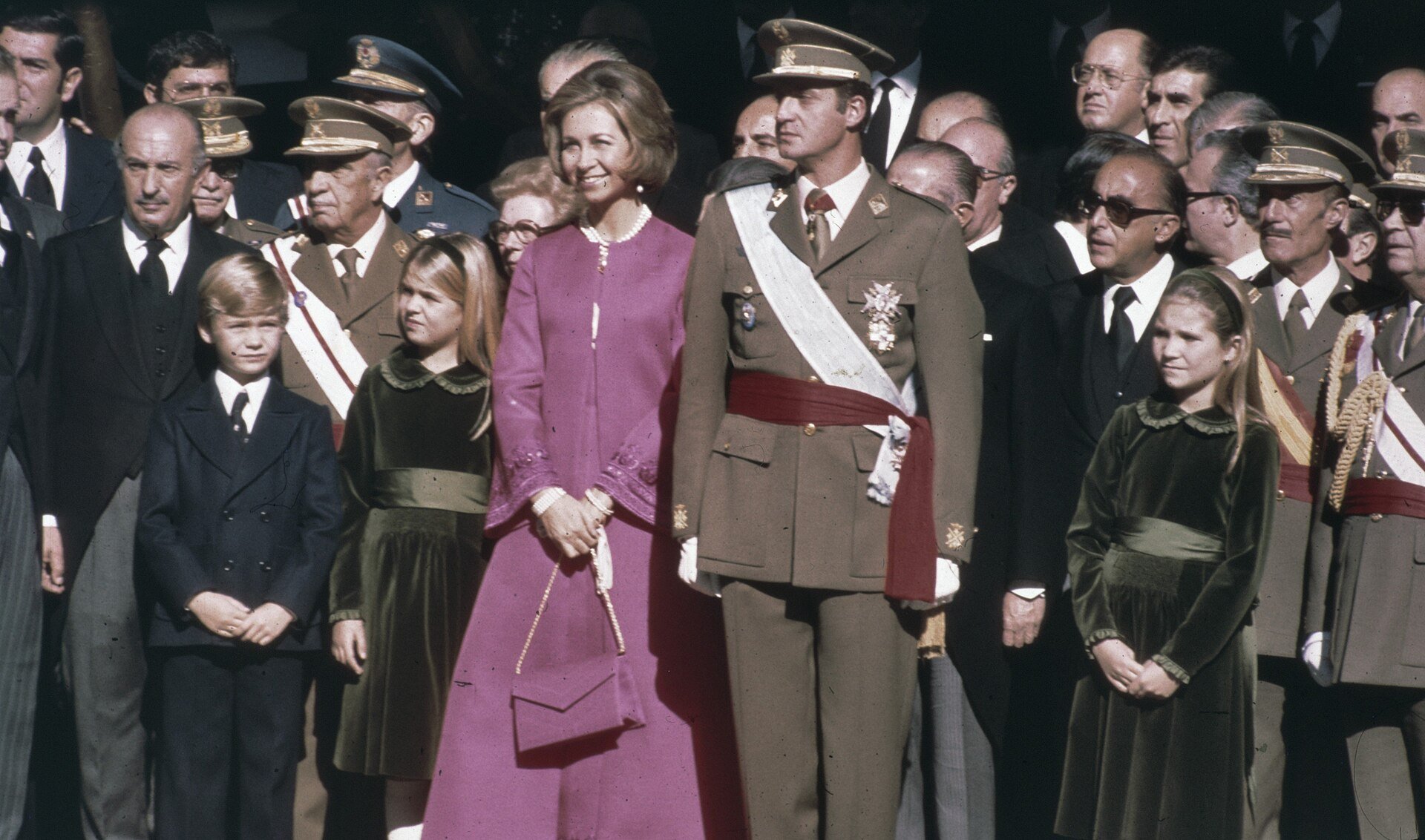
Fig 3. The Spanish parliament declared Prince Juan Carlos as King of Spain on November 22nd, 1975.
Wikimedia Commons contributors, "File:De proclamatie en beëdiging van Prins Juan Carlos tot Koning van Spanje tijdens , Bestanddeelnr 254-9764.jpg," Wikimedia Commons,https://commons.wikimedia.org/w/index.php?title=File:De_proclamatie_en_be%C3%ABdiging_van_Prins_Juan_Carlos_tot_Koning_van_Spanje_tijdens_,_Bestanddeelnr_254-9764.jpg&oldid=946214977 (accessed April 15, 2026).
Adolfo Suárez, who was appointed Prime Minister within a year of Franco’s death, passed the Law of Political Reform in 1976, held and won democratic elections in 1977, and negotiated the approval of the Spanish Constitution in 1978. [18]In 1982, a peaceful transfer of power occurred with Suárez’s conservative Center Democratic Union (UCD) handing over power to Felipe González’s Social Party (PSOE), a moment that poignantly recalled the past political failure that led to the end of the Second Spanish Republic.
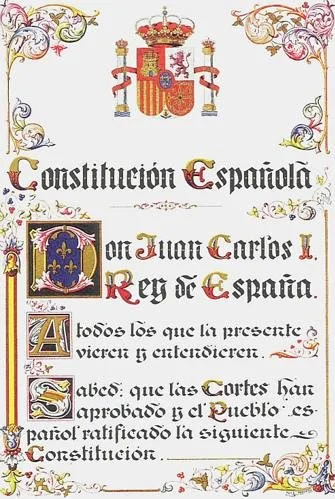
Fig 4. The Spanish Constitution of 1978 that established Spain as a parliamentary monarchy.
Wikimedia Commons contributors, "File:Primera página de la Constitución española de 1978, con escudo de 1981.jpg," Wikimedia Commons,https://commons.wikimedia.org/w/index.php?title=File:Primera_p%C3%A1gina_de_la_Constituci%C3%B3n_espa%C3%B1ola_de_1978,_con_escudo_de_1981.jpg&oldid=1131410274 (accessed April 13, 2026).
The Spanish transition to democracy has been deemed a “miracle” and a model transition because of the way it consolidated democratic institutions and solved complicated national questions in a short period of time without violence.[19] However, the Francoist past still haunted Spain’s present and, if not reckoned with, was threatening to affect its stable, democratic future. Discussing Spain’s successful transition at the cost of a meaningful encounter with the past, historian Carmina Gustrán explains, “That Spain that wished to be modern and European, that past felt a bit uncomfortable so we left it behind.”[20] Gustrán pinpoints how the transition government overlooked the history of systemic violence and targeted oppression, consequently ignoring the wounds of thousands of Spaniards who suffered at the hands of the Francoist government in favor of a quick transition to democracy.
The Role of Picasso’s Guernica in National Reconciliation
The Francoist past posed a notable challenge to the new democracy, which had to navigate the question of how to satisfy the victims of Franco’s harsh politics while simultaneously avoiding further political polarization that could harm the peaceful Transition; as historian Tony Judt asserts, “The splintering of the [Spanish] nation-state was driven by past memories.”[21] Because the Transition was a reform from within rather than a complete break from the past regime, and especially given Suarez’s past as a member of Franco’s Falange Party, there was a lack of full political accountability for high-ranking Francoist officials. Strong protests put pressure on the government to grant amnesty to political prisoners, especially in the Basque Country, which was home to the most political prisoners per inhabitant.[22] In response, the government passed the Amnesty Law in 1977, which was monumental in that it pardoned many political victims of Francoism and granted amnesty to those responsible for acts of violence during the old regime. Amnesty became an integral pillar in the success of the Transition as it established a “collective amnesia” known as the Pact of Forgetting toward the past in order to avoid political polarization.[23] While the Amnesty Law intended to prevent political polarization and look to the future, the refusal to reconcile the divides that Franco perpetuated only created stalled confrontations with historical memory.
The most extreme and dangerous example of political dissatisfaction that surrounded the Transition was the paramilitary and political organization ETA (Euskadia Askatasuna) [Basque Homeland and Liberty]. Formed in response to Franco’s attacks against regional cultural expression, the armed separatist group drew upon the legacy of Basque suppression at the hands of the Spanish state, which notably included the bombing of Guernica, to challenge Spanish democratization. Despite amnesty laws meant to curb potentially polarizing engagement with the past, the ETA threatened national reconciliation and Spanish unity by carrying out targeted bombing campaigns against Spanish politicians, police (Guardia Civil), and journalists for over three decades after Franco’s death until the cessation of the group’s armed activity in 2011.[24]
While the ETA sought to challenge the new centralized government and advocate for regional autonomy through violence, rumors of Guernica’s repatriation sparked debates regarding regional identity and national reconciliation in the cultural sphere. The devastation of the 1937 bombing of Guernica, immortalized through Picasso’s painting, became a historic event that the Spanish people rallied around as a show of their past hardship and national strength, but first and foremost, it was a Basque tragedy.
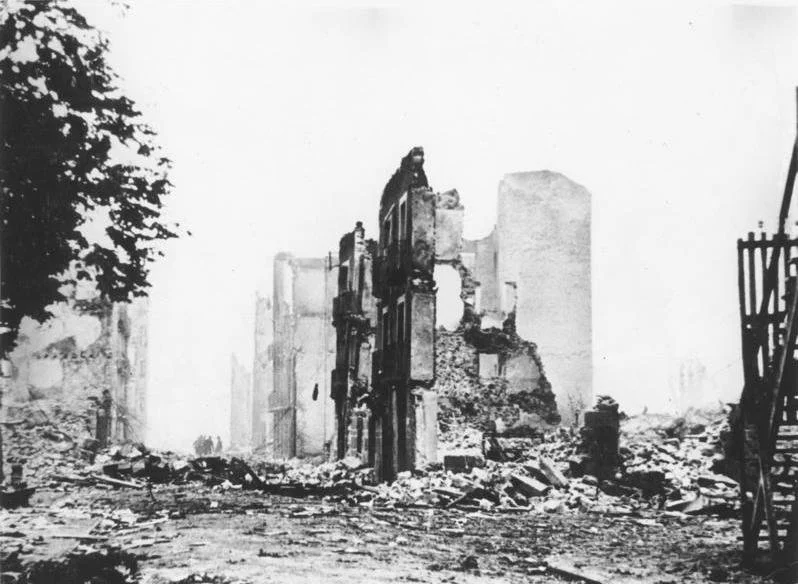
Fig 5. The aftermath of the aerial bombing of Guernica (Gernika) during the Spanish Civil War by German and Italian aircraft in support of Franco's Nationalist forces.
Wikimedia Commons contributors, "File:Bundesarchiv Bild 183-H25224, Guernica, Ruinen.jpg," Wikimedia Commons,https://commons.wikimedia.org/w/index.php?title=File:Bundesarchiv_Bild_183-H25224,_Guernica,_Ruinen.jpg&oldid=1193427866 (accessed April 13, 2026).
The bombing at the hands of the Nationalists was a strategic symbolic attack: carried out on the day of the local market in order to maximize civilian casualties and targeting the city that most-represented the historical autonomy of the Basque Country.[25] The Basques, who had been speaking their own language, practicing their own culture, and following their own laws since pre-Roman times, felt entitled to the painting as it represented their regional history and unity. A movement arose in opposition to the proposed home for Guernica in Madrid with the slogan “el Guernica a Gernika” (Guernica to Gernika) calling for the transfer of Picasso’s painting to the city of its namesake. The Basque “moral, artistic, sociocultural, and historic reasons” to house the painting coincided with their demands of the new government regarding regional autonomy and political amnesty.[26] Despite the government’s unwillingness to give on where the painting would be kept, gaining possession of Guernica would reflect government accountability for the bombing, an action that Franco never took during his rule, and despite controversy over its location, could serve as a way to acknowledge the Basque history of suffering that is also a part of Spain’s history. Historian Paloma Aguilar reflects on the significance of Picasso’s painting in this political conversation, noting, “Acknowledgement of the bombardment would serve to rehabilitate the defeated population in general and, in turn, reconcile the Basques with the rest of Spain that had lost during the war, with the aim of enhancing their integration into the democratic process.”[27]
In keeping Guernica as a national rather than strictly Basque icon, the Spanish government recognized the claim that many Spaniards felt toward the painting, as its presence in the country’s capital city would serve as a way to heal the wounds of the past. In 1977, the Spanish Senate unanimously approved a motion to acquire the painting, with politician Joaquín de Azcárate advocating for the motion by saying that Spain needed the Guernica “for what it signifies and symbolises in itself.”[28] The act of bringing Guernica to Spain itself was powerful enough to unite politicians across political parties, while the painting’s symbolic value as a work of art that directly engages Spain’s tragic past was an important path forward in national reconciliation. An opinion piece in El País on the day of Guernica’s arrival to Spain declares, “Guernica cannot be contemplated as only a pictorial image of the civil war, but as a symbol of the reconciliation between Spaniards of the most diverse ideologies.”[29] Arriving in Spain in 1981, at a time when the government was struggling to grapple with the past in a way that resisted societal divide, Guernica was incredibly important because of the manner in which it could speak to the past without explicitly politicizing it. The haunting imagery of a woman screaming with a dead child in her arms or of entangled bodies and broken limbs construct a symbol of suffering and pain around which all who had memories of the Civil War or Franco’s rule could identify with. As Spanish journalist Francisco Umbral eloquently put it in a 1981 El País article, “We are all Guernica, we all pose and continue to pose for the artwork. Picasso painted us as an entire body.”[30] That being said, the painting’s arrival to Spain was an incredibly important moment in which Spaniards felt unified as a people who had suffered and overcome a violent past together.
Looking to Europe: European Integration
The transfer of Guernica to Spain was not only an event with national and regional dimensions. Europe was also paying attention. After decades of economic stagnation and political distance, the 1970s saw Mediterranean European finally emerge from the peripheries of Europe. Democratic transitions swept across Southern Europe, starting with Greece in 1974, then occurring in Portugal when they finalized a democratic constitution in 1976, and finally reaching Spain after the death of Franco in 1975 and the establishment of the constitution in 1978.[31] After decades of isolation from the rest of Western Europe because of political differences, Spain and the other new Mediterranean democracies looked to the European Community (EC) as a final step in their democratization. Luckily, Europe was also looking at them. The 1970s and 1980s were one of the most significant periods of European enlargement, with the United Kingdom, Denmark, and Ireland accepted as new members of the EC in 1973.[32] Consisting of the most prosperous and liberal European countries, such as France, Germany, and the United Kingdom, and symbolically associated with liberal democracy and political freedom, the EC was enticing for the newly democratic Southern countries. Admission into this modern union would consolidate their democratic transitions and come with major economic and political benefits. As Timothy Garton Ash notes, “For southern Europeans…the struggle for freedom, democracy and Europe was one and the same struggle…Freedom meant Europe and Europe meant freedom.”[33]
The Spanish and Mediterranean transitions to democracy, then, were “inseparable from another: towards membership of what by then was often called simply the European Community.”[34] Spain had felt discontent with their European exclusion in the latter half of Franco’s rule, as his regime had applied for membership in February 1962 but was rejected on the grounds of lacking “democratic credentials.”[35] Following Franco’s attempts to bring Spain closer to Europe, 118 anti-Franco Spaniards, the majority of whom were in exile, met in Munich to draft a resolution for the European Movement that demanded a transition to a democratic state as a prerequisite for closer association between Spain and the EC.[36] Pro-European sentiment was already present in Spain and by Spaniards outside of Spain, but it was during the process of democratization that public support for EC membership and European integration became clear with Spaniards consistently showing EC support in Eurobarometer polls.[37] Therefore, upon their successful transition to democracy, Spain saw admission to the EC as a reward for and final consolidation of their political modernization. While Greece was admitted to the EC in 1981, as there were no powerful arguments against its admission despite its weaker economy, France stalled the process of Portuguese and Spanish acceptance because of the Mediterranean agricultural competition that their entrance would involve.[38] During this time, Spain joined NATO in 1982, and after nine years, Spain and Portugal were finally granted entry into the EC in 1986. Politically and economically, Spain had “arrived” in Europe and cemented itself as a modern, democratic, and European country.
Culturally, the transfer of Guernica to Spain was important in elevating Spain in the European cultural scene and showing that the country had healed from its past. Discussing the success of Guernica upon arriving to Spain, Javier Tusell, who represented the Spanish Ministry of Culture in negotiations with MoMA, explained, “The lesson is that with [Guernica’s] return it has healed the last wound of the cultural war, and, on the other hand, the Administration has become aware of contemporary art.”[39] As Tusell points out, hanging Guernica in Madrid was a way to demonstrate that Spain had moved on from the past and was interested in a modern, peaceful future. To his other point, Guernica had an even more important role for the new Spanish democracy as it served as a way to show that the country was interested in cultivating its modern cultural and artistic capital, similar to how art was used to build cultural relevance toward the end of Franco’s rule. The editors of El País represented the sentiment of many Spaniards when they published a 1979 editorial called “El ‘Guernica’ y Guernica” imploring the Spanish Ministry of Culture to take a more active role in promoting Spanish art and culture, specifically pointing to the French government’s active role in celebrating Picasso’s life and the promotion of Guernica by the MoMA. Reflecting on the transfer of Guernica to Spain after a year, the Spanish Director of Fine Arts, Archives, and Libraries at the time, Alfredo Pérez de Armiñán, emphasized the cultural significance of the masterpiece: “In any case, the repossession of Guernica was a cultural rather than economic issue.”[40] Gaining ownership of Guernica turned out to be one of the most important cultural moments of the Spanish Transition, as it established peace, unification, and modernism as a symbol of the nation.
Conclusion
Within a year of Guernica’s arrival in Spain, over a million people had visited the masterpiece as it hung behind bulletproof glass at the Casón del Buen Retiro, next door to the esteemed Museo del Prado.[41] The painting’s political importance has yet to cease, and its message is not stagnant. Today, it is still a powerful symbol that stirs emotions, causes controversy, and finds itself a part of political conversations. At the United Nations, a 10 by 22 foot tapestry of the painting has hung at the entrance to the Security Council Chamber since September 1985.[42] Recently, in November 2025, President Zelensky of Ukraine visited the painting with the Spanish Prime Minister, drawing parallels between the events at Guernica and his country’s ongoing suffering in the largest European war since World War II.[43] In Spain, Guernica has become a symbol to which Basque nationalists refer as a site of Basque strength, resistance, and union. And, in the small Basque town of Gernika, the painting’s imagery has been used in protest of Israel’s military action in Gaza.[44]
Although Guernica’s long political life began before it entered Spain for the first time, the Spanish government’s recuperation of Picasso’s masterpiece marked the moment at which Spain was completely transforming as a nation, both politically and culturally. During a transitional period where the Spanish government and people were eager to move on from the past, Guernica was a way for Spaniards to engage with their history, from the Spanish Civil War to Franco’s dictatorship and finally to democratization and modernization. A society that subscribed to the Pact of Forgetting to make the Transition easier was confronted with its violent past and was able to look to Picasso’s moving imagery to find a way forward through peace and unity. After four decades of political separation, Spain came together to successfully transition to democracy and repossess this work of art, one of their first steps as a unified nation. On the international stage, Spain joined Europe as a modern and liberal country with a strong cultural and artistic heritage, most notably represented by Guernica hanging in the capital city. The painting has not left Madrid since its arrival, despite continuing requests from the Basque Country and a final transfer in 1992 to the new Museo Reina Sofia.[45] In the capital of Spain, the painting still stands as a symbol of national unity, of peace, and of a country that has grappled with and continues to overcome its tragic past.
Endnotes
[1] James Attlee, “At Some Point in the Near Future,” in Guernica: Painting the End of the World (Head of Zeus Ltd., 2017), 200.
[2] Attlee, “At Some Point in the Near Future,” 193.
[ 3] “Guernica to go to Madrid’s Museo del Prado,” The Museum of Modern Art, September 10, 1981, https://www.moma.org/momaorg/shared/pdfs/docs/press_archives/5928/releases/MOMA_1981_0059_60.pdf.
[4] Diana Arrastia, “La historia de la recuperación del Guernica, el cuadro que tardó más de 40 años en llegar a España,” El Grito, November 28, 2024, https://www.elconfidencial.com/el-grito/2024-11-28/la-historia-oculta-tras-la-recuperacion-del-guernica_4011174/.
[5] Attlee, “At Some Point in the Near Future,” 191.
[6] Aleksandra Hadzelek, “Spain’s ‘Pact of Silence’ and the Removal of Franco’s Statues.” In Past Law, Present Histories, ed. Diane Kirkby (ANU Press, 2012), 157, http://www.jstor.org/stable/j.ctt24h3t8.12.
[7] J. L. Sullivan, ETA and Basque Nationalism: The Flight for Euskadi, 1890-1986 (Routledge, 1988), 27.
[8] Omar G. Encarnación, “Spain after Franco: Lessons in Democratization,” World Policy Journal 18, no. 4 (2001): 37, http://www.jstor.org/stable/40209776.
[9] Tony Judt, Postwar: A History of Europe since 1945 (Penguin Press, 2005), 517.
[10] Raymond Carr, “Introduction: The Spanish Transition to Democracy in Historical Perspective,” in Spain in the 1980s: The Democratic Transition and a New International Role, ed. Robert P. Clark and Michael H. Haltzel (Ballinger Publishing Company, 1987): 2.
[11]Genoveva Tussell García, “Picasso, a political enemy of Francoist Spain,” The Burlington Magazine 155, no. 1320 (2013): 172, https://burlington.org.uk/media/_file/generic/article-38904.pdf.
[12] Chadd Scott, “Art During Dictatorship: Abstraction In Spain Under Franco,” Forbes, February 26, 2023, https://www.forbes.com/sites/chaddscott/2023/02/26/art-during-dictatorship-abstraction-in-spain-under-franco/.
[13] Tussell García, “Picasso, a political enemy of Francoist Spain,” 172.
[14] Jutta Held and Alex Potts, “How Do the Political Effects of Pictures Come About? The Case of Picasso’s ‘Guernica,’” Oxford Art Journal 11, no. 1 (1988): 39, http://www.jstor.org/stable/1360321.
[15] Attlee, “At Some Point in the Near Future,” 192-3.
[16] Judt, Postwar, 523.
[17] Encarnación, “Spain after Franco,” 38.
[18] Carr, “Introduction,” 4-5.
[19] Adam Przeworski, Democracy and the Market: Political and Economic Reforms in Eastern Europe and Latin America (Cambridge University Press, 1991), 8.
[20] “‘Hora 25’, desde el Valle de Cuelgamuros: ‘Aquí no hay partidismo, se está intentando cerrar algo que estaba mal hecho hace tiempo,’” Cadena SER, November 17, 2025, https://cadenaser.com/nacional/2025/11/17/edicion-especial-de-hora-25-este-lunes-desde-el-valle-de-cuelgamuros-cadena-ser/.
[21] Judt, Postwar, 702.
[22] Paloma Aguilar, “The Memory of War and the Lessons of Peace in the Democratic Transition,” in Memory and Amnesia: The Role of the Spanish Civil War in the Transition to Democracy, 1st ed., trans. Mark Oakley (Berghahn Books, 2008), 191, https://doi.org/10.2307/jj.7079916.11.
[23] Fransisco Colom, “The Spanish Transition Forty Years Later: Democracy, Devolution and Pluralism.” Global Centre for Pluralism (2017): 18, https://www.pluralism.ca/press-release/spanish-transition-forty-years-later-democracy-devolution-pluralism/.
[24] Juan Díez Medrano, Divided Nations: Class, Politics, and Nationalism in the Basque Country and Catalonia (Cornell University Press, 1995), 140-41.
[25] “El ‘Guernica’ y Guernica,” El País, June 23, 1979, https://elpais.com/diario/1979/06/24/opinion/299023208_850215.html.
[26] Agustín Ibarrola, “El bombardeo del ‘Guernica,’” El País, October 3, 1979, https://elpais.com/diario/1979/10/04/opinion/307839609_850215.html.
[27]Aguilar, “The Memory of War,” 203.
[28] Aguilar, “The Memory of War,” 203.
[29] “El ‘Guernica,’ un símbolo,” El País, September 10, 1981, https://elpais.com/diario/1981/09/11/opinion/369007202_850215.html; all translations are my own.
[30] Francisco Umbral, “Guernica,” El País, September 15, 1981, https://elpais.com/diario/1981/09/16/sociedad/369439208_850215.html.
[31] Göran Therborn et al., “The 1970s and 1980s as a Turning Point in European History?” Journal of Modern European History 9, no. 1 (2011): 19, https://www.jstor.org/stable/26265922.
[32] Judt, Postwar, 526-27.
[33] Timothy Garton Ash, Homelands: A Personal History of Europe (Yale University Press, 2023), 33.
[34] Garton Ash, Homelands, 33.
[35] Carr, “Introduction,” 10.
[36] Luis Martín-Estudillo, “Sense and Sensuousness: Approaching Europe under Franco’s Dictatorship,” in The Rise of Euroskepticism: Europe and Its Critics in Spanish Culture (Vanderbilt University Press, 2018), 72-3, https://doi.org/10.2307/j.ctv1675bt7.6.
[37] Sebastián Royo, “Lessons from the Integration of Spain and Portugal to the EU,” PS: Political Science and Politics 40, no. 4 (2007): 689, http://www.jstor.org/stable/20452051.
[38] Just, 527.
[39] Rosa Maria Pereda, “Un millón de personas ha visto el 'Guernica' en el Casón del Buen Retiro,” El País, Sept. 9, 1982, https://elpais.com/diario/1982/09/10/cultura/400456802_850215.html.
[40] Pereda, “Un millón de personas.”
[41] Pereda, “Un millón de personas.”
[42] “Guernica (Tapestry after 'Guernica' by Pablo Picasso),” United Nations, accessed December 10, 2025, https://www.un.org/ungifts/guernica-tapestry-after-guernica-pablo-picasso.
[43] Suman Naishadham, “Zelenskyy visits Picasso’s ‘Guernica,’ drawing parallel to Ukraine’s bombing,” PBS News, November 18, 2025, https://www.pbs.org/newshour/world/zelenskyy-visits-picassos-guernica-drawing-parallel-to-ukraines-bombing.
[44] “Sirens blare in Spanish civil war town of Guernica in solidarity with Gaza,” Al Jazeera, December 10, 2023, https://www.aljazeera.com/video/newsfeed/2023/12/10/sirens-blare-in-spanish-civil-war-town-of-guernica-in-solidarity-with-gaza.
[45] Adela Gooch, “'Guernica,' Still Under Fire,” Washington Post, August 3, 1992, https://www.washingtonpost.com/archive/lifestyle/1992/08/03/guernica-still-under-fire/1db027ff-a064-4da6-ac84-683a2e5695a7/.



Abby O’Connor
Abby O'Connor is a graduating senior at the University of Notre Dame pursuing a B.A. in Art History (Honors) and Anthropology with a minor in European Studies. Her academic interests include modern and contemporary art, Spanish history, and cultural identity. She is currently writing an Honors Senior Thesis in Art History investigating how site-specific sculpture in the Spanish Basque Country engages with regional politics, history, and ecology. She has also enjoyed participating in two research projects with the Nanovic Institute for European Studies, where she contributed pieces about sites of historical memory and public art's political power. Beyond her research, she spends time journaling, reading historical nonfiction, and listening to Latin music.