
‘As foul as thou art’: Reading Early Modern Revenge Drama as a Prison Abolitionist
Introduction
In the eyes of the law, to be stabbed is to be murdered, but to be executed by hanging is not. When violence is interpersonal, it is labeled “revenge”; when carried out by a court or a state, it is labeled “justice.” In revenge drama, however, the conventions of death and legality begin to bend. The role of the revenger, a wronged tragic hero who uses extralegal means to avenge violence committed against them, creates a space for capital punishment and other forms of state violence to be interrogated differently. The genre is defined by its restructuring of traditional justice systems and norms, creating an opportunity to view revenge tragedy through modern frameworks of restorative justice, theories of prison abolitionism, and theories of capital punishment abolitionism. Early modern English plays like The Spanish Tragedy (1592) by Thomas Kyd , which focuses on grieving father Hieronomo avenging the murder of his son, and The Maid’s Tragedy (1619) by Francis Beaumont and John Fletcher, in which protagonist Evadne murders the King of Rhodes for keeping her as his secret mistress, are two examples of how revenge drama reframes justice and provides a radical space for othered and marginalized members of society to find the closure they are otherwise denied.
Here, I examine the transformation of justice that takes place in these stories in conjunction with modern day prison abolition, which also engages in a radical reframing of traditional retribution . Prison abolitionists aim to minimize and eliminate prisons and capital punishment, advocating for systems that address harm through reform, education, and rehabilitation rather than incarceration and punishment. Roots of the movement go as far back as the 17th century, but many abolitionist leaders and scholars, such as Angela Davis, generally point to the 1973 Attica Prison Uprising and the subsequent publishing of works like Thomas Mathiesen's 1974 The Politics of Abolition and Fay Honey Knopp's 1976 Instead of Prisons: A Handbook for Abolitionists as the origin for our contemporary movement.[1] Specifically, abolitionists critique the carceral legal system as fundamentally unable to address the harm done to the subjugated and enacted by the powerful. Alongside abolitionist theory, reading Evadne and Hieronomo as parallel characters who each use extralegal means to resist oppression and reclaim autonomy, enhances understanding of the political significance of these plays both in their own era and in our contemporary one.
Hieronomo, Bel-imperia, and Aesthetic Justice
Inspired by the Roman playwright Seneca, English revenge tragedy was launched into stardom in public theaters in London in 1580s with the performance of The Spanish Tragedy, which was performed well into the 17th century and became a cultural referent in the theater for decades. Emulated by Shakespeare in plays such as Hamlet and Titus Andronicus, revenge drama enjoyed extreme popularity through the Elizabethan and early Jacobean era. Like any subgenre, there are certain conventions that appear in most English revenge plays: the presence of a ghost or spirit, exceptionally creative methods of poisoning, a precarious line between going mad and pretending to go mad, metatheater and plays within the play, political turmoil, and, of course, plenty of murder and bloodshed.
The Spanish Tragedy follows the complex politics of the unification of Spain and Portugal. The prince of Portugal, Balthazar, is kidnapped and brought to Spain during a battle between the two nations. Despite the fact that Balthazar was captured by Horatio, the son of the King’s marshall, the higher-ranking King’s nephew Lorenzo uses his status to take the credit, which leads to an unlikely friendship between Lorenzo and Balthazar. Lorenzo’s sister, Bel-imperia, is in love with Horatio, but when her brother and Balthazar realize that this romantic partnership threatens the possibility of a marriage between Bel-imperia and Balthazar which would unite their kingdoms, the young noblemen murder Horatio and hang him publicly on a bower. Upon seeing the body of his son, Horatio’s father Hieronomo vows to take revenge against the murderers, but encounters so many obstacles attempting to get legal justice that he becomes disillusioned with the Spanish court and instead resorts to extralegal action. Ultimately, Hieronomo’s method of revenge is to stage a play, cast Lorenzo and Balthazar in it, and substitute real daggers in the place of props so that he and Bel-imperia can enact revenge by stabbing and killing the murderers (the two revergers commit suicide afterward with the same knives).
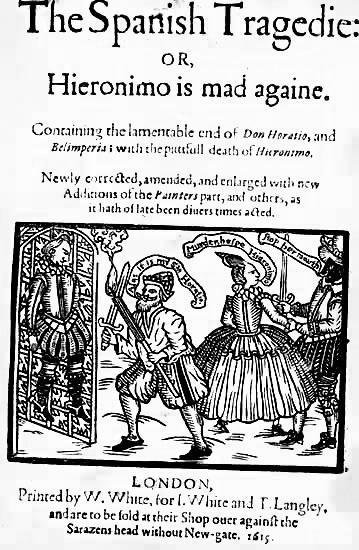
Fig 1. The Spanish Tragedy. Photograph. Wikimedia Commons. https://commons.wikimedia.org/w/index.php?title=File:Kyd-SpanishTragedie-Title.jpg&oldid=1006757867
There are many reasons for the popularity of the genre and this play in particular, but a primary one is that it was very culturally relevant to contemporary audiences. Multiple scholars, including Anthony Gaughan, have referred to Elizabethan England as a prototypal “surveillance state.”[2] Queen Elizabeth had a complex, advanced network of spies working for her, as the political and religious climate in England was highly contentious (see the Babington plot, Anthony Babington’s unsuccessful attempt to assassinate Queen Elizabeth I and install Elizabeth’s prisoner, the Roman Catholic Mary Stuart, on the throne).[3] Playwrights were deeply involved in this climate of suspicion; Thomas Kyd himself was imprisoned and tortured for suspected heresy. These concerns naturally bled into the plays being written at the time. For writers, actors, and audiences alike, I argue that revenge drama was a direct result of this climate of state surveillance and fear. The interest in enacting revenge upon corrupt governments, monarchies, and nobles who prevent true, “legal” justice from taking place is too familiar for coincidence. Linda Woodbridge examines revenge plays as forms of resistance, writing that “the fairness fixation and relish of vigilantism reveal widespread resentment of systemic unfairness – economic, political, and social – as the Renaissance witnessed severe disproportion between crime and punishment, between labor and its rewards.”[4] While playwrights strategically placed all of their revenge tragedies far enough outside of England in terms of location or time period to avoid suspicion, it is likely that their implications and critiques of contemporary English society were missed by few.
To begin to consider the cultural implications of revenge plays inside of a surveillance state, we must first define “justice,” a term thrown around obsessively once violence strikes. There is a compulsive need for murderers, thieves, and wrongdoers to be “brought to justice,” but what does being brought to justice entail? To most, it seems to mean to suffer consequences for your actions; to others, particularly advocates for capital punishment, it means ensuring that this wrongdoer suffers equally as much as the suffering they have caused. In history and in many early modern English plays, justice traditionally takes a retributive form, which is predicated on the idea of restoring symmetry between victim and perpetrator, but this is often impossible when the symmetry has been destroyed by something like an injury or death. The legal system’s way of trying to mend this asymmetry is through incarceration or capital punishment, but many prison abolitionists encourage considering more deeply whether this exchange is equivalent or indeed even comprehensible. In the end, the emotional void of loss is not one that can be meaningfully filled by punishment. In her analysis of The Spanish Tragedy, Eonjoo Park distinguishes between traditional ‘retributive’ forms of justice and the ‘aesthetic’ forms, arguing that the character of Hieronimo redefines justice from its traditional retributive framework of “equality.” Through Hieronimo and his play, Park writes, “the transition of a focus from the perpetrator’s punishment to the victim’s emotional needs marks how justice is redefined along aesthetic lines.”[5] Hieronimo’s futile search for legal recourse for his son’s death shows this incongruity. Because of Lorenzo’s high ranking, his manipulation is effective in convincing the other nobility in the play to ignore Hieronimo’s pleas: “My son whom naught can ransom or redeem!”[6] Hieronimo in general finds that the legal system creates a sterile arena with no allowance for him to express his true anguish and grief. “Yet still tormented is my tortured soul,” he says, “Soliciting for justice and revenge.”[7] Bel-imperia, too, faces weaponization of the legal system against her. Her own brother locks her in a tower to prevent her from telling anyone that she witnessed Horatio’s murder, effectively imprisoning her and leaving her so desperate that she writes a note to Hieronomo in her own blood about what has happened. Her situation mirrors that of many real life victims throughout history; Bel-imperia’s legal system is flawed as such that she, the victim, faces more punishment than her abuser.
A pattern emerges in revenge tragedy wherein people who are othered–whether because of their class, their race, or their gender–must resort to extralegal means in order to be heard and find closure. In Bel-imperia’s case, it is gender, and in Hieronomo’s, it is class. After Hieronimo’s attempts to bring the royals’ attention to the murder of his son are brushed off, he is struck with this realization, lamenting that “Nor aught avails it me to menace them, / Who as a wintry storm upon a plain, / Will bear me down with their nobility.”[8] This begins the tragic realization of Hieronimo’s that, in the eyes of the noble court to which he has dedicated his life, he and his son are, ultimately, disposable. That realization is the catalyst for Hieronimo’s plan to take revenge on his own terms, and where I argue that Hieronimo’s revenge becomes radical and subversive. What revenge plays and prison abolitionists have in common is the belief that retributive justice, also known as mimetic justice or the “eye for an eye” mentality, is not an adequate way of amending harm. Hieronimo resists systemic injustice by refusing to accept the court’s shunning of him, and especially by allowing Bel-imperia to partake in his revenge against Lorenzo and Balthazar. She resists the marriage with Balthazar which was arranged without her consent and reclaims her autonomy by avenging the murder of Hieronomo, her true and chosen love.
When offenses are committed against people who are othered, marginalized, or subjugated, the law very rarely has adequate mechanisms in place for the subjugated person to obtain justice--because the law doesn’t consider them human enough to criminalize violence against them. This is equally true in the early modern period as it is today. Neither leave room for victims to grieve, heal, or recover agency--but both are very eager to speak on behalf of victims. Bel-imperia’s story showcases the consequences of this, as she is forced into a loveless political marriage, imprisoned, and stripped of her agency. Evadne’s story in The Maid’s Tragedy is another example of how the legal system fails female victims; in her case, when it comes to sexual violence.
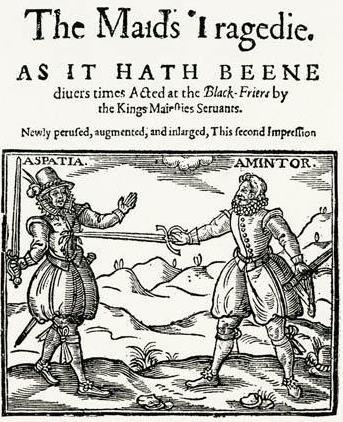
Fig. 2. The Maid’s Tragedy. Photograph. Wikimedia Commons. https://commons.wikimedia.org/w/index.php?title=File:The_Maid%27s_Tragedy.jpg&oldid=887394252
Evadne, Sexual Violence, and Catharsis
Evadne is the mistress of the King, who arranges her marriage with Amintor, a young noble, to cover up their relationship. Evadne goes on to murder the King, and after doing so, asks Amintor to be her husband in truth; when he rejects her, she stabs herself. Evadne–who I argue is the central revenger of The Maid’s Tragedy–has her “purity” and “chastity” not stolen from her, but rather from the patriarchs in her life, particularly her brother Melantius, who calls her a “glorious whore.”[9] Rape in early modern England was usually considered a property crime; when a woman was violated, it was a violation of the “property” of the men she belonged to. Therefore Melantius considers the offense against Evadne to be an offense against him and his masculinity. This is why he feels entitled to demand Evadne kill the King; he argues that violence is the only way that she can cleanse herself. However, I argue that Evadne ends up killing the King not for these reasons, but because it is her only choice to free herself. In her examination of legal records from early modern England, Donatella Pallotti finds that “However recurrent the theme in literature may be, rape as a criminal offence constituted less than one per cent of all indictments. Though legal authority and statutory law regarded rape as a serious crime, incurring severe punishment, the records of the main law courts show that most of the small proportion of men charged with rape were found ‘not guilty’, reprieved, described as ‘at large’, or released without trial. Only a few of the accused were convicted and hanged.”[10] Even if the King had been a regularly-ranking man, Evadne could never have gotten justice for her abuse, because sexual violence against women was so normalized and went largely unpunished. (Because Evadne seemed accepting of her status as mistress at the beginning of the play[11], many would hesitate to call the King her rapist at all, but I agree with Samantha Dressel’s argument that “Rape can be reinterpreted through time… prior consent does not imply future consent. Second, and perhaps more importantly, Evadne’s very ability to consent is brought into question because of the King’s high status.”[12] As Evadne stabs the King, calling herself “the most wronged of women”[13] for what he has done to her, she definitely seems to have a clearer perspective of her victimhood.) Amintor has a similar observation to Hieronimo’s about monarchy: “Thou hast named a word that wipes away all thoughts revengeful; in that sacred name ‘The King’ there lies a terror.”[14] A parallel is created here between Evadne and Hieronomo as revengers–like the power that Lorenzo and the King wield over Hieronomo, Evadne’s perpetrator is a powerful man who controls the very concept of legality, and like Hieronomo, Evadne’s revenge is an act of resistance against systemic injustice. Extralegal revenge was Evadne’s only option, due to the fact that her own rapist dictates the definition of crime, and he would never incriminate himself.
One of the most common questions volleyed at 21st century prison abolition advocates is the title of an article by Angel Parker: “What About the Rapists and Murderers?” Parker, a sexual assault survivor who works as a domestic violence counselor in prisons, answers, “When people ask me what we will do with the rapists and murderers if we abolish the prison industrial complex, including prisons and police, I typically respond ‘what are we doing with them now?’... To ask implies that rapists and murderers primarily make up the 2.3 million people currently incarcerated.”[15] They do not; according to the Federal Bureau of Prisons, almost half of people in prison, 43.1%, are held for “drug offenses.” Only 13.7% are held for “sex offenses.”[16] “Only about 6% of rapists will ever serve a single day in jail, and only around 0.7% of rapes end in a felony conviction,” Parker writes. “In fact, there are many more survivors of rape and sexual assault in prison than there are rapists themselves… The carceral system exposes its own lack of genuine care and accountability to survivors of rape and sexual assault.”[17] This same pattern plays out in early modern England–these numbers run parallel to the ones Pallotti found in early modern records, and are shown in fiction through Bel-imperia (who, while not suffering rape, faces gendered violence and imprisonment) and Evadne, who are treated not as victims but as monstrous themselves.
This othering of women is the reason why state violence has a different impact on them than it does on men. In her touchstone abolitionist text, Are Prisons Obsolete?, Angela Davis writes that “Masculine criminality has always been deemed more ‘normal’ than feminine criminality” and because of this, “There has always been a tendency to regard those women who have been publicly punished by the state for their misbehaviors as significantly more aberrant and far more threatening to society than their numerous male counterparts.”[18] When they see Evadne’s murder of the King, the guards ask, “who can believe a woman could do this?”[19] The key difference is that the punishment of women by the state is a relatively new invention; as Davis also points out, ‘punishment’ for women has historically been doled out in the domestic sphere. Domestic violence against women, for example, has been (and still is) far less frowned upon than women who kill their abusive partners.

Fig 3. Angela Davis at Oregon State University. Oregon State University. Wikimedia Commons. https://commons.wikimedia.org/wiki/File:Angela_Davis_at_Oregon_State_University.jpg
Here returns the stiffness of the law that Hieronimo finds so stifling, so unconducive to healing, catharsis, and closure: the law has no personal caveats. When an othered person or a victim commits violence, very rarely will anyone in the courtroom ask them ‘why?’ and be able to meaningfully change their fate because of their answer. But a profoundly common misunderstanding about history is the idea that just because revenge was difficult for marginalized people, they indeed never took it. Early modern drama reveals endless plots to the contrary, demonstrating that even if they had to find other (extrajudicial) forms of agency and self-protection, they did. When Evadne tells the King that she is going to kill him, he protests, “Thou art too sweet and gentle.” Evadne replies, “No, I am not. / I am as foul as thou art, and can number / as many such hells here.”[20] Underestimating people from oppressed groups not only further reduces their humanity, but erases facts and resistances that run counter to traditionally accepted ones.
Additionally, the concept of whiteness always plays a role in the conceptualization of justice and victimhood. Bel-imperia and Evadne are from Spain and Rhodes respectively, and to modern audiences, they read as white women, but still there is the dimension of early modern England’s racialization of revenge and violence. Revenge plays are almost never set in England; they are set in Italy, or ancient Rome, or, in the case of The Spanish Tragedy and The Maid’s Tragedy, Spain and Greece. Lindsay Ann Reid makes a compelling argument that The Maid’s Tragedy’s setting of Rhodes (and England’s current geopolitical awareness of the expanding Ottoman Empire) is crucial for understanding the play.[21] Place provides authors plausible deniability not just for their social chaos and their tyrannical leaders, but also for the violence and agency of their women. Kim Hall famously argues that during the early modern period, England was attempting to define a national identity and using racial difference and anti-Blackness to do so; this compulsive need for othering and obsession with lightness/darkness/whiteness/blackness of course appears in the poetry and drama written at the time. She writes, “At first only a culminating sign of physical oddity and natural disorderliness, blackness begins to represent the destructive potential of strangeness, disorder, and variety, particularly when intertwined with the familiar, and familiarly threatening, unruliness of gender.”[22] Hall also notes that women’s bodies are often the battleground for this nationalistic identity crisis, with women who don’t fit in with English ideals and cultural norms being referred to by authors, including Shakespeare, with descriptors of Blackness and darkness. Historically, scholars have claimed that these descriptors are non-racial and simply aesthetic, but Hall (and I) argue that there is no aesthetic without race. Still today, the racial disparity in incarcerated populations is staggering.[23] Angela Davis observes that “this intersection of criminality and sexuality continues to be racialized. Thus, white women labeled as ‘criminals’ are more closely associated with blackness than their ‘normal’ counterparts.”[24] Bel-imperia writes her note to Hieronimo in her own blood, a substance that, especially during the 16th and 17th centuries, is very racialized.[25] Evadne’s actions, honor, and “sins” are likened to blackness numerous times. In their confrontation where he orders her to kill the King, Melantius tells her, “on thy branded flesh the world may read / Thy black shame”; Evadne refers to her intentions to kill him as her “black purpose”; “Black is thy color now,” Amintor tells her, when she tells him she has carried out the murder, “disease thy nature.”[26] The association of violence, “criminality,” and victimhood with Blackness and darkness is one of many ways that the powers that be attempt to discourage resistance and turn oppressed people against one another.
The prevalence of the revenge drama, however, pushes back against these attempts. A common idea is that Elizabethan and Jacobean audiences deplored the concept of revenge, and that revenging characters in these plays are simply possessed by a madness that prevents them from thinking clearly or logically. But taking revengers and playgoers seriously allows for a much richer understanding of this early modern drama, particularly its frequent protests of inequality. Revengers are not so easily dismissed as insane or irrational. Whether revenge, as it often is, is a deliberate and radical resistance to systemic violence and equality, or if the internalized desire for vengeance is a tragic side effect of living in a carceral, punitive, and imperialistic world--in either circumstance, it is not compelling nor revealing of any social truth to explain away the inclination toward violence as a disease of the mind or a frolic in gratuity. The impulse is understandable, because the inclination is an uncomfortable one, and sitting with it reveals uncomfortable questions. Should one person ever have the power to end the life of another? If not, why should a state have that power--and does ending a life always look like capital punishment or murder, or can it also mean denying people their communities and their sense of dignity via incarceration? Can the people most targeted by violent carceral systems also perpetuate carceral logic? Is the true tragedy of revenge tragedy the fact that these characters cannot conceive of non-violent forms of justice, that their revenge brings them and everyone else down with it because the compulsion for mimetic justice is always doomed? After all, another one of the hallmarks of revenge tragedy is that nobody makes it out alive, especially not the revenger themselves.
Pacifism cannot be so easily idealized, either. To do so would deny the fact that social change for marginalized groups is and has always been begotten through violent resistance. Oppressors cannot be reasoned with, cannot be “voted out” by a population that is institutionally denied autonomy, political power, and personhood. Evadne understands this better than anyone; when Amintor sees her after she has killed the king, he says in horror, “Thy hands are bloody, and thou hast a knife”; Evadne responds, “In this consists thy happiness and mine.”[27] This feeling of release is lost on Amintor, who proceeds to berate Evadne and call her a monster, but she is right. Evadne’s tragedy is that she is doomed by her narrative and does not find out until after she has committed murder in an attempt to redeem herself. Had she not killed the King, she would have continued to suffer his abuse; after she kills him, she is still denied a place in society, forever tainted, forever “monstrous” to the men around her. As an othered person, Evadne cannot win, but still, just like Hieronimo, her revenge centers her satisfaction as a victim rather than the punishment of the perpetrator, and she gets her moment of catharsis. As the King dies, she says, “Die all our faults together! I forgive thee.”[28] It is through reclamation of their own autonomy, not through the legal system, that Evadne, Bel-imperia, and Hieronomo resist oppression and obtain a sense of inner peace. The fact that they were left no other option does not change the political nature of these acts.
Conclusion
Author and activist Arundhati Roy famously asks, “Can the hungry go on a hunger strike? Non-violence is a piece of theatre. You need an audience. What can you do when you have no audience? People have the right to resist annihilation.”[29] To denounce violence and vengeance without first denouncing and dismantling the violent systems that caused it is nonsensical at best and another act of violence at worst. Seriously considering the possibility of a world without prisons, a world which cares for and educates the vulnerable instead of locking them away, involves restructuring our collective vision of victimhood and autonomy. The challenge that the victims in these plays pose to the widely-held notion of justice is the first step to that world. The key is to center the healing and empowerment of those who have been hurt, not the punishment of those who have done the hurting.
If non-violence is a piece of theatre, what of the fact that theatre in a literal sense about the violence of social and economic underclasses drew, and still draws, such a crowd? A fancy for blood and guts is the reason often given, and it is not an entirely untrue nor a frivolous one. But in my opinion, there is also something more subversive happening when early modern audiences and readers of today find fascination and catharsis in revenge tragedy. In both cases, these are often othered people--lower class, queer and trans, non-white, non-male--viewing a framework through which there is, for once, real equity. Not the equity promised by systems and laws and nobles and congressmen, equity which rewards the few and punishes the many, but equity by blood, accountability on the tip of a knife that anyone can pick up. Even Hieronimo, even Evadne, even Bel-imperia, even me. Even you.
Endnotes
[1] Angela Y. Davis, and Dylan Rodriguez. “The Challenge of Prison Abolition: A Conversation.” Social Justice 27, no. 3 (81) (2000): 212–18.
[2] Anthony Gaughan, “Queen Elizabeth's Secret Agents.” The Faculty Lounge: Conversations about law, culture, and academia, 2018. See also Lisa Jardine, “The Queen’s Eyes and Ears.” The Washington Post, 2005.
[3] Jonathan McGovern. “Publicity and Persuasion in Early Modern England: The Babington Plot and its Aftermath, 1586‒88.” Parergon 40, no. 1 (2023): 131-155.
[4] Linda Woodbridge, English revenge drama: Money, resistance, equality. (Cambridge: Cambridge University Press, 2014).
[5] Eonjoo Park, “‘My Heart Is Satisfied’: Revenge, Justice, and Satisfaction in The Spanish Tragedy,” in Positive Emotions in Early Modern Literature and Culture. (Manchester: Manchester University Press, 2021), 184–198.
[6] Thomas Kyd, The Spanish Tragedy. (London: Routledge, 2013), (3.12.66).
[7] Kyd, The Spanish Tragedy, (3.7.10-14).
[8] Kyd, The Spanish Tragedy, (3.13.36-38).
[9] Francis Beaumont & John Fletcher, The Maid's Tragedy. (Manchester: Manchester University Press, 1988) (4.1.68)
[10] Donatella Pallotti, “Maps of Woe: Narratives of Rape in Early Modern England.” Journal of Early Modern Studies (2013): 211–239.
[11] Beaumont & Fletcher, The Maid’s Tragedy, (2.1.194–195)
[12] Samantha Dressel, “‘This Stroke for the Most Wronged of Women’: Sexual Coercion and Revenge Violence in The Maid’s Tragedy.” in Boundaries of Violence in Early Modern England (London: Routledge, 2023), 140–154.
[13] Beaumont & Fletcher, The Maid’s Tragedy, (5.1.112)
[14] Beaumont & Fletcher, The Maid’s Tragedy, (2.1.307-309)
[15] Angel Parker, “What about the Rapists and Murderers?” Medium, Medium, 2020.
[16] Federal Bureau of Prisons, Statistics: Inmate Offenses. BOP, 202, https://www.bop.gov/about/statistics/statistics_inmate_offenses.jsp
[17] Parker, “What about the Rapists and Murderers?”
[18] Angela Davis, Are Prisons Obsolete? Seven Stories Press, 2011, 66.
[19] Beaumont & Fletcher, The Maid’s Tragedy, (5.1.28)
[20] Beaumont & Fletcher, The Maid’s Tragedy, (5.1.74-76)
[21] Lindsay Ann Reid, "Beaumont and Fletcher's Rhodes: Early Modern Geopolitics and Mythological Topography in The Maid's Tragedy." Early Modern Literary Studies, vol. 16, no. 2, 2012.
[22] Kim F. Hall, “Things of Darkness: Economies of Race and Gender in Early Modern England.” Cornell University Press, 1996.
[23] Federal Bureau of Prisons, Statistics: Inmate Race. BOP, 2025. https://www.bop.gov/about/statistics/statistics_inmate_race.jsp
[24] Davis, Are Prisons Obsolete?(New York City: Seven Stories Press, 2011), 66.
[25] Bettina Bildhauer, “Medieval European Conceptions of Blood: Truth and Human Integrity.” The Journal of the Royal Anthropological Institute, (2013): 57–76. See also Emily Weissbourd’s “Bad Blood: Staging Race Between Early Modern England and Spain.”
[26] Beaumont & Fletcher, The Maid’s Tragedy, (4.1.108-109); (5.1.13); (5.3.134)
[27] Beaumont & Fletcher, The Maid’s Tragedy, (5.3.124-125)
[28] Beaumont & Fletcher, The Maid’s Tragedy, (5.1.113)
[29] Stephen Moss, “Arundhati Roy: 'They are trying to keep me destabilised. Anybody who says anything is in danger.’” The Guardian, 2011.
Bibliography
Beaumont, Francis, and John Fletcher. The Maid's Tragedy. Ed. T. W. Craik. Manchester: Manchester University Press, 1988 (4.1.68)
Bildhauer, Bettina. “Medieval European Conceptions of Blood: Truth and Human Integrity.” The Journal of the Royal Anthropological Institute (2013): 57–76. See also Emily Weissbourd’s “Bad Blood: Staging Race Between Early Modern England and Spain.”
Davis, Angela Y. Are Prisons Obsolete? New York City: Seven Stories Press, 2011, 66.
Davis, Angela Y., and Dylan Rodriguez. “The Challenge of Prison Abolition: A Conversation.” Social Justice 27, no. 3 (81) (2000): 212–18.
Dressel, Samantha. “‘This Stroke for the Most Wronged of Women’: Sexual Coercion and Revenge Violence in The Maid’s Tragedy.” In Boundaries of Violence in Early Modern England, 140-154. London: Routledge, 2023
Foucault, Michel, and Alan Sheridan. Discipline and punish: The birth of the prison. London: Penguin Books, 2020.
Gaughan, Anthony. “Queen Elizabeth's Secret Agents.” The Faculty Lounge: Conversations about law, culture, and academia, 2018. See also Lisa Jardine, “The Queen’s Eyes and Ears.” The Washington Post, 2005.
Hager, Eli. “Many ‘Violent Offenders’ Have Committed Nonviolent Crimes.” The Marshall Project, The Marshall Project, 2019.
Hall, Kim F., Things of Darkness: Economies of Race and Gender in Early Modern England. Ithaca: Cornell University Press, 1996.
Kyd, Thomas. The Spanish Tragedy. London, Routledge, 2013 (3.12.66).
McGovern, Jonathan. "Publicity and Persuasion in Early Modern England: The Babington Plot and its Aftermath, 1586‒88." Parergon 40, no. 1 (2023): 131-155.
Moss, Stephen. “Arundhati Roy: 'They are trying to keep me destabilised. Anybody who says anything is in danger'.” The Guardian, 5 June 2011.
Pallotti, Donatella.“Maps of Woe: Narratives of Rape in Early Modern England.” Journal of Early Modern Studies, (2013), 211–239.
Park, Eonjoo. “‘My Heart Is Satisfied’: Revenge, Justice, and Satisfaction in The Spanish Tragedy.” In Positive Emotions in Early Modern Literature and Culture, 184-198. Manchester: Manchester University Press2021.
Parker, Angel. “What about the Rapists and Murderers?” Medium, Medium, 2020.
Reid, Lindsay Ann. “Beaumont and Fletcher's Rhodes: Early Modern Geopolitics and Mythological Topography in The Maid's Tragedy.” Early Modern Literary Studies16, no. 2(2012).
Woodbridge, Linda. English revenge drama: Money, resistance, equality. Cambridge: Cambridge University Press, 2014.



Ella Sexton
Ella Sexton received her BA in English literature from Arizona State University and plans to continue her studies as a graduate student. Her biggest research interests include restorative justice, queer theory, mental health, and substance abuse, especially as they are all depicted in narrative. She is wildly passionate about libraries, archives, and all ways of creating community to make literature accessible to everyone.