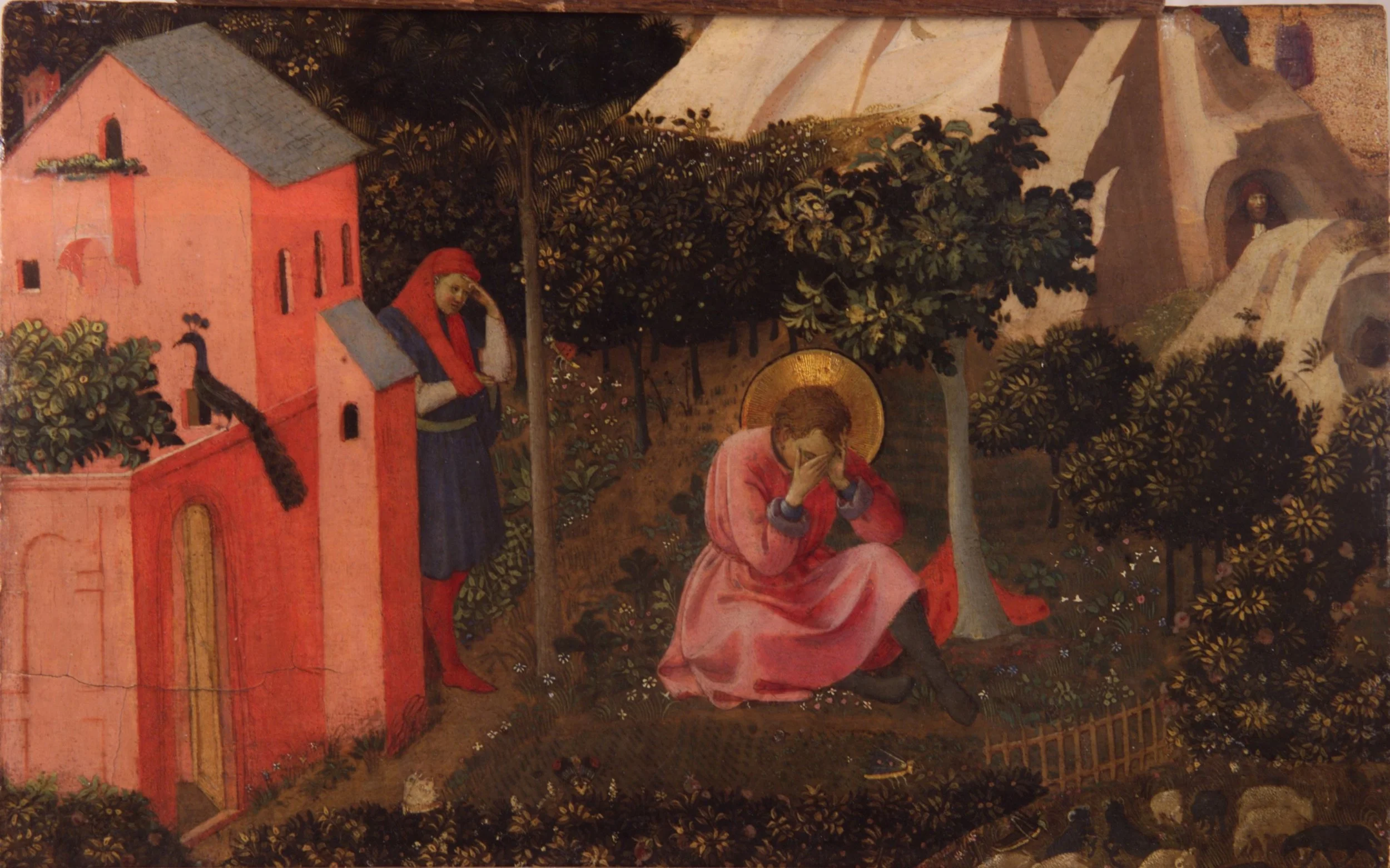
This article argues that Augustine’s identity in the Confessions is not fixed or purely inward, but is continually reshaped through relationships marked by friendship, love, and death. By examining the deaths of close companions—alongside enduring friendships with figures such as Alypius, Nebridius, and Monica—it shows how grief destabilizes Augustine’s sense of self and ultimately redirects his love toward God as its proper end. The study contends that friendship functions as a crucial mediator between self-knowledge and divine knowledge, revealing identity as relational, mutable, and ordered through rightly directed love.
Read MoreThis article examines how Voltaire, Diderot, and d’Holbach questioned religious authority along with Christianity during the Enlightenment. It goes over how their multiple critiques of church authority and the clergy weakened the French monarchy along with the Catholic Church. By relating events such as church reforms and the abolition of the monarchy to Enlightenment ideas, this article makes a clear case for how religious skepticism completely helped reshape the political and religious landscape in France.
Read MoreBy Lauren Wilbur, the University of Texas at Austin
Historical archaeology attempts to understand cultures of antiquity by studying written primary sources in conjunction with archaeological analysis. The Crusades present a challenge in using this method because many physical spaces have not been excavated due to political strife, or they had only been excavated in a biblical context with little regard to any other period. However, the discipline has recently started to see some success in the areas that the Latin Christians occupied and material evidence is more readily available to fill in the holes of Crusader history.
Read MoreGrant K. Schatzman
The metaphor of living artwork is interestingly appropriate to the history of Ovid’s Metamorphoses. The explosion of translation in the Renaissance turned the dusty tomes of Greece and Rome face up once more, but it is for very good reason that the movement is called a “rebirth” rather than a “rediscovery.” It is no surprise that Renaissance writers “rebirthed” Pygmalion with a new interpretation for every cultural criticism and moralization.
Read MoreBy Hsin-Ta Tsai
Should the universality of the UDHR be applied to the people of Tibet in the first place, discounting its sociocultural context? To answer this question, we have to consider the appropriateness of having some principles or a set of human rights regulations that all cultures and nations can agree upon, a rather Western cosmopolitan view on international ethical issues. In cosmopolitanism, national borders are morally irrelevant because “a truly moral rule or code will be applicable to everyone.” However, it raises concerns knowing that most of the debates about international ethics come from Western traditions of moral theory.
Read More